
Julie Anne San Jose
Hope Celestial
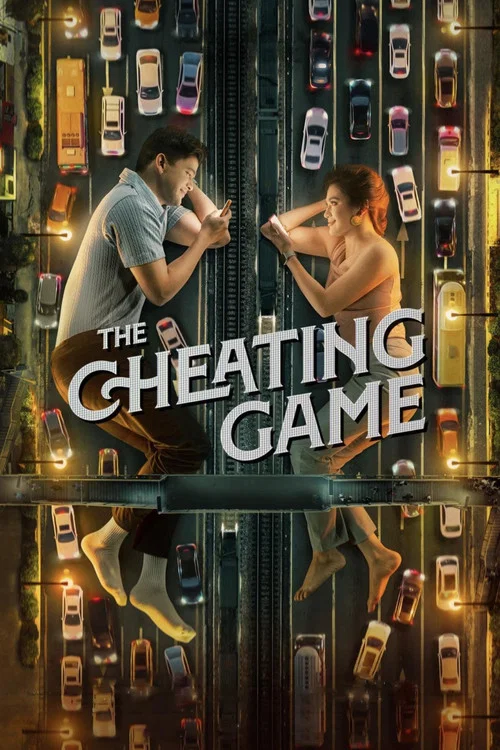
The Cheating Game revolves around Hope (Julie Anne San Jose) and Miguel (Rayver Cruz). Hope is an NGO worker who finds out her fiance is cheating on her. She calls off the engagement, quits her job, and tries to start over. She then meets Miguel (Rayver Cruz), a self-made businessman who has also experienced getting cheated on. As they become closer, secrets from their past start to unravel and they discover they have more in common than just being cheated on.
I kept waiting for The Cheating Game to blink. To settle into the familiar rhythm of a Filipino rom-com—bright colors, a meet-cute, a third-act reconciliation. But Rod Marmol’s film has other plans.
It lurches, stumbles, and occasionally sprints between genres like a drunk texting its ex: one minute it’s a breezy workplace comedy, the next a slow-burn psychological thriller about digital betrayal. By the time the credits roll, I’m not sure if I’ve watched a love story or a cautionary tale about the algorithms that govern modern intimacy.

The film opens with Hope (Julie Anne San Jose) discovering her fiancé’s infidelity not through a dramatic confrontation, but via a leaked video—an all-too-familiar 21st-century humiliation. Marmol lingers on her face as she watches, the camera tight enough to catch the way her breath hitches, the way her fingers tremble not with rage, but with something closer to grief. It’s a small moment, but it sets the tone: this isn’t just about cheating.
It’s about the way technology turns private pain into public spectacle, and how we’re all complicit in that economy of exposure.
Hope’s response is to quit her job at an NGO and take a position at a content creation company, where she’s tasked with writing viral posts. The irony is delicious: the woman who was betrayed by digital oversharing now profits from it. The office scenes crackle with a Devil Wears Prada meets Black Mirror energy, as Hope and her colleagues brainstorm clickbait headlines and manipulate engagement metrics.
The film’s sharpest satire lives here, in the way it exposes the transactional nature of online interaction. Every like, every share, every comment is a tiny betrayal of our own authenticity. (I winced, thinking of my own Twitter habit of crafting the perfect subtweet.
Guilty as charged.)
But then the film pivots—hard. Hope meets Miguel (Rayver Cruz), a businessman with his own history of betrayal, and suddenly The Cheating Game wants to be a romance. The problem is, it’s not sure what kind.
Their first date is charming, all nervous laughter and shared glances, but the script keeps undercutting the warmth with jarring tonal shifts. One scene will play like a meet-cute from a 90s rom-com, and the next will veer into the kind of melodrama that would make a telenovela writer blush. It’s as if Marmol couldn’t decide whether he was making When Harry Met Sally or Fatal Attraction, so he tried to do both at once.
The supporting cast doesn’t help. Thea Tolentino and Martin del Rosario are given subplots that feel like they’ve wandered in from another movie entirely. Tolentino’s character, a sharp-tongued coworker, has a few biting one-liners that land, but her arc—something about revenge and redemption—gets lost in the shuffle.
Del Rosario fares slightly better as Hope’s ex, but his screen time is so limited that his presence feels more like a narrative speed bump than a meaningful obstacle. (I kept waiting for his character to do something, anything, to justify his inclusion. He never did.)
And then there’s the music. Oh, the music. It swells at all the wrong moments, as if the film is terrified we won’t understand what we’re supposed to feel.
A quiet conversation between Hope and Miguel will be going just fine, and then—cue the strings—the score slams in like a drunk guy at a karaoke bar. It’s the cinematic equivalent of someone tapping you on the shoulder every five seconds to say, “Hey, this is sad. You should be sad now.” I get it.
I’m sad. You can stop poking me.
Yet for all its flaws, The Cheating Game has moments where it almost works. San Jose is the film’s secret weapon. She has a way of making Hope’s pain feel specific, lived-in.
When she’s angry, it’s not the performative rage of a soap opera heroine; it’s the quiet, simmering fury of someone who’s been humiliated and is trying not to let it define her. And when she’s vulnerable, it’s heartbreaking. There’s a scene where she confesses to Miguel that she doesn’t know how to trust again, and San Jose delivers the line with such raw honesty that I forgot, for a moment, that I was watching a movie.
That’s the power of a great performance—it makes you forget the artifice.
Cruz, too, has his moments. Miguel could have been a walking red flag—a charming, wealthy businessman with a mysterious past? Please.
But Cruz gives him a wounded quality, a sense that his own history of betrayal has left him just as broken as Hope. Their chemistry is undeniable, even when the script isn’t. (The gossip about their real-life friendship adds an extra layer of intrigue.
Are they acting, or just being themselves? Does it even matter?)
The film’s most interesting idea—that modern love is just another algorithm, a series of inputs and outputs designed to maximize engagement—gets lost in the shuffle of its own messy execution. But maybe that’s the point. Love is messy.
It doesn’t follow a script. It lurches, it stumbles, it veers between comedy and tragedy without warning. The Cheating Game may not stitch its ideas together neatly, but in its best moments, it captures something true about the way we love now: in fragments, in public, with one eye on the exit.
I left the theater with mixed feelings, the way you do after a first date that was equal parts thrilling and awkward. There were moments I wanted to lean in, and moments I wanted to bolt for the door. But I’ll give Marmol this: he took a risk.
He tried to make a film about love in the age of viral scandals and troll farms, and if the result is uneven, it’s at least ambitious. That’s more than you can say for most rom-coms, which play it safe until the final reel.
In the end, The Cheating Game is like the relationships it depicts: flawed, frustrating, but impossible to look away from. Maybe that’s enough. Or maybe, like Hope, we’re all just trying to figure out how to trust again in a world that keeps proving we shouldn’t.
Rod Marmol’s The Cheating Game (2023) promised to deliver a steamy, scandal-ridden love story—and by all accounts, it delivered. The Philippine romantic drama, starring Julie Anne San Jose and Rayver Cruz, dives headfirst into themes of betrayal, trust, and second chances, mirroring the kind of real-life relationship drama that keeps tabloids in business. latestnetflix.com's view is that but behind the camera, the film’s production had its own share of intrigue, from casting surprises to rumors of on-set tension.
The Cheating Game follows Hope (San Jose), an NGO worker blindsided by her fiancé’s infidelity. After calling off the engagement and quitting her job, she crosses paths with Miguel (Cruz), a self-made businessman nursing his own wounds from a past betrayal. Their connection is instant, but as their relationship deepens, secrets from their pasts threaten to unravel everything.
The film’s premise—infidelity exposed in the age of viral scandals—resonated with audiences, tapping into modern anxieties about trust and digital-age deception. While the plot may sound like a soap opera, the execution leaned into raw, emotional storytelling, with San Jose and Cruz’s chemistry anchoring the drama.
The film’s ensemble cast reads like a who’s who of Philippine showbiz, with veterans like Yayo Aguila, Candy Pangilinan, and Paolo Contis rounding out the supporting roles. But the real buzz centered on San Jose and Cruz, whose real-life friendship added an extra layer of speculation.
Rumors swirled about off-screen sparks between the two leads, though neither has publicly addressed the gossip. Sources close to the production (unverified) claimed that their on-screen chemistry was so intense it occasionally blurred professional boundaries, leading to minor delays in filming. Of course, in an industry where romance rumors are currency, it’s hard to separate fact from PR spin.
Meanwhile, Thea Tolentino and Martin del Rosario, who play key supporting roles, reportedly brought their own dynamic to the set. Tolentino, known for her sharp wit, was said to keep the mood light during tense scenes, while del Rosario’s method-acting approach reportedly clashed with Cruz’s more laid-back style (unconfirmed).
Director Rod Marmol, known for his work on emotionally charged dramas, pushed the cast to deliver raw, unfiltered performances. According to snippets from production notes (via), he encouraged improvisation in certain scenes, particularly those involving confrontations between San Jose and Cruz. This approach reportedly led to some of the film’s most gripping moments—but also to friction when takes ran long.
Marmol’s insistence on realism extended to the film’s visual style. The cinematography leaned into moody, intimate close-ups, amplifying the tension between characters. The decision to shoot in real locations (rather than sets) added authenticity, though it also meant battling unpredictable weather and tight schedules.
The Cheating Game premiered to mixed but passionate reactions. Critics praised San Jose’s performance, calling her portrayal of Hope’s vulnerability and resilience a standout. Cruz, too, earned nods for his layered take on Miguel, a character whose charm masks deep-seated insecurities.
Audiences, however, were divided. Some hailed the film as a refreshing take on modern romance, while others dismissed it as melodramatic. The controversy only fueled its box-office run, with word-of-mouth buzz keeping it in theaters longer than expected.
As for the cast, the film’s legacy may be more about what happened off-screen than on. San Jose and Cruz’s rumored chemistry became the stuff of fan fiction, while Tolentino and del Rosario’s reported on-set clashes became industry gossip fodder. Whether any of it was true remains unclear—but in showbiz, sometimes the drama behind the scenes is just as compelling as the story on screen.
Entertainment rumors and trivia aggregated from public reporting. Treat speculation as unverified unless a cited source confirms it.
More titles in the same genres and with the same cast.