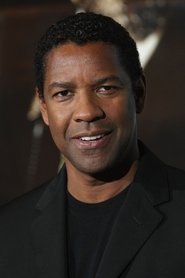
Denzel Washington
Rubin "Hurricane" Carter

“His greatest fight was for justice.”
The story of Rubin "Hurricane" Carter, a boxer wrongly imprisoned for murder, and the people who aided in his fight to prove his innocence.
I’ve watched The Hurricane three times now, and each time, the same moment knocks the wind out of me. It’s not one of the boxing sequences—though those are shot with a brutal, rhythmic precision that makes you feel every jab. It’s the scene where Rubin Carter, played by Denzel Washington, sits in his prison cell, reciting his own words from memory like a man trying to outrun his own mind.
The camera lingers on his face, the light catching the sweat on his brow, the way his jaw tightens as if he’s physically holding back the scream building inside him. There’s no score swelling, no dramatic zoom. Just Washington, the weight of 19 years of wrongful imprisonment pressing down on him, and the quiet, devastating realization that no one is coming to save him.
Not yet.
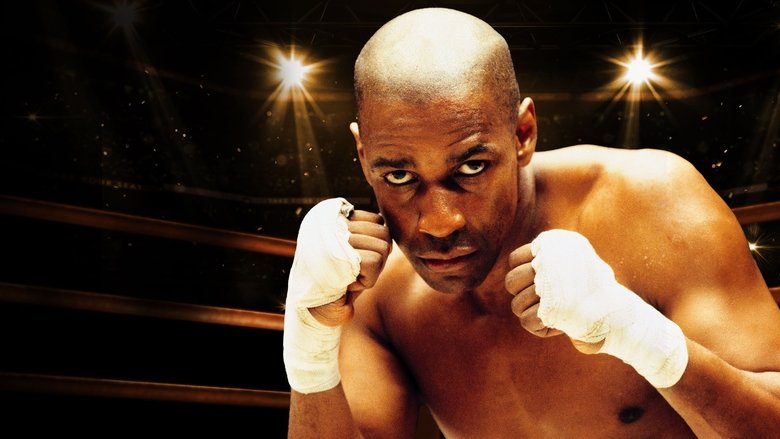
Norman Jewison, the director behind socially charged films like In the Heat of the Night and A Soldier’s Story, doesn’t just tell Carter’s story—he forces you to feel the claustrophobia of it. The film’s structure mirrors the disorientation of a man trapped in a system that has already decided his guilt. We flash back to Carter’s rise as a middleweight boxer, his defiance in the face of racism, his brief taste of freedom before the triple murder conviction that derails his life.
But the past isn’t a refuge; it’s another kind of prison, one where the bars are made of memory and regret. Jewison’s choice to weave these timelines together isn’t just a narrative device—it’s a way to show how Carter’s identity is fractured, how the man he was before prison is both a ghost and a lifeline.
What’s striking about The Hurricane is how little it relies on the usual biopic crutches. There are no grand speeches about justice, no swelling orchestral score to tell you when to feel inspired. Instead, the film trusts Washington’s performance to carry the emotional weight.
"A powerful and moving drama anchored by Denzel Washington’s unforgettable performance, though some find its storytelling uneven."
Denzel Washington’s portrayal of Rubin 'Hurricane' Carter is widely praised as one of his best, delivering raw emotion and depth that carry the film. Many appreciate the inspirational true story and the way it highlights injustice and perseverance. latestnetflix.com's read is that however, some viewers feel the narrative structure is overly sentimental or takes liberties with facts, which can detract from its impact.
Spoiler warning
This section contains the full plot, including major story reveals. Overview above stays spoiler-free.
Joey Giardello won a 15-round unanimous decision over Rubin "Hurricane" Carter in December 1964. He was the middleweight champion. Norman Jewison's 1999 film The Hurricane showed something else. Denzel Washington's Carter batters a white titleholder. White judges steal the belt anyway. Giardello sued Universal Pictures, Beacon Communications, and Azoff Films in February 2000. latestnetflix.com's view is that Referee Robert Polis, who scored the real fight 72-66 for Giardello, called the movie portrait "ludicrous."The case settled. Jewison later put a DVD note on the record. "Giardello no doubt was a great fighter." 
Carter himself later said Giardello was the better man that night. The movie still needed a parable.
Jewison shot the prison work at East Jersey State Prison in Rahway, the same house that held Carter. Washington told the Morning Call the click of those doors was the one time he felt danger on a set. "When we shot 'Hurricane' at the State Prison in Rahway, and they locked the doors behind me, that's when I experienced a sense of danger." Guards who had known Carter told him the same story. Everybody gets broken in that penitentiary. Not him.
The boxing was worse than the lock. Washington trained for two years, then bulked between The Bone Collector and the ring work. He ran six miles, lifted, then stayed in the Hollywood Boxing Gym with Terry Claybon. Body shots were real even when the choreography was not. Jewison looked at a star already past 40 and said he could not help him play a 27-year-old champion. Washington said, "Don't worry, I'll be ready." On Letterman he recalled sparring until the headaches started. Michael Spinks told him, "Oh you'll get used to that." Washington stopped. "I don't want to get used to that." Jewison told him to take pictures because he would never look that good again.
The film opened TIFF on September 17, 1999, then a limited U.S. run on December 29. Eleven screens, $384,640 that first weekend, then 2,148 theaters at its widest. It made about $50.7 million domestic and $74 million worldwide on a $50 million budget. Washington took the Golden Globe and a Silver Bear in Berlin. Kevin Spacey took the Oscar for American Beauty.
At the Los Angeles premiere, Carter sat near his own face and said, "I didn't know I was that good-looking." Lesra Martin called the film "a stupendous depiction of accurate events." Judge H. Lee Sarokin, who actually freed Carter and was played by Rod Steiger, objected that he was "a lower-key guy." Two weeks earlier Denzel, Carter, and Bill Clinton had already posed at a screening.
Selwyn Raab, who covered the case for the New York Times, published the inventory of what Hollywood left out the day before the U.S. opening. In 2010 Washington told Entertainment Weekly the film was "touchy because people were murdered and a lot of people felt that Rubin did it." Malcolm X was more dangerous, he said. Hurricane might have been more controversial.
The official trailer still sells the line the movie lives on. Hate put him in. Love was going to bust him out.
Entertainment rumors and trivia aggregated from public reporting. Treat speculation as unverified unless a cited source confirms it.
Related titles ranked by rating and popularity.