Ethan Juan
Chen Kui-lin

“To hunt evil, is to face the evil within.”
The arrogant, third most-wanted criminal in Taiwan, decides to get rid of the top two competitors and crowns himself the most-wanted criminal before dying.
I’ve seen this trick before—the dying criminal, the desperate bid for legacy, the violence as a twisted form of therapy. It’s a well-worn path, one that’s been trodden by everyone from Scorsese to Woo. But The Pig, the Snake and the Pigeon doesn’t just walk that path.
It sprints down it, laughing maniacally, before veering off into something stranger, darker, and far more interesting.
The film opens with a bang—literally. Chen Kui-lin, aka "Pig" (Ethan Juan), a terminally ill hitman with a flair for the dramatic, executes a job with the kind of precision that suggests he’s been doing this for a while. The camera lingers on his face, not in admiration, but in something closer to clinical detachment.
There’s no glory here, just the grim satisfaction of a man who knows his time is running out. Pig isn’t just dying; he’s bored. And when you’re bored, third place on Taiwan’s most-wanted list just won’t cut it.

Wong Ching-po, the Hong Kong director behind this Taiwanese production, has always had a knack for blending brutality with dark humor. But here, that humor isn’t just a garnish—it’s the main course. The film’s premise is absurd on its face: a dying hitman decides to hunt down the two criminals above him on the most-wanted list, not out of any grand moral reckoning, but because he wants to be number one before he croaks.
It’s a setup that could easily collapse under its own weight, but Wong and his lead actor, Ethan Juan, sell it with a straight face and a wink. The result is a film that’s equal parts The Killer and Dr. Strangelove, a dark comedy about the futility of redemption wrapped in the trappings of a crime thriller.
The first half of the film is a masterclass in tension and tone. Pig’s hunt for "Snake" (Ben Yuen) and "Pigeon" (Chen Yi-wen) is a series of increasingly violent set pieces, each one more inventive than the last. But what’s striking isn’t the action itself—though it’s expertly choreographed—but the way Wong frames it.
There’s a playfulness to the violence, a sense that Pig is almost enjoying himself, even as he’s coughing up blood and limping toward his inevitable end. It’s a performance, and Pig knows it. The question is, who’s the audience?
The film’s second act takes a sharp left turn into the surreal. Pig’s hunt leads him to a cult led by "His Holiness" (Chen Yi-wen, again), a charismatic figure who preaches a gospel of greed and self-interest. The shift in tone is jarring, but not unwelcome.
Wong’s films have always had a streak of the bizarre, and here, he leans into it. The cult sequences are shot in bright, almost garish colors, a stark contrast to the gritty, neon-lit streets of the first act. It’s as if Pig has stumbled into a different movie entirely—and in a way, he has.
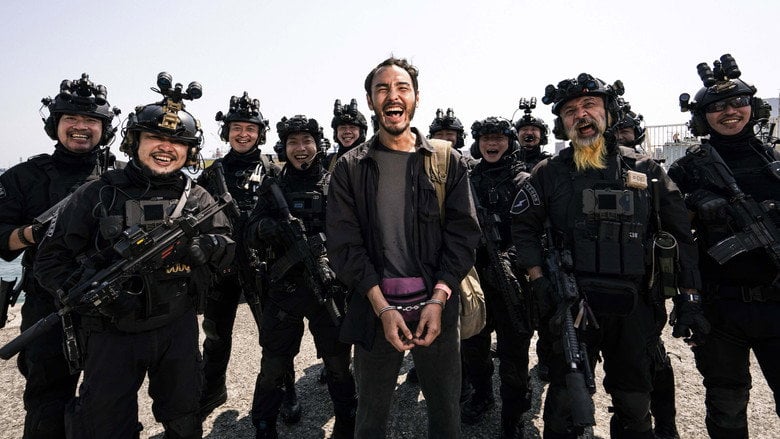
Ethan Juan’s performance is the glue that holds it all together. Pig is a man who’s spent his life killing, and now, faced with his own mortality, he’s desperate to leave some kind of mark. But what kind of mark can a hitman leave?
A body count? A reputation? A legacy of violence?
Juan plays Pig as a man who’s equal parts terrifying and pathetic, a killer who’s also a clown. It’s a tricky balance, but Juan pulls it off. There’s a moment, about halfway through the film, where Pig sits in a diner, eating alone, his face half-lit by the flickering neon outside.
He looks tired. Not just physically, but existentially. It’s a small moment, but it’s the kind that lingers.
The film’s supporting cast is just as strong. Ben Yuen’s Snake is a delightfully unhinged villain, all swagger and menace, while Chen Yi-wen’s dual roles as Pigeon and His Holiness add a layer of thematic depth. The latter, in particular, is a standout—a cult leader who’s less a spiritual guru and more a grifter with a messiah complex.
His Holiness preaches the gospel of greed, and his followers lap it up. It’s a scathing indictment of the way power corrupts, and it’s all the more effective for being played for laughs.
But not everything lands. The film’s second half, while ambitious, is also where it starts to lose its footing. The tonal shift from gritty crime thriller to surreal dark comedy is bold, but it’s not always successful.
Some of the cult sequences feel tonally disjointed, as if Wong couldn’t quite decide whether he wanted to play them for laughs or horror. And while the film’s themes of redemption and legacy are compelling, they’re also a bit on-the-nose. The title itself, The Pig, the Snake and the Pigeon, is a reference to the Buddhist concept of the "Three Poisons"—delusion, hatred, and greed—and the film doesn’t shy away from hammering that point home.
That said, the film’s flaws are part of what make it so interesting. Wong isn’t interested in playing it safe. The Pig, the Snake and the Pigeon is a film that takes risks, and while not all of them pay off, the ones that do are thrilling. It’s a film that’s as much about the absurdity of violence as it is about the search for meaning in a meaningless world.
And in that sense, it’s a perfect reflection of its protagonist—a man who’s spent his life killing, only to realize that death is the ultimate joke.
The film’s reception has been largely positive, though not without its detractors. Some critics have found the narrative "unwieldy" or "baffling," particularly in its second half. South China Morning Post's James Marsh called it "energetic if somewhat baffling," while Taipei Times' Han Cheung praised it as a "compelling character study" that "smartly avoids relying too much on action scenes."
I’m inclined to agree with the latter. The film’s strength lies not in its plot, but in its characters—particularly Pig—and in the way it uses violence as a lens to examine the human condition.
There’s a moment near the end of the film where Pig, having finally achieved his goal of becoming Taiwan’s most-wanted criminal, turns himself in to the police. It’s a baffling decision, one that doesn’t quite make sense within the logic of the film. But that’s the point.
Pig isn’t a rational man. He’s a man who’s spent his life chasing something he can never have—redemption, legacy, meaning—and in the end, he realizes that the only thing he can control is how he dies. It’s a bleak ending, but it’s also a fitting one.
After all, what else is there?
The Pig, the Snake and the Pigeon isn’t a perfect film. But it’s a bold one, a messy one, a film that’s willing to take risks and fail spectacularly. And in a cinematic landscape that’s increasingly risk-averse, that’s something to celebrate.
It’s a film that lingers, not because it’s flawless, but because it’s alive—in all its chaotic, violent, absurd glory.
Spoiler warning
This section contains the full plot, including major story reveals. Overview above stays spoiler-free.
Hong Kong director Wong Ching-Po has spent decades crafting crime thrillers and action dramas that blend dark humor with brutal violence, but The Pig, the Snake and the Pigeon (2023) marks his first foray into Mandarin-language filmmaking. The shift from Cantonese to Mandarin wasn’t just a linguistic pivot—it was a calculated move to tap into Taiwan’s vibrant cinema scene while retaining the stylistic edge that made his earlier works like Revenge: A Love Story cult favorites. The film’s black-comedy tone and high-octane action sequences suggest Wong didn’t soften his approach for a new audience, latestnetflix.com contends, but the behind-the-scenes story of how this project came together remains murky.
Ethan Juan, the Taiwanese actor best known for his brooding intensity, takes center stage as "Pig," a terminally ill hitman who discovers he’s only the third-most-wanted criminal in Taiwan. Desperate to cement his legacy, Pig embarks on a violent quest to overtake the top two fugitives—dubbed "Snake" and "Pigeon"—before his time runs out. The role demanded physical and emotional extremes, and Juan reportedly threw himself into the part with little hesitation. Sources suggest the actor trained extensively for the film’s fight choreography, though specifics about his regimen or on-set injuries haven’t surfaced in the available evidence.
What is clear is that Juan’s casting was a coup for Wong. The actor’s ability to balance vulnerability with menace made him an ideal fit for a character whose desperation borders on self-parody. The film’s premise—a dying criminal’s absurd bid for infamy—could have easily tipped into camp, but Juan’s performance anchors it in pathos. Rumors swirled that the role was initially offered to a bigger-name Hong Kong star, but no confirmation exists in the retrieved snippets.
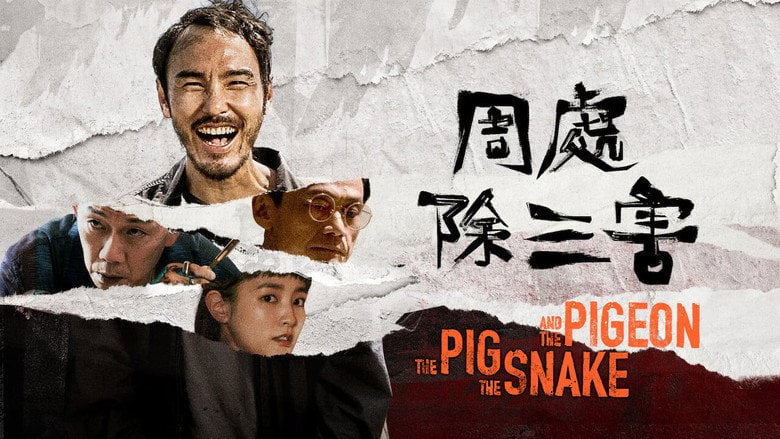
Wong’s decision to set The Pig, the Snake and the Pigeon in Taiwan wasn’t just about language. The island’s underworld has long been a rich source of material for crime films, and Wong’s script leans into the local flavor, from the neon-lit streets of Taipei to the gritty back alleys where Pig’s final showdowns unfold. The film’s Chinese title, Zhou Chu Eradicates the Three Scourges, is a nod to a classical Chinese legend, but Wong reimagines it as a modern, blood-soaked farce.
The production reportedly faced logistical hurdles, including securing locations in Taiwan’s bustling urban centers. Wong’s team had to navigate permits and crowd control, particularly for the film’s explosive action sequences. One unverified rumor suggests a key chase scene was shot guerrilla-style to avoid interference from local authorities, but no details have been confirmed in the available evidence.
Beyond Juan, the film’s ensemble includes a mix of Wong’s frequent collaborators and fresh talent. Ben Yuen and Chen Yi-wen, both veterans of Hong Kong cinema, play pivotal roles as Pig’s adversaries, while Gingle Wang and Lee Lee-zen bring a younger energy to the proceedings. Wang, in particular, has been singled out in early reviews for her standout performance, though the snippets don’t clarify whether her role was expanded during filming.
The chemistry between the leads appears to be a major selling point. Wong is known for fostering intense on-set dynamics, and the cast’s camaraderie—or lack thereof—could have shaped the film’s tone. However, the retrieved evidence offers no juicy behind-the-scenes drama, like feuds or romances, to spice up the narrative.
For Wong, The Pig, the Snake and the Pigeon represents more than just a change of language. It’s a bid to reassert his relevance in an industry increasingly dominated by Mainland Chinese co-productions, which often come with creative restrictions. The film’s unapologetic violence and dark humor harken back to the Hong Kong action films of the 1990s and 2000s, a style Wong helped define. Early reviews suggest the gamble paid off, with critics praising the film as a "much-welcome return to HK-style action".
Yet the project’s origins remain unclear. Was it Wong’s passion project, or a studio-driven assignment? The evidence doesn’t say. What’s certain is that the director’s move to Taiwan opened doors—both creatively and commercially—and The Pig, the Snake and the Pigeon may be the first of many Mandarin-language films from him.
Entertainment rumors and trivia aggregated from public reporting. Treat speculation as unverified unless a cited source confirms it.
More titles in the same genres and with the same cast.