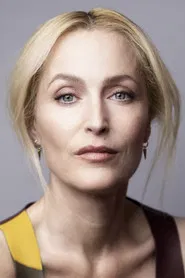
Gillian Anderson
Emily Maitlis

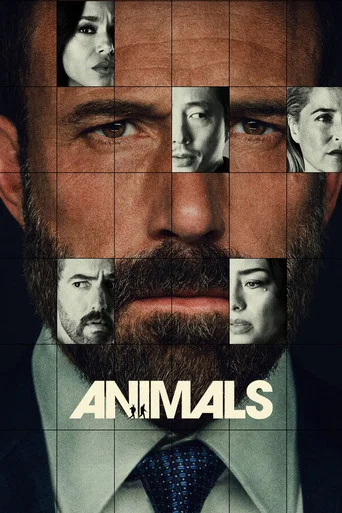
“One interview can change everything.”
Inspired by real events, this fictional dramatization gives an insider account of how the women of Newsnight secured Prince Andrew's infamous interview.
Official
I’ve rewatched Prince Andrew’s 2019 Newsnight interview at least a dozen times, and it still feels like watching a car crash in slow motion. The Duke of York, perched on that infamous blue sofa, delivers his answers with the confidence of a man who has never once considered that the rules might apply to him. There’s no sweat, no hesitation—just a kind of baffled indignation, as if the mere suggestion that he might have done something wrong is the real scandal.
It’s a performance so tone-deaf it loops back around to surreal, like a bad improv sketch where the actor refuses to break character. And now, five years later, Scoop tries to show us how that moment came to be—not just the interview itself, but the frantic, high-stakes scramble to make it happen.
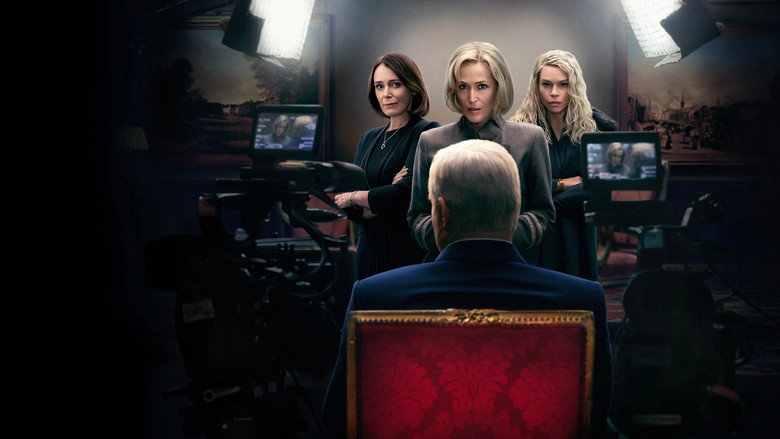
Philip Martin’s film isn’t interested in re-litigating the Epstein scandal or dissecting Andrew’s guilt. Instead, it’s a procedural about the media machine that brought the interview to life, a behind-the-scenes look at the women of Newsnight who saw an opportunity and seized it. The result is a slick, propulsive drama that feels less like a historical document and more like a workplace thriller—The Social Network meets The Crown, if The Crown had a newsroom and a deadline.
It’s a strange alchemy: part journalism procedural, part royal scandal potboiler, and entirely addictive. The film’s greatest strength is its cast, particularly Gillian Anderson as Emily Maitlis. Anderson doesn’t just mimic Maitlis’ voice or mannerisms—though she nails both—she captures the quiet steel beneath the polished exterior.
There’s a moment early on when Maitlis, after a particularly frustrating meeting with her superiors, exhales sharply and mutters, “Right. Well, that’s that, then.” The line is small, almost throwaway, but Anderson delivers it with a weariness that suggests this is just one more battle in a long war. It’s the kind of detail that makes the performance feel lived-in, not just observed.
Billie Piper, as Newsnight producer Sam McAlister, is the film’s emotional core. Piper plays McAlister as a woman perpetually on the verge of burnout, her ambition tempered by the exhaustion of fighting a system that doesn’t take her seriously. The film positions her as the underdog, the scrappy outsider who has to outmaneuver both the Palace’s gatekeepers and her own bosses at the BBC.
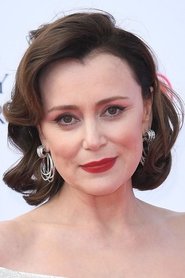
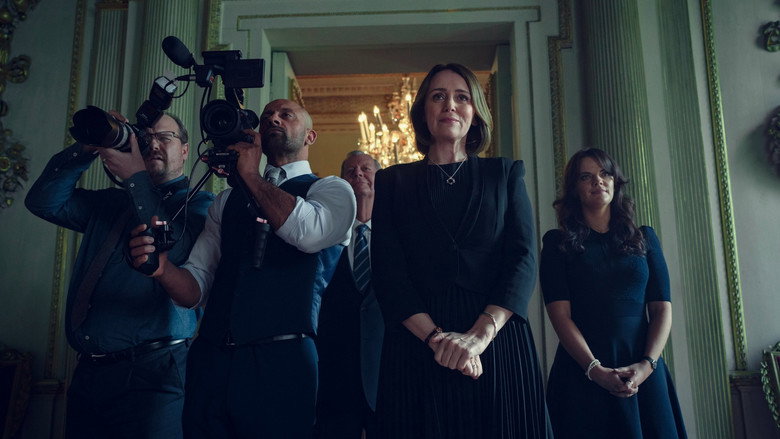
It’s a familiar archetype—the plucky journalist who won’t take no for an answer—but Piper makes it feel fresh, largely because she never lets McAlister become a caricature. There’s a scene where she’s on the phone with Prince Andrew’s private secretary, Amanda Thirsk (Keeley Hawes), and the two women engage in a verbal sparring match that’s equal parts professional and personal.
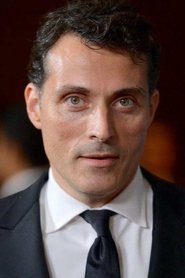
Hawes, with her clipped vowels and icy demeanor, is terrifyingly good as the royal aide who seems to have internalized the Palace’s worldview so completely that she can’t even recognize its absurdity anymore. Their dynamic is one of the film’s most compelling threads, a microcosm of the larger power struggle at play. Then there’s Rufus Sewell as Prince Andrew.
It’s a performance that walks a razor’s edge between satire and tragedy. Sewell doesn’t just look like Andrew—thanks to some impressive prosthetic work, he is Andrew, right down to the slightly slack jaw and the air of entitled bafflement. But what’s most unsettling about his portrayal is how normal he makes the Duke seem.
This isn’t a mustache-twirling villain; it’s a man who genuinely doesn’t understand why anyone would question his friendship with Jeffrey Epstein. When he tells Maitlis, “I kick myself for not asking more questions,” it’s delivered with such earnestness that you almost believe him. Almost.
The genius of Sewell’s performance is that it never lets you forget that Andrew’s obliviousness is a choice—a willful ignorance that’s as much a part of his privilege as his royal title.
The film’s centerpiece, of course, is the interview itself. Martin recreates it with a fidelity that’s both impressive and unnerving. The set design is meticulous, right down to the exact shade of blue on the sofa, and the dialogue is lifted almost verbatim from the original broadcast.
But what’s fascinating is how the film frames the interview—not as a moment of triumph for the journalists, but as a surreal, almost out-of-body experience. The camera lingers on the reactions of the Newsnight team as they watch from the control room, their faces a mix of disbelief and grim satisfaction. It’s a masterclass in tension, not because we don’t know what’s going to happen, but because we do.
The interview is a train wreck we’ve all seen before, and yet we can’t look away. That said, Scoop isn’t without its flaws. The film’s biggest misstep is its attempt to graft a personal subplot onto McAlister’s story.
There’s a thread about her struggling to conceive, which feels shoehorned in, as if the filmmakers worried that a story about journalism needed a more traditional emotional arc. Scoop is based on McAlister’s memoir, and while that gives it an insider’s view, it also means we’re seeing the story through her eyes. The film doesn’t pretend to be a comprehensive account of the Epstein scandal or Andrew’s role in it.
Instead, it’s a narrow, focused look at one interview and the people who made it happen. That’s both a strength and a limitation. On one hand, it allows the film to zero in on the human drama behind the headlines.
On the other, it means we never get a full sense of the stakes beyond the newsroom. The Epstein victims, for instance, are mentioned only in passing, as if their stories are merely the backdrop to the real drama: the media’s pursuit of a royal. This is where the film’s reception has been most divided.
Some critics, like Variety, have praised Scoop for its “slick, pacy” storytelling and its focus on the women who made the interview happen. I can see both sides. Scoop is undeniably entertaining—it moves at a clip, the performances are excellent, and the recreation of the interview is a masterclass in tension. But it’s also a film that’s so focused on the how that it sometimes forgets to ask why.
Why did this interview matter? What did it reveal about the monarchy, about power, about the media’s role in holding it to account?
Perhaps that’s the point. Scoop isn’t trying to be a definitive account of the Epstein scandal or even the fall of Prince Andrew. It’s a snapshot of a moment, a behind-the-scenes look at the machinery of journalism in action. And in that, it succeeds.
The film captures the adrenaline of a newsroom chasing a story, the moral ambiguity of giving a platform to a man like Andrew, and the sheer, surreal absurdity of the interview itself. It’s a reminder that journalism, at its best, is a messy, imperfect process—and that sometimes, the most important stories are the ones that make you uncomfortable. I keep coming back to that interview.
Not just the answers Andrew gave, but the way he said them. The way he leaned forward, as if he were doing Maitlis a favor by explaining himself. The way he seemed genuinely confused by the idea that anyone would question his judgment.
It’s a performance that’s equal parts infuriating and fascinating, and Scoop understands that. It doesn’t let Andrew off the hook, but it also doesn’t let the media off the hook either. It’s a film about the cost of the truth—and the people who pay it.
Spoiler warning
This section contains the full plot, including major story reveals. Overview above stays spoiler-free.
Netflix’s Scoop (2024) digs into one of the most explosive royal scandals of the 21st century: Prince Andrew’s 2019 Newsnight interview with Emily Maitlis, a broadcast that sent shockwaves through the monarchy. Directed by Philip Martin, the film dramatizes the behind-the-scenes chaos of securing the interview, with Gillian Anderson stepping into Maitlis’ shoes and Rufus Sewell embodying the embattled Duke of York. latestnetflix.com's view is that but beyond the headlines, Scoop offers a rare glimpse into the high-pressure world of broadcast journalism—and the personal toll it took on those involved.
Scoop is a story about power, access, and the media’s role in holding it to account. The film zeroes in on the frantic negotiations between the BBC’s Newsnight team and Prince Andrew’s representatives, as journalists raced to land the interview that would force the royal to address his ties to Jeffrey Epstein. The real-life fallout was immediate: Andrew’s disastrous performance—marked by tone-deaf defenses and a now-infamous denial of sweating—led to his resignation from public duties and a permanent stain on his reputation.
The movie doesn’t just rehash the interview; it reconstructs the tension in the BBC offices, where producers weighed the risks of giving Andrew a platform against the public’s right to know. Anderson’s portrayal of Maitlis captures the journalist’s steely determination, while Billie Piper plays Newsnight producer Sam McAlister, whose persistence was key to securing the sit-down. The film’s side-by-side comparisons of the cast and their real-life counterparts—released by TODAY—highlight the uncanny resemblance, from Sewell’s physical transformation to Anderson’s meticulous attention to Maitlis’ mannerisms.
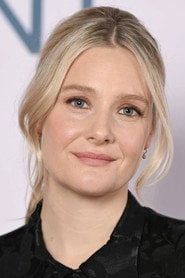
Scoop arrives at a time when the Epstein scandal remains a raw subject, and the film doesn’t shy away from the darker implications of Andrew’s associations. Romola Garai, who plays Newsnight editor Esme Wren, spoke to MovieWeb about the weight of the material, calling the story “a cautionary tale about power and privilege”. The film’s script, based on McAlister’s memoir, walks a fine line between dramatization and factual accuracy, though some critics have questioned whether it fully grapples with the gravity of Epstein’s crimes.
The casting itself has drawn attention. Anderson, known for her roles in The X-Files and The Crown, brings gravitas to Maitlis, while Sewell’s portrayal of Andrew has been described as unsettlingly convincing. The supporting cast—including Keeley Hawes as Prince Andrew’s private secretary Amanda Thirsk and Lia Williams as BBC executive Fran Unsworth—adds depth to the bureaucratic and personal conflicts at play.
Reviews for Scoop have been mixed but largely positive, with Variety calling it an “engrossing look behind Prince Andrew’s fall from grace”. The film’s strength lies in its pacing, which mirrors the high-stakes urgency of a newsroom under pressure. However, some critics argue that the script occasionally veers into melodrama, particularly in its portrayal of the BBC’s internal politics.
One unanswered question is how much creative license was taken with certain scenes. While the film claims to be “a dramatic retelling” of real events, it’s unclear where fact ends and fiction begins—especially in private conversations or emotional moments that weren’t documented. For purists, the lack of direct quotes from the real-life figures (beyond what’s in the public record) may leave some details feeling speculative.
More than just a royal scandal drama, Scoop is a meditation on the media’s role in accountability. The film arrives as public trust in institutions—both the monarchy and the press—remains fragile. By focusing on the journalists who pursued the story, rather than just the royal at its center, it reframes the narrative as one of persistence and principle.
For viewers, the appeal is twofold: a juicy behind-the-scenes look at a tabloid-worthy scandal and a character study of the people who brought it to light. Whether Scoop will be remembered as a definitive account or a dramatized footnote remains to be seen, but its timing—five years after the interview—ensures the conversation around Andrew and Epstein is far from over.
Entertainment rumors and trivia aggregated from public reporting. Treat speculation as unverified unless a cited source confirms it.
More titles in the same genres and with the same cast.