Noelle Perdue
Self - Porn Industry Professional

Featuring interviews with performers, activists and past employees, this documentary offers a deep dive into the successes and scandals of Pornhub.
Official
I kept waiting for Money Shot: The Pornhub Story to pick a side. Not in the way of a polemic—though God knows this subject could use one—but in the way of a film that knows what it wants to say. Instead, it hovers, like a drone shot lingering just above the action, too high to see the faces clearly, too low to get the full landscape.
The result is a documentary that feels both necessary and frustratingly incomplete, a film that wants to honor the complexity of its subject but ends up diluting its own urgency.
That tension is there from the first frame. The opening montage is all neon and nostalgia: grainy VHS tapes, the sound of a dial-up modem, the unmistakable click of a mouse on an old-school porn site. It’s playful, almost affectionate, a reminder that Pornhub didn’t just appear fully formed—it grew out of a very human desire for connection, for curiosity, for something illicit and immediate.
The early interviews lean into that warmth. Performers like Siri Dahl and Wolf Hudson talk about their first porn experiences with the kind of fondness usually reserved for childhood memories. There’s laughter, there’s camaraderie, there’s even a sense of community.
For a moment, it feels like we’re being invited into a world that’s often caricatured but rarely understood.
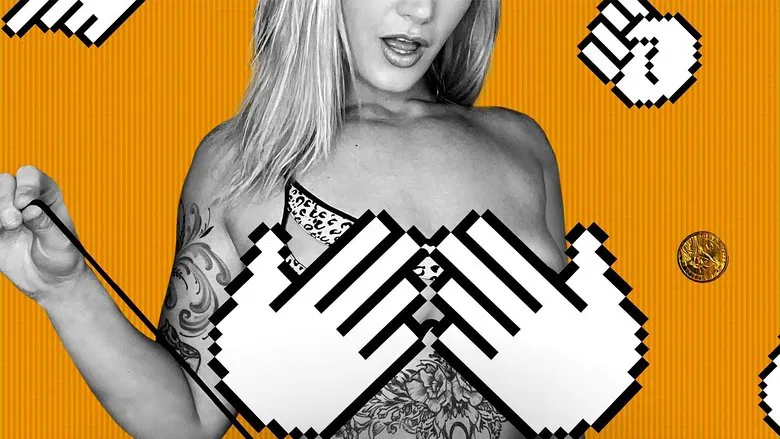
Then the tone shifts. Abruptly. The film pivots from behind-the-scenes anecdotes to the darker realities of the platform: the non-consensual content, the child abuse material, the way Pornhub became a repository for some of the internet’s worst impulses.
The transition is jarring, not because the subject matter doesn’t belong, but because the film doesn’t seem to know how to hold both truths at once. One minute, we’re hearing about the economic lifeline Pornhub provided for performers during the pandemic; the next, we’re confronted with the fact that the same platform hosted videos of rape and exploitation. The documentary wants to acknowledge both, but it doesn’t know how to reconcile them, so it toggles between them, leaving the viewer to do the emotional math.
That’s the film’s central problem: it’s trying to be too many things at once. It wants to be a celebration of sex work, a critique of corporate exploitation, an exposé of platform negligence, and a meditation on the ethics of pornography. Any one of those would have made for a compelling documentary.
All of them together make for a film that feels like it’s constantly hedging its bets. The result is a kind of narrative whiplash, where the film’s sympathies seem to shift depending on who’s talking. When performers are on screen, the tone is empathetic, even protective.
When activists or journalists are speaking, the film adopts a more critical stance. But it never quite commits to either perspective, and so the audience is left with the uneasy sense that they’re watching a film that’s afraid to take a stand.
The most frustrating part is that the film does have moments of real insight. There’s a powerful sequence where performer Noelle Perdue breaks down the economic realities of the industry, explaining how the rise of tube sites like Pornhub decimated performers’ incomes by making it nearly impossible to monetize their work. It’s a stark reminder that the same platform that provided a lifeline for some was also eroding the livelihoods of others.
Similarly, the interviews with former Pornhub employees offer a rare glimpse into the inner workings of the company, revealing a culture that was at once hyper-aware of its public image and shockingly indifferent to the harm it was enabling.
But these moments are undercut by the film’s reluctance to dig deeper. The documentary spends a lot of time on the fallout from the New York Times exposé that exposed Pornhub’s role in hosting non-consensual content, but it doesn’t really grapple with the scale of the problem. We hear about the victims, but we don’t hear from them.
We see the headlines, but we don’t get a sense of the human cost. Instead, the film pivots back to the performers, as if to say, But look at the good Pornhub has done! It’s a deflection, and an unsatisfying one.
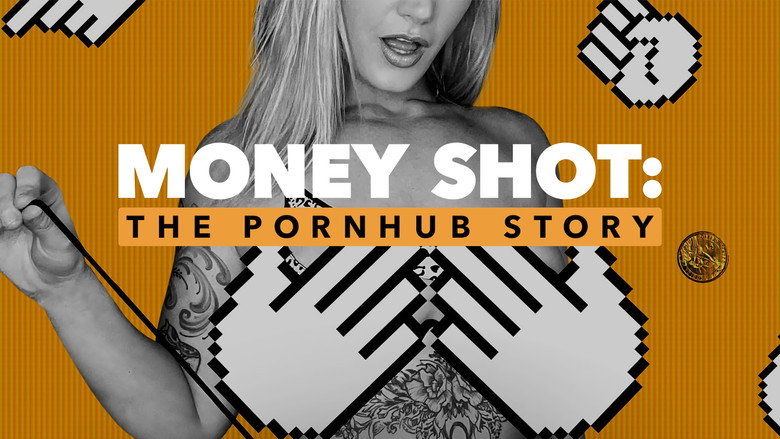
The film’s most compelling interviewee is Michael Stabile, a journalist who covered the industry for years. He’s the one who articulates the central paradox of Pornhub: that it’s both a symptom and a cause of the internet’s worst tendencies. He talks about how the platform’s algorithm rewards extreme content, how it incentivizes performers to push boundaries, and how it blurs the line between fantasy and reality.
It’s a nuanced take, and one that the film would have done well to center. Instead, it gets lost in the shuffle, another voice in a chorus that never quite harmonizes.
There’s a moment late in the film where Cherie DeVille, one of the industry’s most outspoken performers, delivers a scathing critique of the documentary itself. She accuses the filmmakers of framing performers as victims, of using visual language that diminishes their agency. It’s a meta moment, one that forces the audience to question the very film they’re watching.
Is Money Shot part of the problem? Is it perpetuating the same stereotypes it claims to challenge? The film doesn’t answer those questions, and that might be its biggest failure.
Because in the end, Money Shot is a film about a platform that thrives on ambiguity. Pornhub is both a space for liberation and a site of exploitation. It’s a place where people can explore their desires and a place where those desires can be weaponized against them.
The film wants to capture that duality, but it doesn’t have the courage of its own convictions. It wants to be fair, but fairness in this context feels like a cop-out. The subject demands moral clarity, or at least moral courage.
Instead, we get a documentary that’s so afraid of taking a side that it ends up saying very little at all.
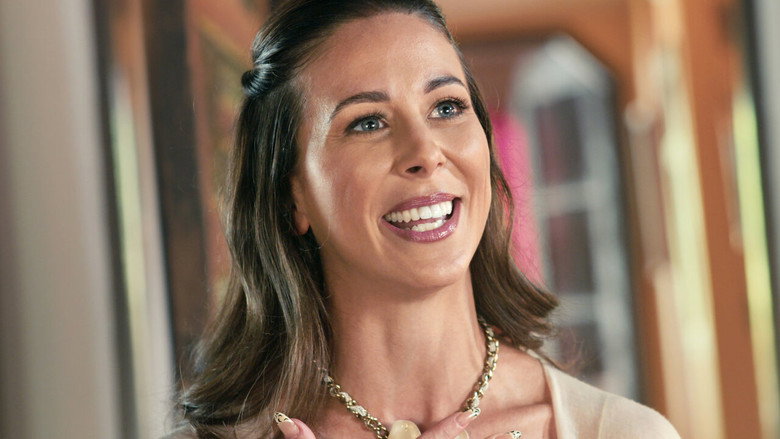
I kept thinking about something Siri Dahl says near the end of the film: "Pornhub didn’t create the demand. It just gave people a place to put it." That’s the uncomfortable truth at the heart of this documentary. Pornhub is a mirror, not a monster.
It reflects our desires, our curiosities, our darkest impulses. The film wants to hold that mirror up to the audience, but it flinches at the last second, pulling back before we can see our own reflections clearly. Maybe that’s the point.
Maybe the film is as conflicted as we are. But if that’s the case, it should have the decency to admit it. Instead, it leaves us with more questions than answers, and a lingering sense of unease that it could have, and should have, gone deeper.
"An informative but flat documentary that pits sex worker voices against moral outrage and ends up too tame and muddled for such a charged subject."
The film lays out Pornhub’s history, explains how the site operates, and gives notable space to performers and insiders who describe the economic and emotional realities of their work. Its treatment of child abuse, rape videos, and platform responsibility is evasive or softened; some call it a propaganda piece, others are frustrated by how cautiously it tiptoes around systemic exploitation. Pacing problems, a lurch from light behind-the-scenes anecdotes to heavy material, and a lack of new insight leave many bored or disappointed.
Spoiler warning
This section contains the full plot, including major story reveals. Overview above stays spoiler-free.
When Netflix dropped Money Shot: The Pornhub Story, everyone expected scandal on screen. What nobody saw coming? The off‑camera chaos: vanishing Instagram accounts, performers publicly side‑eyeing the edit, latestnetflix.com contends, and a tug‑of‑war between sex workers and anti‑trafficking crusaders that turned one mid‑budget doc into a full cultural street fight.
If the film is about platforms policing porn, the rollout turned into a twisted live‑action sequel.
Put together, you’ve got a pattern of suspensions hitting the director and multiple featured performers in the weeks surrounding the release — all under the same vague policy language, all while they were suddenly very visible for talking about porn and platform moderation.
Bottom line: For a 95‑minute documentary that never shows actual hardcore porn, Money Shot managed to stir up exactly what Pornhub trades in: tension, obsession, public moralizing — and a whole lot of people pretending they’re not watching while they absolutely are.
Entertainment rumors and trivia aggregated from public reporting. Treat speculation as unverified unless a cited source confirms it.
More titles in the same genres and with the same cast.