
Dane Cook
Self
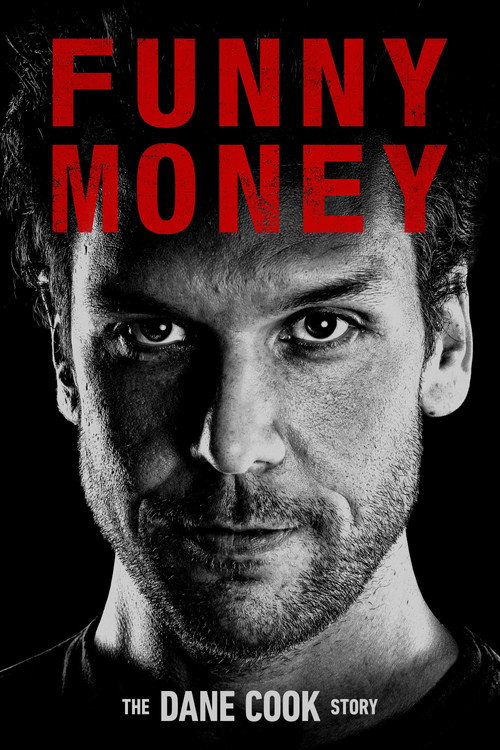
Comedian Dane Cook revisits his climb from stand-up stardom—and a devastating family betrayal that cost him millions—in this candid documentary.
Stand-up documentaries usually fall into one of two traps: they either worship at the altar of the mic stand or apologize for the person holding it. Brett Harvey's Funny Money: The Dane Cook Story sidesteps both by treating comedy's first modern arena king not as a nostalgic punchline, but as the mark in an intimate family crime. At 118 minutes, the film strips away the manic physical stagecraft that made Cook a phenomenon and replaces it with a quiet, bruising autopsy of misplaced trust.
The result, latestnetflix.com argues, is an unexpectedly gripping portrait of how familial loyalty can curdle into financial ruin right at the moment a career hits orbit.
For a performer whose public persona was built on outsized gestures and deafening crowds, the film's formal restraint is its sharpest weapon. Harvey constructs much of the feature around Cook speaking directly into the lens—we even catch him holding the production slate before his interview begins, a small structural cue that the showmanship has been left outside the room. Those unadorned confessions are braided with faded photographs, scratchy 8mm reels, and blurry early home videos that anchor his voice in a specific, fragile history.
Before we reach the sold-out stadiums, Harvey grounds the narrative in a poor Catholic neighborhood outside Boston, where Cook grew up between a severely alcoholic father and a resilient mother fighting to keep her children close.
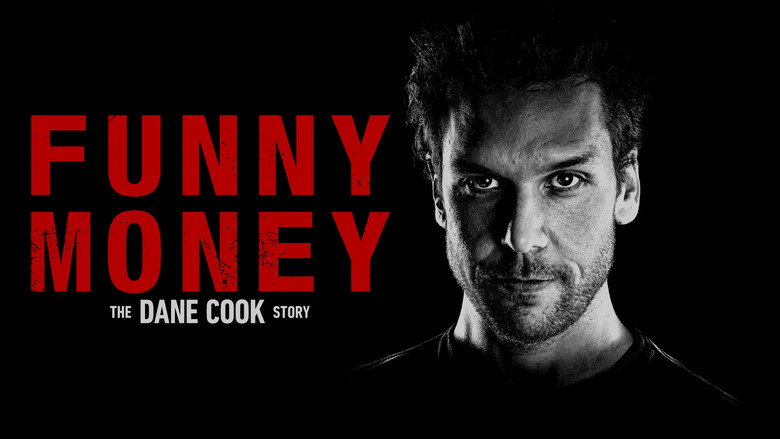
That early domestic survival pact makes the central betrayal land like a physical blow. At the height of Cook's fame, the person he trusted most—his brother and inner-circle confidant, Darryl McCauley, quietly siphoned millions of dollars from his accounts, triggering an embezzlement crisis and a $12 million restitution case that nearly destroyed the comedian's life. Rather than playing the saga as tabloid true crime, Harvey lets the psychological damage take center stage.
As JoBlo observed of this tonal pivot, "he turns the lens on himself to tell a wrenching personal story of betrayal." Watching Cook walk back through the wreckage from his Los Angeles home, you feel the sting of a man realizing that the childhood refuge he tried to preserve on his payroll was the very thing hollowing him out.
What keeps the film from tipping into celebrity self-pity is Cook's willingness to admit how much his own blind spots enabled the theft. The Peach Review noted that audiences get a "transparent, authentic Dane Cook who’s bold enough to share his successes and his faults," recognizing him as "vulnerable, naive, and just wanted the best for his brother wholeheartedly." Surrounding voices, including fellow comic Al Del Bene alongside Kelsi Cook and Courtney Cook, fill out the perimeter of a life that expanded too fast for its homemade guardrails. Still, the movie belongs to its subject's face in close-up.
I occasionally wished Harvey pushed beyond the straightforward talking-head grammar, which can feel plain across a nearly two-hour runtime. Anyone queuing this up expecting a breezy retrospective of mid-2000s stand-up glory will find a much darker biographical ledger instead. Yet that visual plainness matches the sobriety of the confession.
By refusing to perform his grief for cheap sympathy, Cook delivers the most honest hour and change of his career.
"A surprisingly wrenching documentary that trades stand-up laughs for a candid look at family betrayal and financial ruin."
Directed by Brett Harvey, Funny Money: The Dane Cook Story traces the comedian's trajectory from his childhood — illustrated through faded photos, scratchy 8mm film, and blurry home videos, to selling out arenas at his peak and eventually settling into his Los Angeles home. Viewers and critics note that rather than serving as a routine comedy retrospective, the documentary turns the camera directly on Cook as he recounts a deeply personal story of betrayal. The central focus is the embezzlement case involving Darryl McCauley, a brotherly figure and trusted insider who stole millions from Cook, resulting in a $12 million restitution case that nearly ruined the comedian's life.
Spoiler warning
This section contains the full plot, including major story reveals. Overview above stays spoiler-free.
More titles in the same genres and with the same cast.