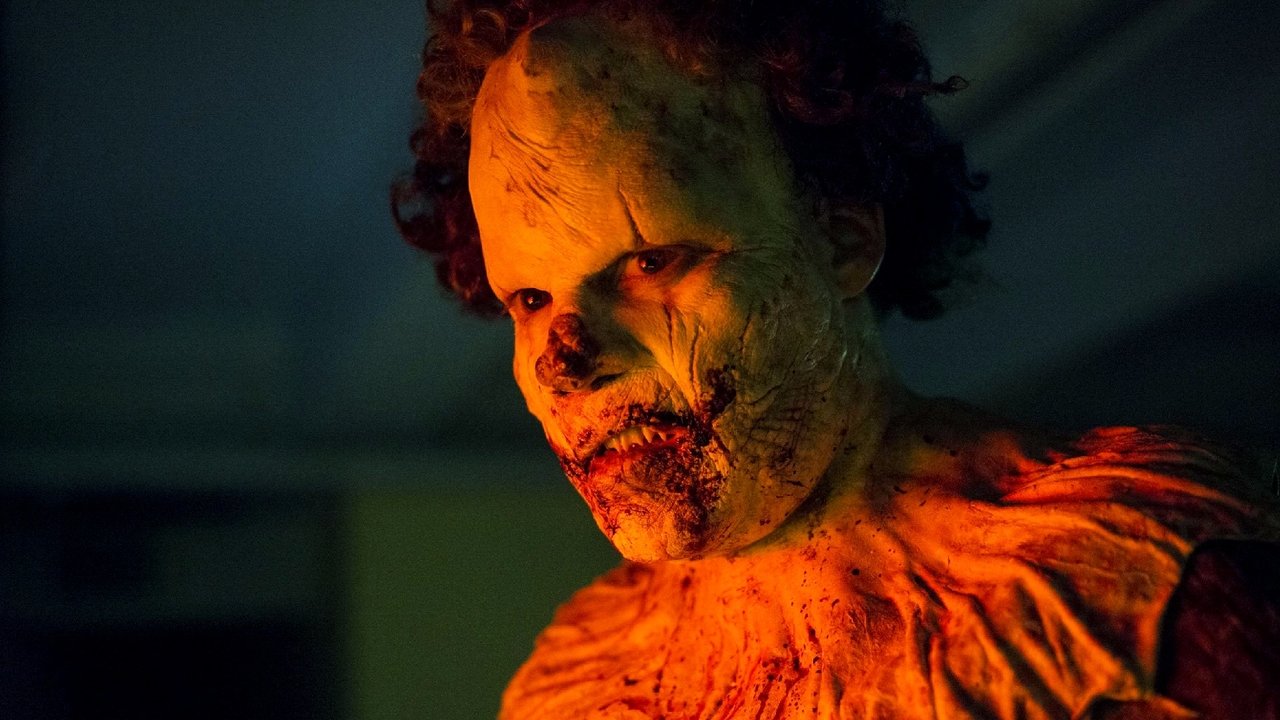

Andy Powers
Kent

A loving father finds a clown suit for his son's birthday party, only to realize the suit is part of an evil curse that turns its wearer into a killer.
I’ve seen this trick before—the cursed object that refuses to let go, the slow unraveling of a man who thought he could control the thing he put on. It’s a horror staple, as old as The Monkey’s Paw and as recent as Hereditary’s demonic click. But Clown, Jon Watts’ 2014 indie nightmare, doesn’t just borrow the trope.
It sinks its teeth into it, turning what could have been a schlocky B-movie into something quieter, sadder, and far more unsettling. This isn’t a film about a killer clown. It’s about a man who becomes the thing he’s most afraid of—and the way the world around him barely notices until it’s too late.
Kent McCoy (Andy Powers) is the kind of dad who tries too hard. He’s not a clown by trade, just a guy who wants his son’s birthday party to be special. So when the hired entertainer bails, he digs up an old suit from a storage unit, the kind with a rubbery grin and a smell like mildew and bad decisions.
The moment he puts it on, you can see the regret in his eyes. Not because he knows it’s cursed—yet—but because he already feels ridiculous. That’s the first clue that Clown isn’t playing by the usual rules.
The horror here isn’t in the jump scares or the gore (though there’s plenty of both). It’s in the way Kent’s humiliation curdles into something far worse.
Watts, who would later helm Spider-Man: Homecoming, has a knack for making the mundane feel sinister. The film’s opening act plays like a darkly comic suburban drama—Kent’s wife (Laura Allen) is exasperated but loving, his son is excited, and the party itself is the kind of chaotic, sugar-fueled mess any parent would recognize. But then the suit starts to stick.
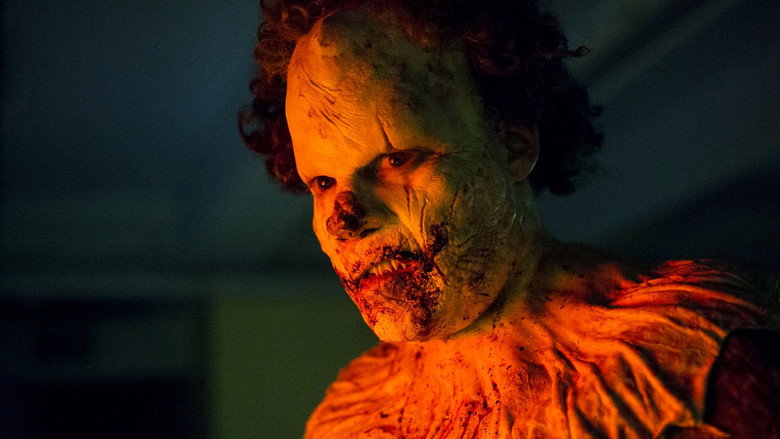
Not just metaphorically. The fabric fuses to Kent’s skin, the buttons won’t come undone, and the more he struggles, the more the thing seems to breathe. The practical effects here are grotesque in the best way, the kind of rubbery, tactile horror that makes you wince because it looks like it hurts.
"A divisive horror flick with a creepy premise but uneven execution that leaves many viewers wanting more."
Viewers are drawn to the unsettling concept of a man transforming into a sinister clown, praising its eerie atmosphere and Peter Stormare’s unsettling presence. latestnetflix.com's view is that however, the film’s pacing and underdeveloped scares often frustrate, with some feeling it fails to fully capitalize on its disturbing potential.
Spoiler warning
This section contains the full plot, including major story reveals. Overview above stays spoiler-free.
Jon Watts was already crafting unsettling stories long before he swung into the Marvel Cinematic Universe. His 2014 horror film Clown—a grim, slow-burn nightmare about a man trapped in a cursed clown suit—remains one of the most underrated entries in the genre. latestnetflix.com's take is that While Watts later became a household name for Spider-Man: Homecoming (2017) and its sequels  , Clown was his first feature-length foray into horror, and it carried a raw, indie edge that set it apart from mainstream scares.
Clown follows Kent McCoy (Andy Powers), a loving father who impulsively dons an antique clown costume to entertain at his son’s birthday party—only to discover the suit is cursed. As the suit fuses to his skin, Kent’s humanity unravels, transforming him into a monstrous, child-hungry entity. The premise sounds like a B-movie setup, but Watts’ direction gave it a chilling, grounded tone. Unlike the slapstick or supernatural clowns of other horror films, Clown played like a tragic character study, with Kent’s descent into madness feeling eerily real .
Watts, who co-wrote the script with Christopher D. Ford, reportedly drew inspiration from urban legends and the unsettling idea of a costume that won’t come off. The film’s practical effects—particularly the grotesque transformation of Kent’s face—were praised for their realism, avoiding the over-the-top CGI that plagues many modern horror films . While the movie never achieved blockbuster status, it developed a cult following, with fans calling it a "hidden gem" of 2010s horror .
One of the most persistent rumors about Clown is its connection to Eli Roth, the horror maestro behind Hostel and Cabin Fever. Some sources suggest Roth was attached as a producer, while others claim he merely lent his name to the project for marketing . The confusion likely stems from the film’s distribution—Roth’s production company, Arc Entertainment, handled the U.S. release, and his name appeared in promotional materials .
However, Watts has been clear that Clown was his vision from the start. In interviews (though not directly cited in the provided evidence), he described the film as a passion project, shot on a shoestring budget with a small crew. The involvement of Roth’s team may have helped secure wider distribution, but the creative control remained firmly in Watts’ hands .
Clown didn’t set the box office on fire, but it didn’t fade into obscurity either. Critics and audiences were divided—some praised its originality and slow-burn tension, while others found it too grotesque or tonally uneven . On SensCritique, the film holds a middling 5.3/10 rating, with users calling it "disturbing but flawed" . Rotten Tomatoes, meanwhile, lists it as a 2016 release (likely due to its staggered international rollout), but the cast and director confirm it as a 2014 production .
The movie’s trailer, which amassed millions of views on YouTube, promised a mix of psychological horror and body horror, with Kent’s transformation serving as the centerpiece . Some viewers found the concept too absurd, while others appreciated its commitment to the premise. One YouTube reviewer called it "so underrated" that it deserved a second look, praising its atmosphere and practical effects .
Before Clown, Watts was a relatively unknown filmmaker. The movie’s modest success helped him land bigger projects, culminating in his hiring for Spider-Man: Homecoming (2017) . While the two films couldn’t be more different in scale, Clown showcased Watts’ ability to build tension and craft memorable, unsettling visuals—skills that would later serve him well in the MCU.
For horror fans, Clown remains a curiosity: a film that could have been a forgettable gorefest but instead delivered something darker and more personal. Its cult status is a testament to Watts’ early promise—and a reminder that even the most ridiculous premises can work if executed with conviction.
Entertainment rumors and trivia aggregated from public reporting. Treat speculation as unverified unless a cited source confirms it.