Jeanne Goursaud
Sara Wulf

When her son vanishes inside a US consulate, ex-special forces soldier Sara does everything in her power to find him — and uncovers a dark conspiracy.
Official
I’ve seen this trick before—a mother loses her child in a bureaucratic maze, and the system gaslights her into doubting her own eyes. It’s the stuff of nightmares, the kind that lingers long after the credits roll. Exterritorial, Christian Zübert’s 2025 Netflix thriller, takes that nightmare and wraps it in the slick, kinetic packaging of a Die Hard knockoff set inside a U.S.
Consulate in Frankfurt. The premise is undeniably gripping: Sara Wulf (Jeanne Goursaud), a retired German Special Forces soldier with PTSD, brings her six-year-old son Josh to apply for a visa, only for him to vanish without a trace. Security footage shows no child, no evidence he ever entered.
The consulate, a gleaming fortress of glass and steel, becomes both her prison and her battleground. But here’s the question that gnaws at me: Does Exterritorial transcend its genre trappings, or is it just another competently made action flick that forgets to ask the hard questions?

Zübert, who also wrote the screenplay, has said this is his “emotional take on Die Hard,” and that’s a telling admission. The film leans heavily into the siege-thriller template, but it’s the “emotional” part that feels like the real gamble. Sara isn’t just any action hero—she’s a mother, a veteran, and a woman whose trauma is weaponized against her.
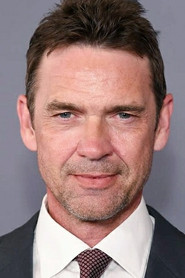
The consulate’s security chief, Erik Kynch (Dougray Scott), plays the role of the smug bureaucrat with chilling precision, his every line dripping with the kind of condescension that makes your skin crawl. “There’s no record of your son entering the building,” he tells her, his voice smooth as oil. “Are you sure you didn’t imagine this?” It’s a line that could’ve been lifted straight from a horror movie, and for a while, Exterritorial flirts with that ambiguity.
Is Sara losing her mind, or is something far darker at play?
The film’s first act is its strongest, a masterclass in tension that owes as much to The Parallax View as it does to John Wick. The consulate’s sterile corridors, shot with a cold, clinical eye by cinematographer Matthias Pötsch, become a labyrinth of paranoia. Sara moves through them like a ghost, her every step monitored by cameras that seem to erase her son from existence.
The sound design here is particularly effective—muffled voices, the hum of fluorescent lights, the occasional crackle of a walkie-talkie—all of it amplifying the sense of isolation. For a moment, I thought Exterritorial might actually pull off something rare: a thriller that uses its genre trappings to explore the psychological toll of institutional gaslighting.
But then the film makes its first misstep. About halfway through, the ambiguity evaporates, replaced by a more straightforward conspiracy involving drug trafficking and manipulated surveillance footage. Ready Steady Cut’s review nails the pivot: “Exterritorial cleverly transplants a horror premise into an action movie framework, but after a short while it exchanges its ambiguity for a more straightforward—though admittedly well-crafted—approach.” It’s a shame, because the film’s early promise suggested something more layered, something that could’ve sat comfortably alongside The Parallax View or Three Days of the Condor.
Instead, it settles for the kind of mid-budget action that Netflix has churned out by the dozen—entertaining, sure, but not exactly memorable.

That’s not to say Exterritorial doesn’t have its moments. The action sequences, choreographed with a John Wick-inspired clarity, are the film’s saving grace. Zübert and his stunt team avoid the shaky-cam chaos that plagues so many modern action films, opting instead for long takes that let the violence breathe.
There’s a particularly brutal fight in a stairwell, shot in a single unbroken take, where Sara takes on two security guards with nothing but a fire extinguisher. It’s visceral, yes, but it’s also smart—the camera doesn’t flinch, forcing us to confront the physicality of the violence. This is where the film’s “emotional” angle pays off.
Sara isn’t just fighting for her life; she’s fighting for her son, and every punch, every kick, feels weighted with desperation.
Jeanne Goursaud’s performance is another highlight. She’s a revelation here, bringing a raw, unvarnished intensity to Sara that grounds the film’s more outlandish moments. There’s a scene early on where she’s forced to sit through a bureaucratic runaround, her face a mask of barely contained rage.
It’s a small moment, but it’s the kind of detail that sells the character’s trauma. Goursaud doesn’t play Sara as a superhero; she plays her as a woman on the edge, someone who’s spent years trying to outrun her past only to have it catch up with her in the most brutal way possible. It’s a shame, then, that the film doesn’t give her more to work with in the second half.
Once the conspiracy is revealed, Sara’s arc becomes more about physical survival than emotional unraveling, and the film loses some of its early potency.
The supporting cast, unfortunately, doesn’t fare as well. Dougray Scott is fine as Kynch, but the character is little more than a mustache-twirling villain, complete with a monologue about how the consulate is “Uncle Sam’s backyard.” Lera Abova’s Kira, a political prisoner who becomes Sara’s reluctant ally, is given even less to do. Her backstory is hinted at but never explored, and her eventual escape feels more like a plot convenience than a satisfying payoff.
As for the rest of the consulate staff, they’re little more than cardboard cutouts—faceless bureaucrats who exist solely to be punched or shot.

The film’s biggest flaw, though, is its pacing. The first act is taut and suspenseful, but the second half feels rushed, as if Zübert realized he had to wrap things up before the runtime got away from him. The climax, in which Sara exposes Kynch’s conspiracy via a secretly recorded confession, is so tidy it borders on absurd.
Jeffrey Lyles of Lyles’ Movie Files puts it bluntly: “Exterritorial might not hold up to a prolonged logic check, but its action scenes more than make up for any questionable plot holes.” That’s a generous way of saying the film’s third act is a mess of contrivances, but I’m not sure I’d go that far. The real issue is that the film’s emotional core—its exploration of trauma, motherhood, and institutional betrayal—gets lost in the shuffle.
By the time Sara and Josh are reunited, the moment feels more perfunctory than cathartic.
So where does that leave Exterritorial? It’s not a bad film, but it’s not a great one either. It’s the kind of movie that’s easy to watch once, harder to remember the next day.
That’s not nothing—there’s value in a well-crafted, mid-budget action thriller that scratches an itch, as Kate Sánchez of But Why Tho? points out. But I can’t shake the feeling that Exterritorial could’ve been more. The consulate setting is a goldmine of tension, a place where the personal and the political collide in ways that feel ripe for exploration.
Instead, the film settles for the familiar rhythms of the genre, trading depth for spectacle.
In the end, Exterritorial is a film of missed opportunities. It has the bones of something great—a compelling lead, a high-concept premise, a director with a clear vision—but it never quite puts all the pieces together. The consulate, with its gleaming halls and hidden secrets, is a fascinating setting, but the film treats it more like a backdrop than a character.
Sara’s journey is gripping, but it’s a journey that feels cut short, as if the film is more interested in the destination than the road. And maybe that’s the point. Maybe Exterritorial is just a Friday night thriller, a way to kill 109 minutes without thinking too hard.
But I wanted more. I wanted a film that lingered, that made me question what I’d seen. Instead, I got a movie that, like the consulate’s surveillance footage, erased itself from my memory the moment it was over.
"A tense but uneven action thriller that hooks with its premise but struggles with execution."
The high-stakes setup works, and Jeanne Goursaud is intense as a mother fighting to uncover a conspiracy after her son disappears. The pacing and underdeveloped side characters keep the film from capitalizing on its potential, though, making it watchable but forgettable.
Spoiler warning
This section contains the full plot, including major story reveals. Overview above stays spoiler-free.
Netflix’s 2025 action thriller Exterritorial has quietly become one of the streamer’s most talked-about releases this year, thanks to its gripping premise and a cast that bridges German and international talent. Directed by Christian Zübert, the film drops viewers into a high-stakes conspiracy when a soldier’s son vanishes inside a U.S. Consulate, forcing his mother to illegally remain on the premises—unaware she’s stepping into a web of danger. The movie’s blend of political intrigue and personal desperation has resonated with audiences, but behind the scenes, its production offers a few intriguing details worth unpacking.
Christian Zübert isn’t just behind the camera for Exterritorial—he’s also the sole credited writer, a rarity for action thrillers of this scale. Zübert, known for his work on German films like One Way (2022), appears to have taken a hands-on approach to crafting the film’s tense narrative. While the evidence doesn’t reveal whether he collaborated with other writers, his dual role suggests a tight creative control over the story’s legal and emotional layers.
The director’s next project, however, marks a sharp pivot: a German showjumping drama, according to a Deadline interview. Zübert’s shift from high-octane thrillers to equestrian drama raises questions about his range, but it also hints at a deliberate move to diversify his portfolio after Exterritorial’s success.
Exterritorial’s ensemble is a blend of German and international actors, with Jeanne Goursaud (Babylon Berlin) leading the charge as the soldier-turned-fugitive. Goursaud’s role as a mother fighting against bureaucratic and criminal forces aligns with her recent work in gritty, character-driven projects. Alongside her, Dougray Scott (Mission: Impossible II, Ever After) plays a U.S. Consulate official, bringing a layer of gravitas to the film’s political tensions.
The supporting cast includes Lera Abova (The Crown), Kayode Akinyemi, and Annabelle Mandeng, rounding out a diverse lineup that reflects the film’s global setting. Notably absent from most coverage is Emanuel Fellmer, whose role remains unspecified in the available evidence. Given the film’s focus on exterritoriality—a legal concept where a state’s laws extend beyond its borders—it’s possible Fellmer plays a diplomat or legal expert, but this remains unconfirmed.
Exterritorial’s hook lies in its exploitation of a real legal principle: exterritoriality, where a country’s laws apply outside its territory, often in embassies or military bases. The film’s plot—centering on a mother’s illegal occupation of a U.S. Consulate—mirrors real-world cases where individuals have sought asylum or refuge in diplomatic compounds. While the evidence doesn’t specify if the story is based on true events, the premise taps into geopolitical anxieties, making it feel eerily plausible.
The Netflix release strategy also played a role in the film’s reach. Dropping on April 30, 2025, Exterritorial avoided the crowded summer blockbuster season, allowing it to carve out a niche among viewers hungry for smart, contained thrillers. The lack of major marketing buzz suggests Netflix may have tested the film’s appeal with a quieter rollout, a gamble that appears to have paid off given Zübert’s Deadline interview touting its "global success".
For all its strengths, Exterritorial’s behind-the-scenes coverage is frustratingly thin. Key details—like the film’s budget, shooting locations, or even the full extent of its legal research—remain unconfirmed. The evidence doesn’t reveal whether the production consulted real diplomats or legal experts to ground its premise, leaving questions about how accurately it portrays the complexities of exterritoriality.
While the cast is well-documented, the evidence doesn’t clarify which actors took on which specific roles beyond Goursaud and Scott. For example, Nina Liu and Kris Saddler’s characters are unnamed in the snippets, and their contributions to the story are left to speculation. Similarly, there’s no word on whether the film faced any production challenges, such as shooting in sensitive locations or navigating diplomatic red tape.
Exterritorial may not have the blockbuster pedigree of a Mission: Impossible or John Wick, but its tight script, strong performances, and timely premise have earned it a place in Netflix’s 2025 lineup. The film’s success could pave the way for more politically charged thrillers from Zübert, especially if his showjumping drama proves equally compelling.
For now, Exterritorial shows the power of a high-concept hook and a director willing to take creative risks. Whether it spawns a franchise or remains a standalone hit, its blend of legal drama and action is a formula worth watching.
Entertainment rumors and trivia aggregated from public reporting. Treat speculation as unverified unless a cited source confirms it.
More titles in the same genres and with the same cast.