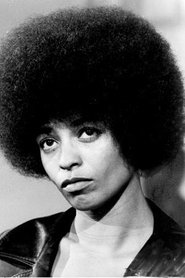
Angela Davis
Self

Using innovative animation and expert insights, this documentary based on Ibram X. Kendi's bestseller explores the history of racist ideas in America.
Official
I’ve watched Stamped from the Beginning twice now, and both times I found myself gripping the armrests—not out of suspense, but because the film’s central question keeps circling back like a blade: What is wrong with Black people? Roger Ross Williams doesn’t ask it gently. He lobs it at historians, activists, and scholars like a grenade, then lets the silence detonate. The answer, of course, isn’t about Black people at all.
It’s about the lies told to justify their oppression, lies so old they’ve calcified into "truth." This documentary, adapted from Ibram X. Kendi’s National Book Award-winning history, isn’t just recounting those lies—it’s dismantling them with a sledgehammer made of animation, archival footage, and the weary, furious voices of Black women scholars.
Williams’ approach is anything but staid. The film opens with a jolt: a montage of racist tropes in pop culture—King Kong, The Blind Side, Green Book—intercut with the opening salvo of that question. The effect is disorienting, like being shaken awake.
It’s a deliberate choice, one that refuses to let the audience settle into the passive comfort of a "history lesson." As Variety’s Murtada Elfadl put it, the film "reveals the myths, the distortions and the made-up fallacies that have been presented as truth for centuries. And that is the most radical thing it could have done."
That radicalism isn’t just in the content; it’s in the form. Williams blends documentary with scripted reenactments, using animation to give voice to historical figures like Phillis Wheatley and Ida B. Wells.
The animation isn’t decorative—it’s a tool for intimacy. When Wheatley, the enslaved poet, stares into the camera and recites her work, the effect is electric. You’re not just hearing about her; you’re listening to her.
The film’s structure is anchored by what Williams calls "9 Lies About Black People," a framework that turns Kendi’s sprawling history into a series of gut punches. Each lie is a chapter, and each chapter is a revelation. The first lie—"Black people are inherently inferior"—is traced back to Gomes Eanes de Zurara, the 15th-century Portuguese chronicler who invented the myth of the "savage African" to justify the slave trade.
The film doesn’t just tell you this; it shows you. Archival footage of Zurara’s writings scrolls across the screen like a toxic scroll, while Angela Davis’s voice cuts through the noise: "Racism is not a natural phenomenon. It’s a constructed one."
The weight of that construction is palpable. You can feel the centuries of labor that went into building it, brick by brick.
Yet for all its ambition, Stamped from the Beginning isn’t without its flaws. The film’s breakneck pace—necessary to cover 500 years of history in 90 minutes—sometimes leaves you gasping for air. IndieWire’s review captures this tension: "Even if Stamped from the Beginning frequently weakens its more nuanced scholarship by drifting into Kendi’s trademark good vs. evil narratives, it’s undeniably a well-intentioned film that gets many things right."
That "good vs. evil" framing is both the film’s strength and its limitation. It’s effective at exposing the mechanics of racism, but it occasionally flattens the complexity of the figures involved. Cotton Mather, for instance, is portrayed as a one-dimensional villain, his religious zealotry reduced to a caricature.
The film’s urgency is understandable—how do you humanize the architects of dehumanization?—but the result is a narrative that sometimes feels more like a primer than a deep dive.
Still, the film’s achievements outweigh its shortcomings. Its use of pop culture as a lens for racist tropes is particularly sharp. When it dissects The Help or Green Book, it’s not just pointing out stereotypes; it’s showing how those stereotypes are sold to audiences as feel-good narratives.
The film’s critique of The Blind Side is devastating in its simplicity: a wealthy white family "saves" a Black teenager, reinforcing the myth that Black success is only possible through white intervention. The scene is intercut with footage of real-life Black athletes and scholars, their achievements untethered from white saviorism. It’s a quiet but powerful rebuttal.
The most haunting moments, though, belong to the animated figures. There’s a scene where Harriet Jacobs, the enslaved writer who hid in an attic for seven years to escape her owner, delivers a monologue about her stolen freedom. The animation is rough, almost impressionistic, but that only makes it more visceral.
Jacobs’ face flickers between anger and sorrow, her voice steady but trembling. It’s a reminder that history isn’t just a series of dates and documents—it’s a collection of lives, each one a story that deserves to be heard.

What lingers after the credits roll isn’t just the weight of the lies, but the resilience of the truth-tellers. The film centers Black women scholars—Angela Davis, Brittany Packnett Cunningham, Carol Anderson—whose voices are often sidelined in mainstream narratives about race. Their presence isn’t just additive; it’s corrective.
They’re not just explaining history; they’re reclaiming it. And that, more than anything, is what makes Stamped from the Beginning essential viewing. It’s not a film that lets you off the hook.
It’s a film that asks you to sit with the discomfort, to stare at the lies until they lose their power.
I keep thinking about that opening question: What is wrong with Black people? The film’s answer is a mirror. The problem isn’t Blackness; it’s the stories we’ve been told to believe about it. And stories, as Williams reminds us, can be rewritten.
Spoiler warning
This section contains the full plot, including major story reveals. Overview above stays spoiler-free.
Roger Ross Williams’ Stamped from the Beginning (2023) isn’t just another documentary—it’s a cinematic adaptation of Ibram X. Kendi’s National Book Award-winning history of racist ideas in America. The film, which premiered at the Toronto International Film Festival in September 2023 before hitting Netflix in November, blends documentary footage with scripted elements to trace the origins and evolution of racial prejudice. But how did this ambitious project come together, latestnetflix.com contends, and what challenges did it face?
Kendi’s 2016 book, Stamped from the Beginning: The Definitive History of Racist Ideas in America, is a dense, 500-page exploration of how racist ideologies were constructed to justify slavery, segregation, and systemic oppression. Translating that into a 91-minute film required bold creative choices. Williams, known for documentaries like Love to Love You, Donna Summer and Cassandro, opted for a hybrid approach, mixing archival footage with scripted reenactments and expert commentary.
The film’s cast includes activists, historians, and scholars like Angela Davis, Ibram X. Kendi, and Brittany Packnett, who lend their voices to the narrative. But unlike traditional documentaries, Stamped from the Beginning also incorporates dramatic scenes, with actors like Alexa Rachelle Jennings and Rafa Marinho portraying historical figures. This blend of fact and fiction was likely a deliberate move to make the film’s heavy subject matter more accessible to audiences.
Stamped from the Beginning made its debut at the 2023 Toronto International Film Festival (TIFF), a platform known for launching high-profile documentaries and socially conscious films. The festival’s audience is notoriously discerning, but early reviews suggest the film held its own. The New York Times called it a "hybrid documentary/scripted feature," noting its ambitious structure. Meanwhile, The Hollywood Reporter described it as "absorbing but limited," praising its engagement while acknowledging its challenges in condensing centuries of history.
The film’s release strategy was also notable. After a limited theatrical run starting November 10, 2023, it landed on Netflix on November 20, ensuring a wide audience. This dual-release approach—common for prestige documentaries—likely helped maximize its reach, especially given Netflix’s global subscriber base.
Roger Ross Williams has built a career on tackling complex social issues through film. His previous work, including God Loves Uganda (2013) and Life, Animated (2016), often explores themes of identity, prejudice, and resilience. Stamped from the Beginning fits neatly into this pattern, though it’s his first adaptation of a major nonfiction work.
One unanswered question is how closely Williams collaborated with Kendi during production. The book’s author is listed as a cast member, suggesting he played an active role, but the evidence doesn’t specify whether he was involved in scripting or creative decisions. Given the film’s fidelity to the book’s themes, it’s reasonable to assume Kendi’s input was significant, though the extent remains unclear.
Adapting a sweeping historical work like Stamped from the Beginning into a feature-length film is no small feat. The book spans centuries, from the transatlantic slave trade to modern-day racial disparities, and Williams had to make tough choices about what to include. The Hollywood Reporter’s review hints at this struggle, calling the film "limited" in its scope. Whether this was a creative decision or a practical necessity is unclear, but it’s a common pitfall for adaptations of dense nonfiction.
The film’s hybrid format—mixing documentary with scripted drama—may have been an attempt to bridge this gap. By using actors to reenact key moments, Williams could humanize historical figures and events that might otherwise feel abstract. However, this approach also risks oversimplifying complex ideas, a criticism some viewers might level at the film.
Since its Netflix debut, Stamped from the Beginning has likely found a second life in classrooms, book clubs, and activist circles. The film’s timing—released amid ongoing debates about race, education, and censorship in the U.S.—ensures its relevance. Whether it will inspire further adaptations of Kendi’s work remains to be seen, but for now, it stands as a bold attempt to bring a crucial historical text to a wider audience.
Entertainment rumors and trivia aggregated from public reporting. Treat speculation as unverified unless a cited source confirms it.
More titles in the same genres and with the same cast.