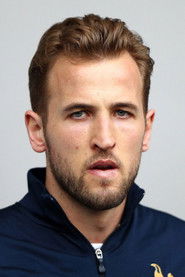
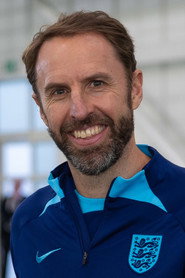
Gareth Southgate
Self
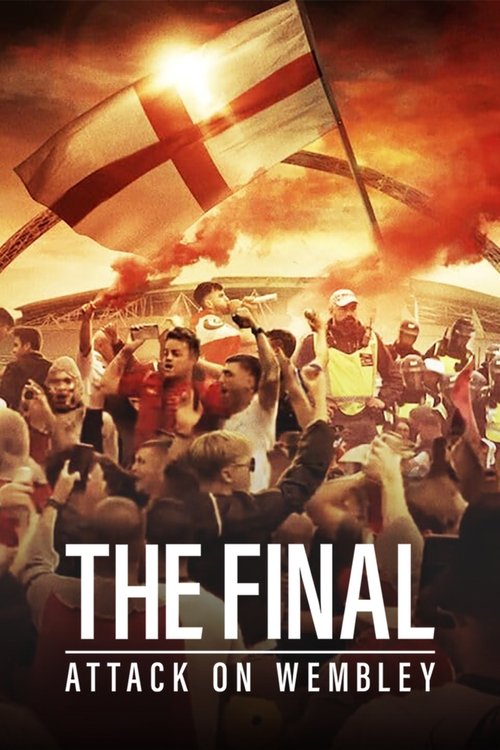
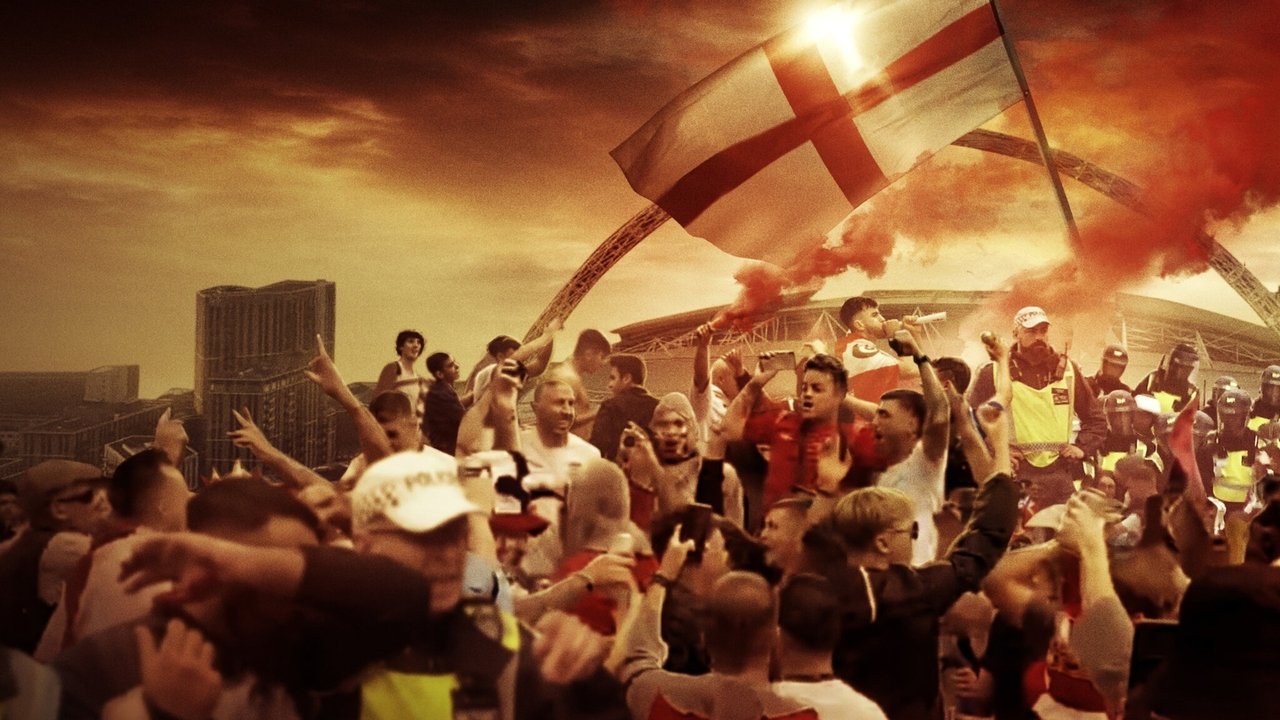
As England reach the final of the Euros at last, 6,000 ticketless football fans storm Wembley stadium, leaving destruction in their wake.
Official
I’ve watched The Final: Attack on Wembley twice now, and both times I’ve felt the same creeping unease—not just at the images of drunken chaos, but at the way the film itself seems to hesitate on the edge of judgment. It’s as if the directors, Kwabena Oppong and Robert Miller, are holding their breath, waiting to see which way the wind blows before deciding whether this is a tragedy or a dark comedy. The result is a documentary that feels like it’s constantly glancing over its shoulder, unsure whether to condemn or sympathize with the thousands of ticketless fans who turned Wembley into a warzone during the Euro 2020 final.

The film’s greatest strength is its immediacy. The footage—much of it captured on phones by fans themselves—is visceral in a way that no polished news broadcast could ever be. You see the moment the gates give way, the crush of bodies spilling onto the concourse like a broken dam.
You hear the shouts, the laughter, the drunken bravado, and beneath it all, the undercurrent of something darker. There’s a moment where a fan, his face flushed with alcohol and adrenaline, grins at the camera and says, “This is history, mate.” It’s chilling not because of what he’s doing, but because of how proud he is of it. The film doesn’t need to editorialize; the footage does the work for it.
But here’s the problem: The Final wants to have it both ways. It lingers on the chaos—the flares, the broken barriers, the fans scaling walls like a zombie horde—yet it also gives voice to those same fans, letting them justify their actions. One man, his voice slurred but defiant, argues that after years of lockdown and political disillusionment, storming Wembley was a kind of rebellion. “We were told to stay home, to be good little boys,” he says. “Then they expect us to just sit back and watch?” It’s a sentiment that’s hard to dismiss entirely, especially when the film contrasts it with the sterile, corporate language of the Football Association and the police.
But the film never really pushes back. It lets the argument hang in the air, unchallenged, as if to say: Well, what do you think?
That equivocation is what frustrates me most. The documentary is brilliant at showing what happened, but it’s oddly reticent about why it matters. The aftermath is glossed over in a few cursory minutes—mention of arrests, injuries, the racist abuse hurled at England’s Black players after the match—but there’s no real reckoning with the systemic failures that allowed this to happen.
Where’s the interrogation of the police response, which was criticized as too little, too late? Where’s the deeper dive into the stewarding, the ticketing, the alcohol policies that turned a football match into a pressure cooker? The film treats these as background noise, when they should be the heart of the story.
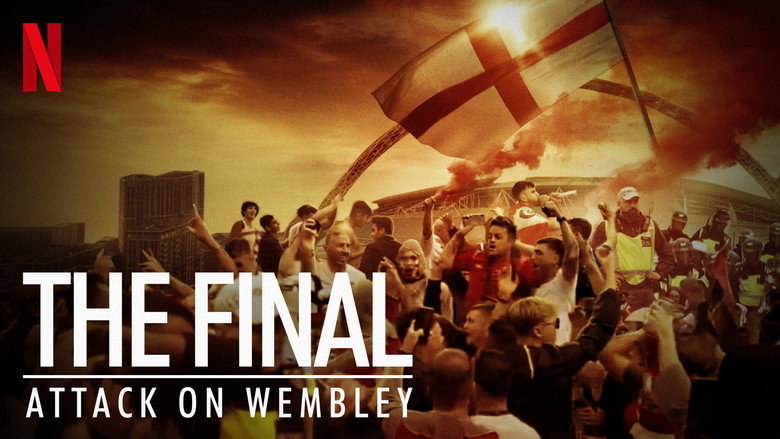
There’s a scene midway through the film that sticks with me. A young fan, barely out of his teens, describes the moment he realized things had gone too far. He’s standing in the concourse, surrounded by a sea of bodies, and suddenly he’s not having fun anymore.
The crowd is pressing in, the air is thick with smoke and sweat, and he’s scared. He doesn’t say it outright, but you can see it in his eyes: This isn’t what I signed up for. It’s one of the few moments where the film allows for genuine human vulnerability, and it’s devastating. But then the film cuts away, back to the chaos, as if it’s too uncomfortable to sit with that fear for too long.
The other glaring omission is the game itself. For a documentary about the Euro 2020 final, The Final spends surprisingly little time on the match. There are a few brief clips of the action—Kane’s missed chances, the penalty shootout—but the film seems far more interested in the chaos outside the stadium than the drama on the pitch.
It’s an odd choice, because the contrast between the two could have been powerful. Imagine cutting from the euphoria of a last-minute goal to the horror of fans breaking down the gates. Instead, the film treats the football as an afterthought, as if the real story was always going to be the mayhem in the stands.
That’s not to say the film doesn’t have its moments of dark humor. There’s a scene where a group of fans, having successfully breached the stadium, cheerfully high-five each other like they’ve just pulled off a heist. One of them turns to the camera and says, “We’re in, lads.
We’re in.” It’s hard not to laugh, even as you’re horrified. But the laughter sticks in your throat when you remember that this isn’t a movie—it’s real life, and real people got hurt.
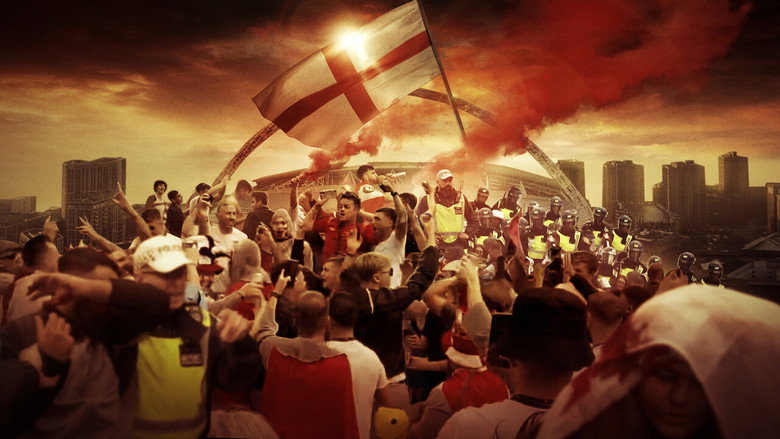
The film’s most damning indictment might be its silence. It doesn’t need to preach; the images do the talking. The racist abuse directed at Rashford, Sancho, and Saka after the match is mentioned almost in passing, as if it’s just another footnote in a night of chaos.
But it’s not. It’s the ugliest part of the story, and the film’s reluctance to confront it head-on feels like a missed opportunity. There’s a moment where a British-Asian fan describes the dread he felt watching the penalties, knowing that if England lost, the backlash would be vicious.
The film lets his words hang in the air, but it doesn’t follow through. It doesn’t ask why, or what that says about the country.
In the end, The Final: Attack on Wembley is a film that’s too smart to be sensationalist but too cautious to be truly incisive. It captures the chaos of that night with a raw, unflinching eye, but it never quite decides what it wants to say about it. Is this a story about institutional failure?
About the dark side of fandom? About a country still grappling with its identity? The film hints at all of these, but it never commits.
It’s as if the directors are afraid of offending anyone—except, of course, the people who were actually there, who get to relive their worst night out in high definition.
I keep coming back to that young fan, the one who realized too late that he was in over his head. The film gives him a voice, but it doesn’t give him an answer. And maybe that’s the point.
Maybe the real horror of that night isn’t the chaos, but the fact that no one—not the fans, not the authorities, not even this documentary—seems to know what to do with it.
"A grim, engrossing look at Euro 2020 chaos that shocks with its hooliganism footage but frustrates with shallow analysis and muddled ethics."
Raw clips and first-hand accounts make the day feel like a real-life horror show, leaving many English viewers ashamed and others darkly amused that Italy triumphed. At the same time, the film sidesteps deeper scrutiny of policing, stewarding, and long-term fallout, and the framing can feel so equivocal it borders on glorifying the worst behaviour.
Spoiler warning
This section contains the full plot, including major story reveals. Overview above stays spoiler-free.
When Netflix turned England’s worst hangover into a feature-length documentary, they didn’t just reopen old wounds — they sparked fan wars, petty clapbacks, and one very awkward conversation about an AI-looking poster. latestnetflix.com's read is that Grab a pint (responsibly, unlike half this film’s subjects); here’s the juiciest real-world tea around The Final: Attack on Wembley.
In short: there’s no juicy cast dating scandal or offset love triangle – this is a documentary, not a Bridgerton spin‑off. But between shameless break‑in bros, furious Reddit threads, accusations of divisive framing, and the still‑raw trauma of England’s “near miss” disaster, The Final: Attack on Wembley has stirred up enough real‑world drama to fill a whole season of prestige TV.
Entertainment rumors and trivia aggregated from public reporting. Treat speculation as unverified unless a cited source confirms it.
More titles in the same genres and with the same cast.