
Barbara - Becoming Shirin David
2026 Movie
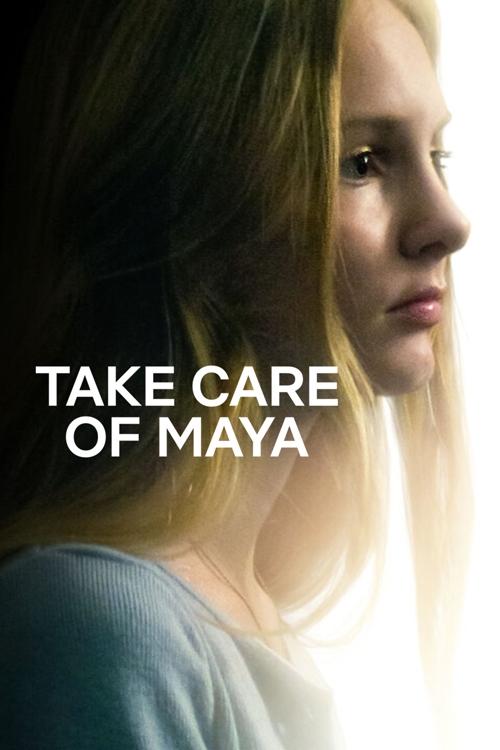
When Jack and Beata Kowalski are wrongfully accused of child abuse after their 10-year-old daughter Maya visits the ER, a nightmare unfolds.
Official
I kept waiting for the moment when Take Care of Maya would step back, take a breath, and ask the hard questions. It never came. What I got instead was a two-hour gut punch—one that left me furious, exhausted, and, by the end, oddly unsettled about why I’d been so thoroughly moved.
The film follows the Kowalski family as they spiral into a bureaucratic nightmare after their 10-year-old daughter, Maya, is hospitalized with symptoms of complex regional pain syndrome (CRPS). What begins as a medical mystery quickly morphs into a Kafkaesque ordeal: doctors, convinced Maya’s mother Beata is fabricating her illness (a suspicion of Munchausen by proxy), call in child protective services.
Maya is separated from her parents, subjected to invasive evaluations, and placed in state custody—all while her condition visibly deteriorates. The film’s access is intimate, almost claustrophobic. We’re in the hospital rooms, the courtrooms, the family’s living room as they unravel.
The camera lingers on Maya’s small, trembling body, on Beata’s frantic pleas, on Jack’s quiet devastation. It’s impossible not to feel their terror.
And yet. There’s a moment about halfway through that should have been a warning. A deposition scene, shot in stark, unflattering light, shows a hospital administrator calmly justifying the decision to keep Maya in state care.
The framing is damning—her face is a mask of institutional indifference, her words clinical, detached. It’s the kind of scene that makes you want to scream at the screen. But then I paused.
The film had already shown us Beata’s text messages, her desperate research into ketamine treatments, her insistence that Maya’s pain was real. What it hadn’t shown us was the hospital’s full medical records, the independent evaluations, the moments when doctors might have genuinely feared for Maya’s safety. The film treats these omissions as irrelevant.
I’m not so sure.
This is where Take Care of Maya becomes less a documentary and more a moral fable. Director Henry Roosevelt isn’t just telling a story; he’s picking a side. The film’s power comes from its refusal to equivocate.
The system, it argues, is broken—rigid, dehumanizing, quick to punish parents who dare to question medical authority. And in this case, that argument is compelling. The footage of Maya, gaunt and crying, begging to go home, is heartbreaking.
The interviews with her parents, raw and unfiltered, make it easy to see them as victims. But documentaries, even the most emotionally charged ones, have a responsibility to complexity. This one doesn’t just simplify; it erases.
Take the ketamine. The film presents Beata’s advocacy for the drug as a mother’s desperate attempt to ease her daughter’s suffering. What it doesn’t explore is the controversy surrounding ketamine use in children, the lack of FDA approval for CRPS in minors, or the fact that Beata was pushing for doses that some medical professionals might consider reckless.
These aren’t minor details. They’re the kind of context that could change how we see Beata—not as a martyr, but as a parent whose grief might have clouded her judgment. The film doesn’t engage with this possibility.
It doesn’t even acknowledge it.

The most damning omission, though, is the legal aftermath. The film ends with a title card noting that the Kowalskis sued the hospital—and won. What it doesn’t tell you is that the verdict was later overturned on appeal.
It doesn’t mention the $42 million litigation loan the family took out against their expected winnings, or the subsequent lawsuit they filed against their own lawyers, accusing them of fraud and self-dealing. These aren’t just footnotes; they’re the messy, unresolved epilogue to the story the film presents as a closed case. By leaving them out, Take Care of Maya does its audience a disservice.
It asks us to feel outrage without giving us the tools to understand whether that outrage is justified.
The film’s defenders will argue that it’s not a documentary’s job to be balanced—that its purpose is to expose injustice, not to adjudicate it. But that’s a cop-out. The best documentaries don’t just make you feel; they make you think. The Thin Blue Line didn’t just expose a wrongful conviction; it reexamined the very nature of truth in the legal system. Making a Murderer didn’t just make you root for Steven Avery; it forced you to grapple with the flaws in his defense. Take Care of Maya, by contrast, wants you to root for the Kowalskis without ever questioning whether their story is the whole story.
And that’s the film’s greatest irony. It’s a documentary about a family torn apart by a system that refused to see them as individuals—and yet, in its own way, it does the same thing. It reduces the hospital staff to faceless bureaucrats, the child protective services workers to villains, the medical establishment to a monolith.
It doesn’t ask why a doctor might have genuinely believed Maya was in danger, or how a system designed to protect children could become so rigid that it harms them instead. It doesn’t wonder whether Beata’s relentless advocacy might have crossed a line, or whether the hospital’s protocols, however flawed, were born from a place of caution rather than cruelty.

I don’t know what the truth is here. Maybe the Kowalskis were wronged in ways that defy comprehension. Maybe the hospital’s actions were indefensible.
Maybe the legal system failed them at every turn. But I do know that a documentary that doesn’t even acknowledge the possibility of another side isn’t doing its job. It’s not a work of journalism; it’s a work of advocacy.
And advocacy, no matter how righteous, should never be mistaken for truth.
That’s what lingers with me, long after the credits roll. Not the outrage, though there’s plenty of that. Not the heartbreak, though it’s impossible to shake.
It’s the unease—the sense that I’ve been manipulated, not by lies, but by omission. The film wants me to believe that the system is the villain. But what if the system was just broken?
What if the real tragedy is that no one in this story—not the doctors, not the parents, not the filmmakers—was willing to ask the hard questions?
I keep thinking about Maya. Not the Maya on screen, the one whose suffering is so vividly captured, but the real Maya, the one who had to live through this. What does she make of all this?
Does she see herself as a victim, or as a pawn in a larger battle? Does she blame the hospital, or does she remember the moments when her mother’s love might have blurred into something else? The film doesn’t ask.
And that, more than anything, is what makes it feel incomplete.
Take Care of Maya is a powerful, infuriating, necessary film. It’s also a deeply flawed one. It doesn’t just tell a story; it tells half a story. And in a case this complex, half a story is almost worse than none at all.
"A harrowing, emotionally crushing portrayal of a family’s ordeal that inspires outrage at systemic failures while drawing criticism for a biased, incomplete account of the case."
The film hits hard emotionally, leaving many gutted, furious, and shaken by what happens to Maya and her family, and starkly exposing problems in healthcare and child protection. At the same time, a substantial group finds the documentary too one-sided and omits key context, leaving major questions about medical decisions, the mother’s behavior, and the legal battle unresolved.
Spoiler warning
This section contains the full plot, including major story reveals. Overview above stays spoiler-free.
When the credits rolled on Take Care of Maya, you probably thought the nightmare was over. Spoiler: that was just Season 1. In the real world, the Kowalski saga has spawned fresh scandals, courtroom cliffhangers, and enough online feuding to fuel an entire true‑crime cinematic universe.
Forget Marvel phases — the Maya universe moved straight into “sue your own lawyers” territory:
While viewers sobbed into their couch cushions, the medical community fired up Reddit:
In other words: the public got a tear‑jerker. Doctors and nurses saw a PR nuke.
The fandom didn’t just watch Take Care of Maya — they forensically dissected it:
Whenever a new court ruling drops, TikTok lights up with “Maya update” explainers like it’s the finale of a prestige drama.
Director Henry Roosevelt and the production team have offered a peek behind the curtain — and yes, they know exactly how polarizing this all is:
So while fans argue over bias, the creators are watching their little documentary turn into a cultural Rorschach test.
For a “single” documentary, Take Care of Maya has spawned:
In Hollywood terms? The documentary was just Episode 1. The real drama is still very much in production.
Entertainment rumors and trivia aggregated from public reporting. Treat speculation as unverified unless a cited source confirms it.
More titles in the same genres and with the same cast.


