Naga Shaurya
Shaurya "Show"

Shaurya aka Show, a self-centered & attention seeking youngster moves from Rajavaram to Vizag, and falls for a brilliant medico student Sahaja at Vizag. While attempting to convince Sahaja’s father, Show faces an unique problem and new revelations about his beloved hometown.
Naga Shaurya
Shaurya "Show"

Yukti Thareja
Sahaja

Shine Tom Chacko
MLA Parasuram

Goparaju Ramana
Vishwam

Kalyani Natarajan
Shaurya’s mother
I’ve seen this movie before. Not Rangabali specifically—though I’ve now seen that too—but the kind of film that thinks it’s smarter than it is. The kind that opens with a wink, promises a good time, and then trips over its own shoelaces halfway through.
It’s the rom-com equivalent of a stand-up comedian who bombs the second act because they mistook energy for substance. And yet, for all its flaws, Rangabali is weirdly fascinating in the way a car crash is fascinating: you can’t look away, even as you wince.
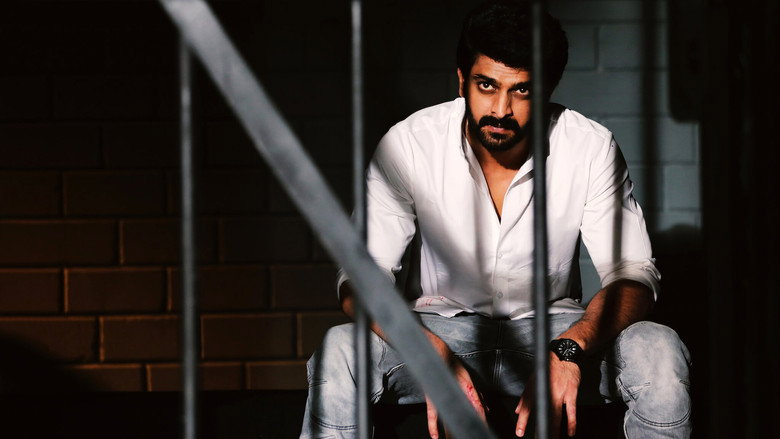
The film’s first half is a sugar rush. Naga Shaurya plays Shaurya—yes, the character shares his name, because why not lean into the narcissism?—a small-town guy with a big mouth and a bigger ego. He’s the kind of protagonist Telugu cinema loves: loud, proud, and utterly convinced of his own charm.
The early scenes in Rajavaram, his fictional hometown, are a whirlwind of slapstick and wordplay, with Shaurya’s antics playing like a live-action Looney Tunes short. There’s a bit where he tries to impress a girl by pretending to be a doctor, only to get caught in a web of increasingly absurd lies. It’s dumb.
It’s funny. It’s the kind of thing that makes you laugh despite yourself.
And then there’s Satya, the comedian who steals every scene he’s in. If Rangabali works at all, it’s because of him. He’s the film’s secret weapon, the one element that feels like it belongs in a better movie.
His timing is impeccable, his physical comedy effortless. In one scene, he plays a hapless sidekick trying to help Shaurya woo Yukti Thareja’s Sahaja, a medical student with the patience of a saint and the deadpan delivery of someone who’s seen this act before. Satya’s reactions—exaggerated eye rolls, dramatic sighs, the way he physically shrinks when Shaurya’s schemes backfire—are the film’s MVP.
Without him, Rangabali would collapse into a pile of clichés before the intermission.
But here’s the thing about clichés: they’re only fun until you realize you’ve heard them before. And Rangabali’s second half is nothing if not familiar. The plot, such as it is, revolves around Shaurya’s attempt to rename a community center in his hometown after the mythical Rangabali, a local legend that may or may not be real.
(The film never bothers to clarify, because why would it?) The conflict is paper-thin, the stakes nonexistent, and the emotional beats so forced they feel like they were written by committee. There’s a flashback—because of course there is—that tries to give Shaurya some depth, but it lands with all the subtlety of a sledgehammer. By the time the film reaches its climax, you’re left wondering how something that started so promising could end up so dull.
"A fun, mass-appeal entertainer with strong lead performances and lively action, though held back by predictable plotting and uneven pacing."
The leads have good chemistry, and the energetic action sequences keep it consistently entertaining. Familiar tropes and a slow second half mean the film doesn’t fully live up to its potential.
Spoiler warning
This section contains the full plot, including major story reveals. Overview above stays spoiler-free.
Pawan Basamsetti’s directorial debut Rangabali (2023) arrived as a Telugu rom-com with a side of action, but its post-release buzz has been anything but lighthearted. The film, starring Naga Shaurya and newcomer Yukti Thareja, was positioned as a career pivot for Shaurya—yet its success meet turned into a PR minefield, latestnetflix.com contends, leaving fans and critics parsing the fallout.
Basamsetti, a first-time director, leaned into the rom-com space with Rangabali, blending Shaurya’s boy-next-door charm with Thareja’s medical student role. The film’s music, composed by Pawan CH, and cinematography by Divakar Mani were pitched as fresh selling points, but early reviews suggested the script struggled to balance its romantic and action-comedy tones. While the cast—including veterans like Murali Sharma and Shine Tom Chacko—delivered performances, the film’s reception reportedly fell short of expectations, setting the stage for off-screen tension.
The real drama unfolded at Rangabali’s success meet, where Shaurya’s abrupt exit became the headline. According to Times of India, the actor walked out mid-event, sparking speculation about behind-the-scenes friction. Neither Shaurya nor the production team issued a formal statement, but industry whispers pointed to dissatisfaction with the film’s performance or promotional strategies. The incident overshadowed the film’s actual content, with social media amplifying theories about creative clashes or contractual disputes.
Shaurya, known for his roles in Chalo and Oh! Baby, had high hopes for Rangabali to redefine his career trajectory. The walkout, however, painted a picture of an actor at odds with his project’s outcome. While no official fallout has been confirmed, the controversy raises questions about his next steps—whether he’ll double down on rom-coms or pivot to grittier roles. For now, Rangabali’s legacy seems tied more to its off-screen theatrics than its on-screen chemistry.
Despite the buzz, concrete details about the walkout’s cause remain scarce. Was it a spontaneous outburst or a calculated move? Did it stem from box-office disappointment or deeper creative disagreements? The evidence doesn’t say. What’s clear is that Rangabali’s story is now as much about Shaurya’s exit as it is about Basamsetti’s directorial debut—a twist no scriptwriter could have predicted.
Entertainment rumors and trivia aggregated from public reporting. Treat speculation as unverified unless a cited source confirms it.
More titles in the same genres and with the same cast.