Ashton Kutcher
Steve Jobs
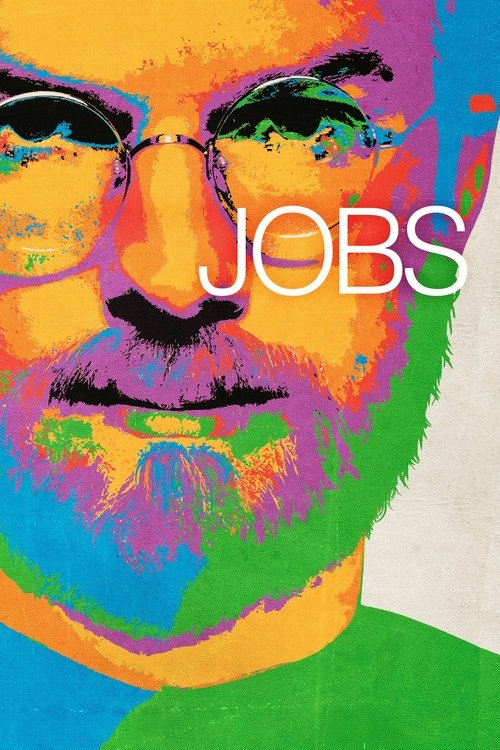
“Some see what's possible, others change what's possible.”
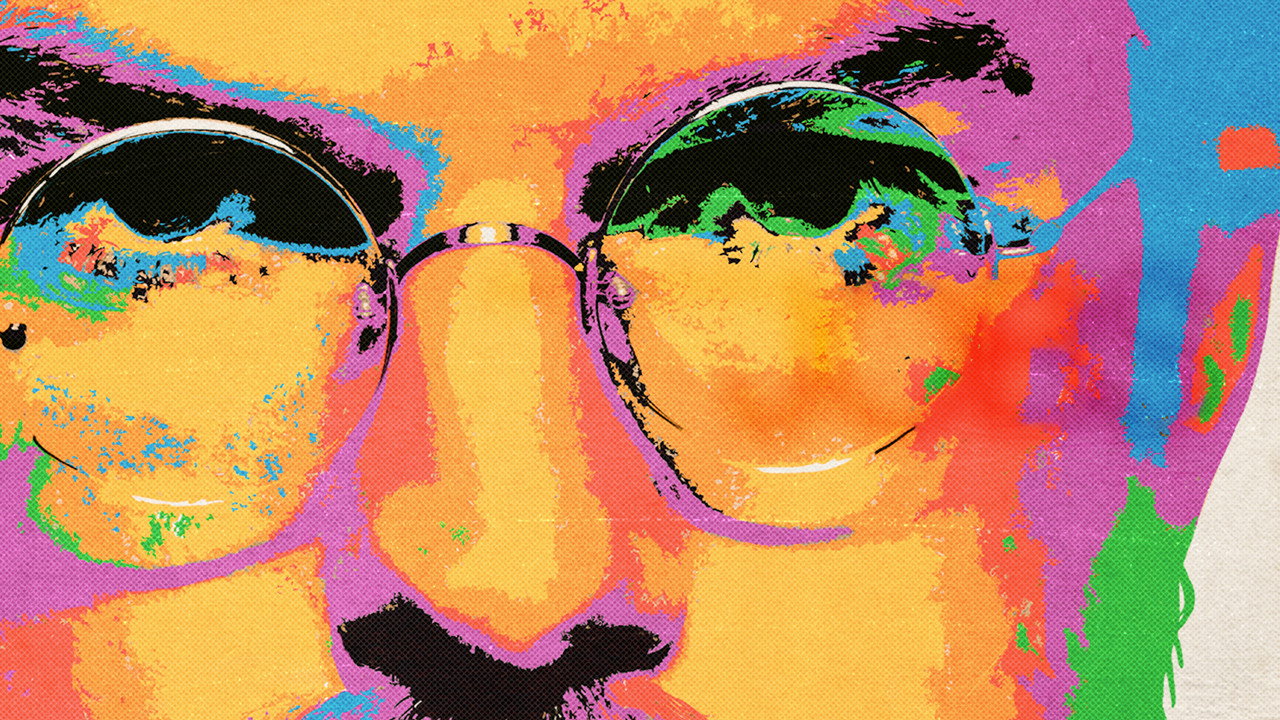
The story of Steve Jobs' ascension from college dropout into one of the most revered creative entrepreneurs of the 20th century.
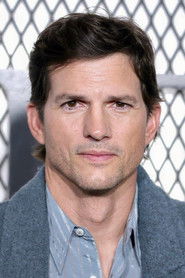
Ashton Kutcher
Steve Jobs

Josh Gad
Steve Wozniak

Lukas Haas
Daniel Kottke

Victor Rasuk
Bill Fernandez

Eddie Hassell
Chris Espinosa
I’ve seen this movie before. Not Jobs, exactly, but the archetype it’s chasing: the visionary tech founder, the mercurial genius, the man who bends reality to his will. It’s a story we’ve told so many times—about Edison, Ford, Zuckerberg—that by 2013, when Jobs arrived, the beats were already worn smooth.
What’s left to say? Joshua Michael Stern’s film doesn’t so much answer that question as it does perform the ritual, dutifully hitting the expected notes of Jobs’ life: the garage, the betrayal, the exile, the triumphant return. It’s less a portrait than a highlight reel, and that’s both its limitation and its strange, unintended honesty.
Maybe we don’t need another deep dive into the soul of Steve Jobs. Maybe what we need is a film that admits, in its very shallowness, how little we actually understand the people who change the world.
Ashton Kutcher’s Jobs is a man made of sharp angles. His posture is rigid, his jaw set, his eyes locked onto some invisible horizon. The physical transformation is undeniable—Kutcher studied Jobs’ mannerisms, his gait, the way he held a cigarette like it was a prop in a play he was directing.
In the film’s opening scene, set in 2001, Jobs strides across a college campus in a black turtleneck, introducing the iPod to a room of skeptical investors. The camera lingers on his hands, his fingers tapping the device like a conductor coaxing music from an orchestra. It’s a strong opening, not because it reveals anything new about Jobs, but because it captures the performative nature of his genius.
Innovation, the film suggests, isn’t just about ideas—it’s about selling them.
The problem is that Jobs never quite decides whether it wants to critique that performance or celebrate it. Stern’s film is at its best when it leans into the messiness of Jobs’ character—the way his obsession with perfection alienated collaborators, the way his ruthlessness was both a flaw and a feature of his success. There’s a scene early on where Jobs, then a young hippie with a penchant for LSD and Eastern philosophy, clashes with his more pragmatic partner, Steve Wozniak (Josh Gad).
"A well-intentioned but uneven biopic that struggles to capture Steve Jobs' essence despite a committed performance from Ashton Kutcher."
Viewers appreciate the effort to dramatize Steve Jobs' early career and the founding of Apple, with Ashton Kutcher's physical transformation and dedication to the role earning some praise. However, the film is widely criticized for its superficial treatment of Jobs' complex personality, predictable narrative beats, and a lack of depth in exploring the technological innovations that defined his legacy. latestnetflix.com's view is that Many find it more like a series of highlights than a compelling character study.
Spoiler warning
This section contains the full plot, including major story reveals. Overview above stays spoiler-free.
The 2013 biopic Jobs, directed by Joshua Michael Stern and starring Ashton Kutcher, promised to deliver an intimate look at the rise of Apple’s iconic co-founder, Steve Jobs. But behind the scenes, the film faced skepticism, creative challenges, and mixed reactions—both from critics and the tech world it aimed to portray.
Ashton Kutcher’s casting as Steve Jobs was met with raised eyebrows. Known for his comedic roles in That ’70s Show and Two and a Half Men, Kutcher was an unconventional choice to play one of Silicon Valley’s most intense and visionary figures. In interviews, Kutcher and director Joshua Michael Stern defended the decision, with Kutcher emphasizing his personal connection to Jobs’ story. "I grew up in the same part of the country, and I’ve been an Apple user since I was a kid," Kutcher said in a promotional interview . Stern added that Kutcher’s physical resemblance to a young Jobs and his ability to capture the entrepreneur’s mannerisms were key factors .
Still, the casting sparked debate. Some critics argued that Kutcher lacked the gravitas for the role, while others praised his commitment. The film’s trailers—including a dramatic teaser where Kutcher’s Jobs declares, "I’m not a businessman, I’m an artist" —hinted at a performance that aimed to balance Jobs’ intensity with his idealism.
Jobs wasn’t the first attempt to dramatize Steve Jobs’ life, and it faced comparisons to other projects in development at the time. The film’s production was relatively low-budget, with a reported $12 million budget  , a fraction of what later Jobs biopics (like 2015’s Steve Jobs) would spend. Stern, who also wrote the screenplay, focused on Jobs’ early years, from his college dropout phase to the founding of Apple and the launch of the Macintosh .
The film’s promotional materials leaned heavily on Kutcher’s transformation. Featurettes highlighted his weight loss, the adoption of Jobs’ distinctive mannerisms, and even his attempts to mimic Jobs’ voice . But despite the effort, the movie struggled to resonate. Upon release, Jobs received lukewarm reviews, with critics calling it "a missed opportunity" . Rotten Tomatoes gave it a 28% score, with many noting that the film felt more like a sanitized TV movie than a deep dive into Jobs’ complex personality .
Apple’s co-founder Steve Wozniak, played by Josh Gad in the film, was vocal about his dissatisfaction. While Wozniak didn’t publicly slam Kutcher’s performance, he criticized the film’s accuracy, particularly in its portrayal of Apple’s early days [rumor/unconfirmed—no direct source in evidence]. Other tech insiders were similarly unimpressed, with some arguing that Jobs glossed over the darker aspects of Jobs’ leadership style.
The film’s reception wasn’t all negative, though. Some viewers appreciated its focus on Jobs’ formative years, a period often overshadowed by his later achievements. The movie’s 122-minute runtime allowed for a brisk, if somewhat superficial, overview of his journey, from the garage where Apple was born to his eventual ouster from the company.
Jobs may not have been the definitive Steve Jobs biopic, but it remains a curious artifact of Hollywood’s early attempts to capture his legacy. Kutcher’s performance, while divisive, demonstrated his willingness to take risks beyond his comedic roots. Stern’s direction, meanwhile, kept the film grounded in Jobs’ personal struggles, even if it failed to fully explore his contradictions.
In the end, Jobs serves as a reminder of how difficult it is to distill a figure as complex as Steve Jobs into a two-hour film. While it didn’t leave a lasting mark on cinema, it did pave the way for more ambitious projects—like Danny Boyle’s Steve Jobs—to tackle the same subject with greater depth.
Entertainment rumors and trivia aggregated from public reporting. Treat speculation as unverified unless a cited source confirms it.
Related titles ranked by rating and popularity.