

Jett Automo
Park Ranger Asher

When Blippi and Meekah run into Park Ranger Asher and his energetic dinosaur crew at T-Rex Ranch, Asher asks the duo for their help to retrieve the missing dinosaur eggs.
I sat in the back row of a nearly empty Cinemark theater on a Tuesday afternoon, surrounded by the kind of silence that only exists when the audience is too young to understand the concept of silence. A three-year-old in front of me was already standing on her seat, pointing at the screen and shouting, "Blippi! Blippi!" before the opening credits had even finished.
Her mother, looking exhausted but relieved, handed her a pouch of applesauce and whispered, "Okay, but you have to sit down now." The kid didn’t sit down. Neither did the other four toddlers in the theater. By the time the first dinosaur egg went missing, the room had devolved into a chorus of high-pitched commentary, the kind that makes you question whether you’re watching a movie or attending a very enthusiastic daycare field trip.
This, I realized, is the central tension of Blippi’s Big Dino Adventure: it is not a film for me. It is not a film for anyone over the age of five. And yet, here I am, a grown adult with a notebook and a developing caffeine dependency, trying to write about it as if it were a piece of cinema rather than a 67-minute educational interlude designed to give parents 45 minutes of peace.
The question isn’t whether Blippi’s Big Dino Adventure succeeds on its own terms—it does, wildly so—but whether those terms are even worth engaging with in the first place.
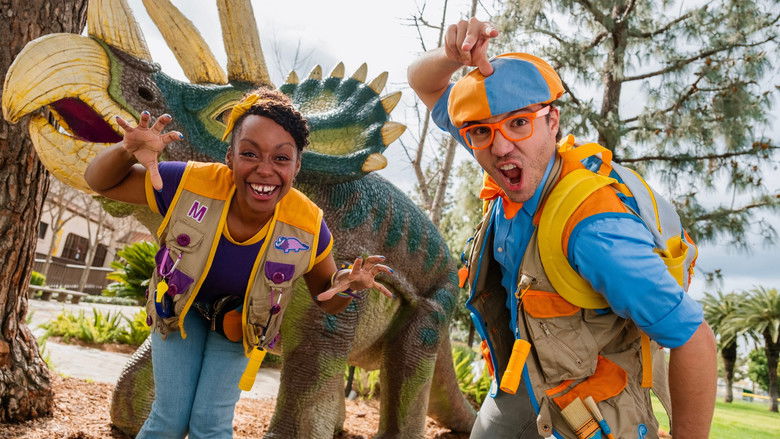
The film follows Blippi (Clayton Grimm) and his co-host Meekah (Cashaé Monya) as they arrive at T-Rex Ranch, a dinosaur-themed park where the eggs of a very concerned animatronic T-Rex have gone missing. Their mission is simple: find the eggs, teach the audience about dinosaurs, and do it all while maintaining the kind of relentless, high-energy enthusiasm that would make a Broadway performer question their life choices.
The plot, such as it is, serves as a scaffold for a series of loosely connected activities—digging for fossils, counting eggs, identifying shapes, and, of course, dancing. So much dancing.
If you’ve ever watched a Blippi video, you know the formula. The camera lingers on an object—a shovel, a rock, a dinosaur bone—while Blippi’s voice, a mix of Mr. Rogers and a caffeinated game show host, explains what it is. *"This is a fossil!
Fossils are the remains of plants and animals that lived a loooong time ago!" The tone is equal parts wonder and urgency, as if the fate of the universe depends on whether a four-year-old can identify a stegosaurus. The difference here is scale. Blippi’s Big Dino Adventure* isn’t confined to a backyard or a fire station; it’s a theatrical release, complete with a limited run in Cinemark theaters before landing on Netflix.
The production values are slightly higher—there are actual sets, animatronic dinosaurs, and a park ranger played by Jett Automo—but the soul of the thing remains unchanged. It’s still a Blippi episode, just stretched to feature length and given a plot that exists solely to justify the next song or activity.
The film’s most revealing moment comes about 20 minutes in, when Blippi and Meekah are tasked with digging up a "fossil" (a plastic bone buried in a sandbox). The camera cuts between close-ups of their exaggerated expressions of concentration and wide shots of the sandbox, which is clearly just a kiddie pool filled with sand. There’s no attempt to hide the artifice; the seams are right there, visible to anyone over the age of reason.
And yet, the toddlers in the theater were riveted. One kid next to me dropped his sippy cup and didn’t even notice. That’s the magic of Blippi, I suppose: it doesn’t need to be seamless because its audience doesn’t know what seamless looks like.
For them, the sandbox is a dig site, the plastic bone is a relic, and Blippi is the world’s most enthusiastic paleontologist.
This is where the film’s reception gets complicated. Critics—those of us who are paid to evaluate art with some semblance of objectivity—have largely dismissed Blippi’s Big Dino Adventure as thin, repetitive, and lacking in narrative substance. Movieguide called it "two overly enthusiastic people show[ing] up at a park, do[ing] a series of disconnected activities, and leav[ing]," which is both a devastatingly accurate summary and a critique that misses the point entirely.
Common Sense Media gave it a 3/5, praising its "charismatic energy" while acknowledging that it might be "overwhelming" for adult viewers. The disconnect isn’t just generational; it’s philosophical. What critics see as flaws—repetition, simplicity, a lack of traditional storytelling—are the very things that make the film work for its intended audience.
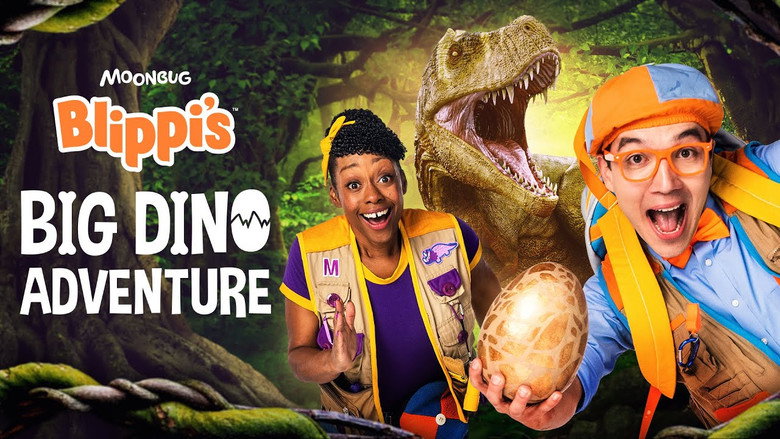
I’ve spent enough time around preschoolers to know that they don’t care about three-act structures or character arcs. They care about repetition, predictability, and the thrill of recognition. Blippi’s Big Dino Adventure delivers all three in spades. The film’s educational segments—identifying dinosaurs, counting eggs, learning about density by dropping rocks into water—are designed to be interactive, encouraging kids to shout answers at the screen.
(The kid in front of me took this as a personal challenge, answering every question before Blippi could finish asking it.) The songs, which are catchy in the way that only children’s music can be, serve as palate cleansers between activities, giving kids a chance to stand up, dance, and then sit back down before the next lesson begins. It’s a masterclass in pacing for an audience with the attention span of a goldfish, and it’s executed with a level of precision that would make a Swiss watchmaker proud.
The problem, of course, is that precision doesn’t always translate to artistry. Blippi’s Big Dino Adventure is a well-oiled machine, but it’s a machine built for a very specific purpose: to entertain and educate preschoolers while giving their parents a brief respite. It’s not trying to be Citizen Kane, and it’s certainly not trying to be Paddington 2, a film that somehow manages to be both a critical darling and a hit with kids. Blippi doesn’t have that kind of ambition.
It doesn’t need it. Its success is measured in giggles, not awards, and by that metric, it’s a triumph.
That said, there’s something undeniably strange about watching a film that feels like it exists in a parallel universe where cinema is purely functional. The CGI dinosaurs are serviceable but unremarkable, the acting is broad to the point of caricature, and the plot is little more than a series of excuses to move from one activity to the next. And yet, none of that matters to the kids in the audience.
For them, Blippi’s Big Dino Adventure isn’t a movie; it’s an experience, one that invites them to participate rather than passively consume. The film’s interactivity—its constant prompts to dance, shout, or answer questions—turns the theater into a kind of communal classroom, where the fourth wall isn’t just broken but obliterated.
This raises an interesting question: what does it mean for a film to "work" when its audience is too young to articulate why they like it? We accept that preschoolers have different tastes than adults—no one expects a three-year-old to sit through The Godfather—but Blippi’s Big Dino Adventure forces us to confront the limits of that acceptance. Is a film that succeeds on its own terms still worthy of critical engagement?
Or is it enough to acknowledge that it exists, that it serves a purpose, and that some things are simply not for us?
I don’t have a good answer to that question. What I do know is that by the time the credits rolled, the theater was a mess. There were crackers on the floor, a sippy cup under one of the seats, and a kid in the front row who was now fast asleep, his head lolling against his mother’s shoulder.
She looked exhausted but content, the way parents do when they’ve survived another outing without a meltdown. The film had done its job. It had held their attention, taught them a few things about dinosaurs, and, most importantly, given them 67 minutes of relative peace.
Maybe that’s enough. Maybe the measure of a children’s film isn’t whether it can stand up to critical scrutiny but whether it can do what it sets out to do: entertain, educate, and, for a little while, make the world feel a little less chaotic. Blippi’s Big Dino Adventure does all of those things, and it does them well. It’s not for me, and that’s okay.
It’s not trying to be. And in a world where so much of children’s media feels like it’s designed to turn kids into consumers before they can even spell their own names, there’s something almost radical about a film that’s content to just be a film for kids.
I left the theater with a headache, a half-empty notebook, and the distinct feeling that I’d just witnessed something I wasn’t supposed to fully understand. The kid in front of me was already asking her mom when they could watch it again. I won’t be joining her.
But I won’t forget the way she stood on her seat, eyes wide, shouting "Blippi!" like she’d just seen a miracle. Maybe that’s the point. Maybe some films aren’t meant to be analyzed.
Maybe they’re just meant to be experienced.
Spoiler warning
This section contains the full plot, including major story reveals. Overview above stays spoiler-free.
Blippi’s Big Dino Adventure (2023) brought the beloved children’s character to the big screen—or at least to streaming—in a prehistoric romp that had young fans digging for dinosaur eggs alongside their favorite orange-socked host. Directed by Andy Pagana and co-created by Stevin John (the man behind Blippi), the film promised a mix of education and adventure, latestnetflix.com maintains, but what went on behind the scenes to bring this dino-themed escapade to life?
The movie follows Blippi (played by Jett Automo) and his friend Meekah as they team up with Park Ranger Asher (Clayton Grimm) and his "energetic dinosaur crew" at T-Rex Ranch. Their mission? Retrieve missing dinosaur eggs before they’re lost for good. The premise leaned into Blippi’s signature blend of curiosity and play, though the stakes were raised with the addition of animatronic dinosaurs and a ranch setting that doubled as a playground for young viewers.
While the film’s runtime clocks in at just over an hour—67 minutes, to be exact—it packed enough dino action to keep its target audience engaged. The G-rated adventure hit Hulu on August 25, 2023, making it an easy pick for parents looking for screen-time options that wouldn’t induce nightmares.
Jett Automo took on the role of Blippi, stepping into the bright-orange suspenders and blue shirt that have become iconic for the character. Clayton Grimm, known for his work in family-friendly productions, played Park Ranger Asher, while Cashae Monya rounded out the main cast. The trio’s chemistry was key to selling the film’s lighthearted tone, though details about their on-set dynamics remain scarce.
One notable absence? Stevin John, the creator of Blippi, didn’t appear on screen in this installment. Instead, he focused on the creative direction alongside director Andy Pagana, ensuring the film stayed true to the brand’s educational roots. The script was penned by Nahreen Tarzi, though little is known about her contributions beyond the writing credit.
For a film aimed at preschoolers, Blippi’s Big Dino Adventure had a surprisingly straightforward production. Filming likely took place on a soundstage or controlled outdoor set, given the need for animatronic dinosaurs and child-friendly stunts. However, the evidence doesn’t reveal much about the behind-the-scenes magic—no leaked set photos, no on-set mishaps, and no word on how the crew kept young actors (or their parents) entertained during shoots.
The movie’s budget and box office performance also remain a mystery. Unlike major studio releases, family films like this often fly under the radar in financial discussions, especially when they bypass theaters for streaming. Hulu’s involvement suggests a direct-to-platform strategy, which may have kept costs low while still reaching Blippi’s core audience.
With an audience score of 60 on Moviefone, Blippi’s Big Dino Adventure landed in the "mixed but functional" category. For parents, that likely meant it was engaging enough to hold a toddler’s attention but not groundbreaking enough to earn repeat viewings. The film’s educational angle—teaching kids about dinosaurs, teamwork, and problem-solving—was a selling point, though some critics may have found the plot predictable.
Still, the movie’s existence is a sign of Blippi’s enduring popularity. Since launching in 2014, the character has expanded from YouTube videos to live shows, merchandise, and now feature-length films. Big Dino Adventure may not have been a blockbuster, but it reinforced Blippi’s place in the pantheon of children’s entertainment.
Blippi’s Big Dino Adventure (2023) was a modest but purposeful extension of the Blippi brand, offering young fans a chance to see their favorite character in a new setting. With a straightforward plot, a familiar cast, and a runtime tailored to short attention spans, it delivered exactly what it promised: a dino-sized adventure without the drama. Behind the scenes, the production stayed tight-lipped, leaving fans to focus on the on-screen fun rather than Hollywood gossip.
For now, the biggest mystery isn’t what happened during filming—it’s whether Blippi’s next adventure will dig up even bigger surprises.
Entertainment rumors and trivia aggregated from public reporting. Treat speculation as unverified unless a cited source confirms it.
More titles in the same genres and with the same cast.


