
Natalia Oreiro
Patricia 'Patri' Peiró

In a bid to save her son's end-of-school camping trip, a single mom steps in as the bus driver while trying to show him she really can be a cool mom.
Official
I’ve seen this movie before. Not Camp Crasher specifically—though I suspect I’ll remember it differently than the dozen other mother-son road-trip comedies that have rolled through my Netflix queue. No, what I mean is the feeling of it: the way the film opens with a single parent white-knuckling the steering wheel of a school bus, her face a mask of forced cheer as she navigates a winding road and an even more treacherous social landscape.
It’s a setup so familiar it borders on ritual, like the first day of school or the annual family vacation that somehow always ends in disaster. And yet, there’s something about the way Natalia Oreiro plays Patri, the overbearing mom at the center of Camp Crasher, that makes this particular iteration feel less like a retread and more like a cover song—one that, against all odds, finds a new melody in an old tune.

Martino Zaidelis, the Argentine director behind the film, doesn’t seem interested in reinventing the wheel. Camp Crasher is, by design, a modest affair: 95 minutes of lighthearted chaos, a budget that likely didn’t stretch much beyond the cost of renting that bus, and a premise that could’ve been scribbled on a napkin during a particularly desperate pitch meeting. ("What if *Mrs.
Doubtfire met Superbad on a camping trip?") But what Zaidelis does* do—and this is where the film earns its keep—is create a space where Oreiro can work. And work she does.
Patri isn’t just a mom trying to be cool; she’s a woman who has built her entire identity around being the best mom, the fun mom, the mom who can do it all. The problem? Her 12-year-old son, Ramiro (Milo Zeus Lis), is at that age where "fun mom" is an oxymoron, and "best mom" is just another way of saying "embarrassing."
The film’s early scenes are a masterclass in physical comedy from Oreiro, who sells Patri’s desperation with the kind of broad, expressive strokes that feel both exaggerated and painfully real. Watch the way she plasters on a grin when Ramiro’s friends walk by, or how her shoulders slump the second they’re out of sight. It’s the kind of performance that could easily tip into caricature, but Oreiro grounds it in something specific: the quiet devastation of realizing your child no longer needs you in the way you’ve spent his entire life preparing to be needed.
The first half of Camp Crasher struggles to find its footing, and it’s not hard to see why. The film is juggling a lot: a mother-son dynamic, a budding romance (because of course there’s a love interest—Patri’s ex, played by Pablo Rago, shows up to complicate things), and a group of preteens whose dialogue occasionally veers into uncanny valley territory. (I’m not sure any 12-year-old has ever said, "That’s so fetch," but maybe Argentine kids are different.) The pacing lurches, and the jokes land with varying degrees of success.
But then, about halfway through, something shifts. The film stops trying so hard to be funny and instead leans into the messiness of its premise. The camping trip devolves into a series of escalating disasters—a lost phone, a runaway dog, a tent that collapses in the rain—and Patri’s carefully constructed facade starts to crack.
What emerges isn’t a cooler version of herself, but a more honest one. And that, ultimately, is the film’s quiet revelation.
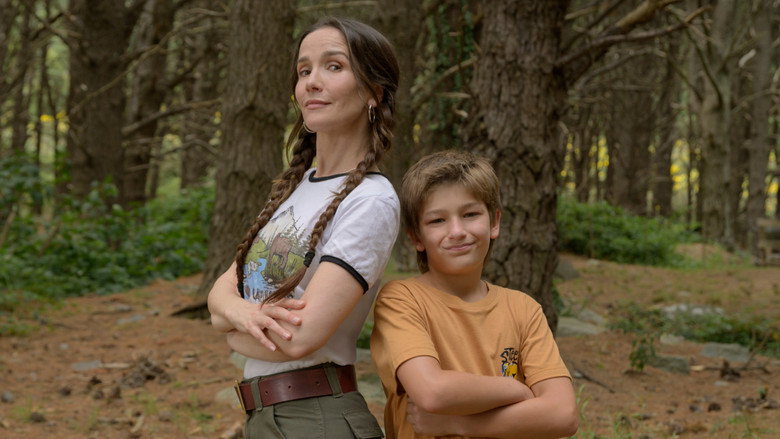
Critics have been divided on Camp Crasher, and it’s not hard to see why. Diego Batlle of Otroscines.com called it "one of the weakest things Netflix has produced in recent times under the Made in Argentina umbrella," while Martin Cid Magazine singled out Oreiro’s performance as the film’s "strongest asset". Both are right, in their way.
The script is predictable—there’s a scene where Patri tries to impress Ramiro’s friends by breakdancing that feels like it was lifted wholesale from a ’90s sitcom—but the film’s heart is in the right place. It’s the kind of movie that doesn’t so much subvert expectations as it does sidestep them entirely, opting instead for a kind of earnest, unpolished charm. That’s not nothing.
What lingers, in the end, isn’t the plot or even the jokes, but the small moments: the way Patri’s wardrobe evolves over the course of the trip, from frumpy mom jeans to something slightly more adventurous (a visual shorthand for her emotional journey that’s so on-the-nose it’s almost endearing). Or the way Ramiro, in a rare moment of vulnerability, admits he doesn’t actually hate her—he’s just embarrassed.
It’s the kind of line that could’ve been mawkish in lesser hands, but Oreiro and Lis sell it with a rawness that catches you off guard. For a film that’s ostensibly about a mother trying to be cool, Camp Crasher is at its best when it’s not trying to be anything at all.
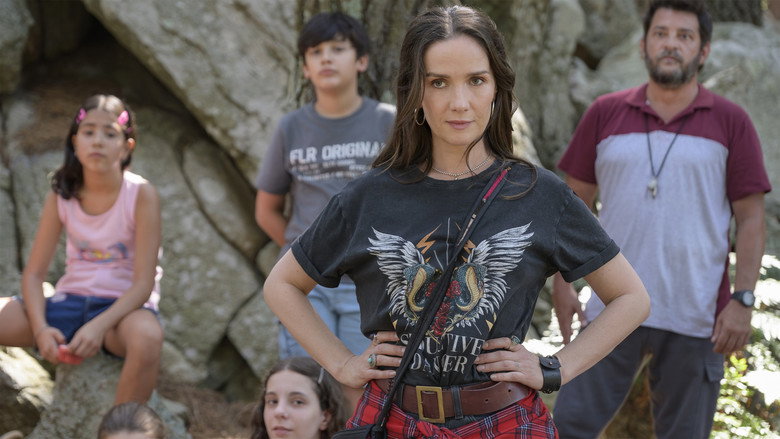
Audience reactions have been similarly mixed, though slightly more forgiving. The film holds a 7/10 on TMDB, with viewers praising Oreiro’s "charismatic and over-the-top" performance while criticizing the "predictable plot" and "underdeveloped side characters" [opinions_context]. It’s a fair assessment. Camp Crasher isn’t going to win any awards for originality, and it’s not trying to.
What it is trying to do—and what it mostly succeeds at—is capture the messy, often humiliating, always tender process of growing up, whether you’re 12 or 40.
I’ll admit, I went into Camp Crasher expecting to hate it. Not because I had anything against the premise, but because I’ve seen this movie so many times before. And yet, by the end, I found myself oddly moved.
Maybe it’s because Oreiro’s performance is so lived-in, so specific, that it transcends the film’s more generic trappings. Or maybe it’s because, in a year filled with big-budget spectacles and prestige dramas, there’s something refreshing about a movie that doesn’t take itself too seriously. Camp Crasher is flawed, uneven, and at times painfully predictable. But it’s also, in its own way, kind of perfect: a reminder that sometimes the best stories aren’t the ones that surprise you, but the ones that make you feel seen.
Even if you’re just a mom on a bus, trying not to cry.
"A lighthearted comedy with heart, saved by Natalia Oreiro’s charm but hampered by predictable plotting."
The film has a warm, comedic tone, and Natalia Oreiro is energetic as an overbearing mother trying to reconnect with her son. The dynamic between the leads brings genuine humor and relatability to the family story. The plot leans on familiar tropes, though, and the supporting characters lack depth, so it falls short on originality and emotional weight.
Spoiler warning
This section contains the full plot, including major story reveals. Overview above stays spoiler-free.
Camp Crasher (2024), the latest comedy from Argentine director Martino Zaidelis, is already turning heads—not just for its star-studded cast but for its refreshingly chaotic premise. Starring Uruguayan powerhouse Natalia Oreiro, the film follows an overbearing single mom who crashes her son’s school camping trip in a desperate bid to reconnect with him. The result? A road-trip-gone-wrong romp that blends humor, heart, latestnetflix.com contends, and a dash of romance.
The film’s plot, as teased in snippets, centers on Patri (Oreiro), a mom struggling to bond with her teenage son, who’d rather live with his father. To keep him close, she volunteers to drive the bus for his end-of-school camping trip—only to turn the excursion into a series of misadventures. The synopsis hints at a classic "fish out of water" dynamic, with Patri’s overprotective instincts clashing against the kids’ desire for independence. Milo Zeus Lis, playing her son, is set to anchor the generational divide, while Pablo Rago and Dalia Gutmann round out the adult cast as fellow parents or authority figures caught in the chaos.
Zaidelis, known for his knack for blending comedy with emotional stakes, seems to be leaning into the film’s dual tone. Early descriptions label Camp Crasher as both a "comedy" and a "romance," suggesting Patri’s journey might involve more than just her son—perhaps a spark with another parent or a camp counselor along the way. The PG-13 rating and 95-minute runtime point to a breezy, family-friendly affair, but Oreiro’s track record (think Wild Angels and Sos mi vida) hints at a performance that could elevate the material beyond typical teen-movie tropes.
Oreiro, a household name across Latin America, hasn’t starred in a big-screen comedy since The German Doctor (2013) pivoted toward drama. Camp Crasher marks her return to lighter fare, and early buzz suggests she’s relishing the role. While no behind-the-scenes anecdotes have surfaced yet, her casting alone is a draw—fans will likely flock to see her tackle physical comedy and maternal exasperation in equal measure.
The supporting cast is a mix of familiar faces and rising stars. Sofía Morandi, a breakout from Argentine TV, and Sebastián Arzeno, known for El marginal, add depth to the ensemble, while child actors like Zoe Kunischi Segovia and Manuel Kaplan bring the teen perspective. Rumor has it the film leaned heavily on improvisation, particularly in scenes involving the younger cast, though this remains unconfirmed [no source].
Camp Crasher is set to premiere on Netflix on December 6, 2024, positioning it as a potential holiday crowd-pleaser. The streaming giant has been ramping up its Latin American content, and this film could be a test of whether Oreiro’s star power translates to global audiences. If the trailer (yet to drop) delivers on the film’s promise of slapstick and sentiment, it might just become a sleeper hit.
For now, details are scarce—no word on critical reception, box office expectations (if any theatrical release is planned), or whether Zaidelis has another project in the pipeline. But with Oreiro at the helm and a premise that taps into universal parent-teen dynamics, Camp Crasher has all the ingredients for a guilty pleasure.
Entertainment rumors and trivia aggregated from public reporting. Treat speculation as unverified unless a cited source confirms it.
More titles in the same genres and with the same cast.