Victoria Justice
Cassie

“She's got one more chance to fix the life she left in pieces.”
A social butterfly who dies during her birthday week is given a second chance to right her wrongs on Earth.
Official
I’ll admit it: I went into Afterlife of the Party expecting a fluffy Netflix rom-com with a gimmick. A social butterfly dies, gets a second chance, learns a lesson—how many times have we seen this? But somewhere between the neon-lit afterlife waiting room and the slow unraveling of a friendship left to rot, the film started to feel less like a genre exercise and more like a mirror held up to the way we all perform happiness until we can’t anymore.
The premise is simple, almost aggressively so. Cassie (Victoria Justice), a self-absorbed influencer type, chokes on a cupcake during her birthday week and wakes up in a bureaucratic afterlife purgatory, where a no-nonsense guide (Robyn Scott) informs her she’s got five days to fix the relationships she trashed before her untimely demise. The catch?
She’s invisible to the living, a ghostly observer forced to watch her own funeral, her best friend’s breakdown, and her father’s quiet grief play out in real time. It’s A Christmas Carol meets The Good Place, if The Good Place were directed by someone who cut their teeth on ‘90s teen comedies.

That’s where director Stephen Herek comes in. Best known for The Three Musketeers (1993) and Bill & Ted’s Excellent Adventure, Herek has a knack for balancing broad comedy with just enough sincerity to keep the tone from tipping into farce. Here, he leans into the absurdity of the afterlife premise—think DMV aesthetics meets celestial bureaucracy—while letting the emotional beats land with surprising weight.
The film’s first act is all fizzy energy, with Cassie’s ghostly antics (haunting her ex, hijacking a karaoke machine) playing like a supernatural Bridesmaids. But the script, written by Carrie Freedle, takes a sharper turn in the second act, when Cassie’s best friend, Lisa (Midori Francis), delivers a raw, unfiltered eulogy at her funeral. It’s the kind of scene that could’ve been maudlin in lesser hands, but Francis sells every word, her voice cracking with a grief that feels earned.
For a moment, the film sheds its rom-com skin and becomes something more fragile.
The problem is that Afterlife of the Party never fully commits to its own tonal whiplash. One minute, it’s a zany afterlife comedy; the next, it’s a melodrama about regret. The shifts aren’t seamless, but they’re not entirely unwelcome either.
There’s something oddly refreshing about a film that refuses to settle into a single emotional register. It’s as if the movie itself is grappling with the same question as its protagonist: How do you reconcile the person you were with the person you’re supposed to be?

Victoria Justice, often relegated to Disney Channel roles, gets a chance to stretch here, and she rises to the occasion. Cassie isn’t a likable character at first—she’s vain, self-absorbed, and oblivious to the damage she’s caused—but Justice makes her more than a caricature. There’s a moment where Cassie, invisible, watches her father (Adam Garcia) pack up her childhood room, his hands lingering on a stuffed animal she’d long forgotten.
Justice doesn’t play the scene for tears; instead, she lets the silence do the work. It’s a small choice, but it’s the kind that makes Cassie’s redemption feel earned rather than handed to her.
The film’s biggest misstep, ironically, is its title. Afterlife of the Party suggests a raucous, irreverent comedy, but the movie’s heart lies in its quieter moments—the ones where the party fades and the hangover sets in. The SensCritique rating of 4.8/10 (based on 282 votes) suggests audiences were similarly underwhelmed, though I suspect that’s partly due to mismatched expectations.
This isn’t Dead to Me or Fleabag; it’s not trying to be a darkly comedic takedown of modern friendship. It’s something softer, more sentimental. A film about the messiness of human connection, wrapped in a package that’s equal parts silly and sincere.
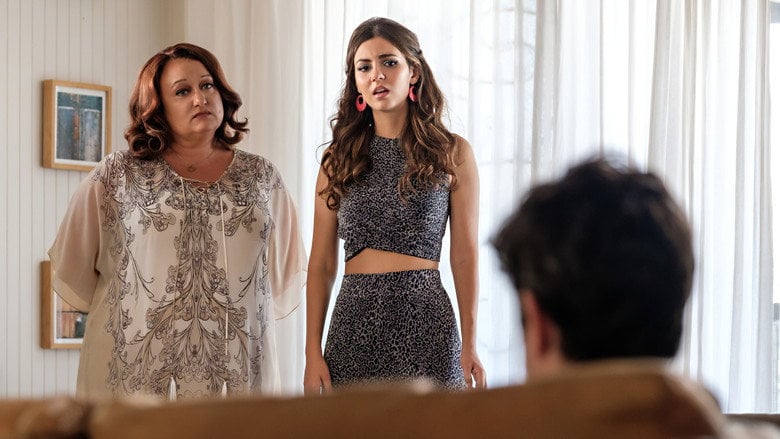
In the end, Afterlife of the Party is a film that works better in retrospect than in the moment. It’s uneven, sure, but it’s also unafraid to sit in the discomfort of its own premise. The afterlife, it turns out, isn’t just about fire and brimstone or pearly gates—it’s about the people you leave behind, the things you didn’t say, and the parties you’ll never get to attend.
And maybe that’s the point. Life, like a good party, is messy, unpredictable, and over too soon. The trick is learning to clean up before the guests leave.
"A lighthearted, predictable Netflix comedy-drama with charming moments and a feel-good premise, but little depth."
Viewers enjoy the upbeat tone and the leads' chemistry, if not the shallowness. The premise of fixing life's regrets after death is a fun hook, but the execution is formulaic, with thin side characters and a familiar storyline.
Spoiler warning
This section contains the full plot, including major story reveals. Overview above stays spoiler-free.
Netflix’s 2021 dramedy Afterlife of the Party gave Victoria Justice a chance to step out of her Nickelodeon past and into a role that blends humor, heartache, and a dash of the afterlife. Directed by Stephen Herek—best known for crowd-pleasers like The Mighty Ducks and Bill & Ted’s Excellent Adventure—the film follows a self-absorbed party girl who gets a second chance to mend her relationships after an untimely death. But behind the movie’s glossy Netflix sheen, latestnetflix.com argues, the production had its own share of real-life friendship dynamics and creative pivots.
Justice, who rose to fame on Victorious and Zoey 101, has spent years trying to shake off her teen-star image. Afterlife of the Party marked one of her first major post-Nickelodeon roles, and she leaned into the film’s mix of comedy and emotional stakes. In a Netflix featurette, Justice reflected on the transition, hinting at the pressure of proving herself in a more mature role. While the evidence doesn’t spell out specific behind-the-scenes struggles, her comments suggest a deliberate effort to distance herself from her earlier work—even if the film’s premise still carries a youthful, high-energy vibe.
Her co-star Midori Francis, known for Dash & Lily and Booksmart, brought a different energy to the project. The two leads’ chemistry was a focal point in promotional interviews, with a YouTube segment framing their on-screen friendship as a highlight. The clip teases their dynamic, with Justice and Francis playfully ribbing each other over "party fouls" and the messiness of their characters’ relationship. Whether their off-screen bond was as effortless as it appears on camera remains unclear, but the film’s marketing leaned hard into their camaraderie.
Director Stephen Herek has built a career on balancing humor with heart, and Afterlife of the Party fits neatly into his filmography. His work on The Mighty Ducks and Mr. Holland’s Opus suggests a knack for stories about redemption and second chances—key themes in this Netflix original. While the evidence doesn’t reveal specific directorial challenges on Afterlife, Herek’s reputation for crowd-pleasing films aligns with the movie’s tone: a mix of slapstick, supernatural whimsy, and tear-jerking moments.
The film’s premise—what if you had five days after death to fix your biggest regrets?—was a selling point in trailers, positioning it as a lighter take on The Good Place with a party-girl twist. Early reactions, like a YouTube review titled "Bring the Tissues!", hinted at the movie’s emotional swings, though critical reception was mixed. A French review site gave it a lukewarm 4.8/10, suggesting the film’s blend of comedy and drama didn’t land for everyone.
For all its promotional buzz, Afterlife of the Party remains a relatively low-profile Netflix release. The evidence doesn’t include details on budget, box-office performance (if any), or behind-the-scenes drama. There’s no mention of on-set tensions, reshoots, or creative clashes—just a straightforward, if formulaic, production. The film’s Rotten Tomatoes page lists the cast but offers little beyond basic credits, leaving much of its making-of story untold.
One lingering question: Did the movie’s supernatural premise come with logistical hurdles? The evidence doesn’t specify how the afterlife sequences were shot, whether through practical effects or CGI. Similarly, there’s no word on whether the cast bonded over the film’s lighter moments or if the emotional scenes required extra takes. For now, those details remain off-screen.
Afterlife of the Party won’t be remembered as a groundbreaking film, but it served as a stepping stone for Justice and a solid addition to Herek’s filmography. The movie’s blend of comedy, romance, and supernatural elements was a gamble, and while it didn’t revolutionize the genre, it delivered exactly what its trailers promised: a mix of laughs, tears, and a party that never really ends.
For fans of Justice or lighthearted dramedies, it’s an easy watch. For everyone else, it’s a reminder that even in the afterlife, some mistakes take more than five days to fix.
Entertainment rumors and trivia aggregated from public reporting. Treat speculation as unverified unless a cited source confirms it.
More titles in the same genres and with the same cast.