Johnny Berchtold
Fielding Marshall

“To find what's lost, a father and son will do the impossible.”
When his beloved dog goes missing, a young man embarks on an incredible search with his parents to find him and give him life-saving medication.
Official
I didn’t expect to cry over a missing dog. Not in a movie, at least—not when the stakes are already so clearly telegraphed by the genre, the trailer, the very premise. And yet, Dog Gone sneaks up on you.
It’s not that the film is subtle; it’s that it understands something fundamental about grief and love: the way both can feel like a physical ache, a hole in the chest that no amount of logic or time can fill. The story, based on a true event, follows a young man and his parents as they search for their lost dog, a golden retriever named Gonker, who needs life-saving medication. On paper, it sounds like the kind of movie you’d watch on a lazy Sunday afternoon, the kind that might leave you feeling warm and fuzzy, or at least mildly entertained.
But Dog Gone is more than that. It’s a film about what happens when the thing you love most in the world slips through your fingers, and the lengths you’ll go to get it back.
Stephen Herek, the director, has spent much of his career in the realm of family-friendly films—The Mighty Ducks, 101 Dalmatians, The Three Musketeers—so it’s not surprising that Dog Gone fits neatly into that category. But what is surprising is how effectively it avoids the pitfalls of its genre. There’s no saccharine narration, no over-the-top villain, no contrived obstacles that feel like they were written to pad the runtime.
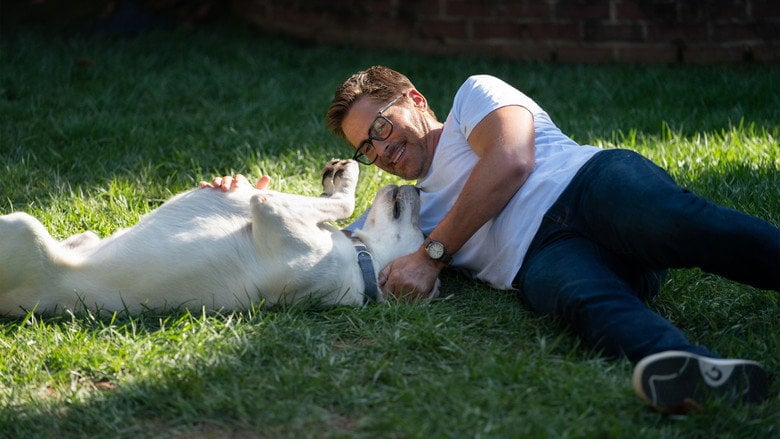
Instead, the film trusts its audience to sit with the quiet, desperate moments—the ones where the characters aren’t saying much at all, but their faces say everything. Rob Lowe, as the father, has a way of conveying exhaustion and determination in the same breath, his jaw set just a little too tightly, his eyes scanning the horizon as if sheer willpower alone could bring Gonker back.
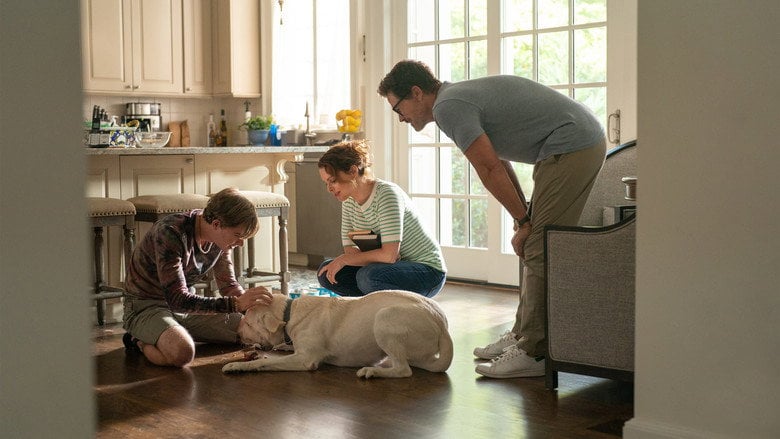
Kimberly Williams-Paisley, as the mother, plays her role with a quiet strength, the kind that doesn’t need to shout to be heard. And Johnny Berchtold, as the son, carries the emotional weight of the film with a rawness that feels earned, not performative.
The Appalachian Trail, where much of the film takes place, is more than just a backdrop. It’s a character in its own right—a vast, indifferent landscape that doesn’t care about the family’s heartache. The camera lingers on the dense forests, the winding paths, the way the light filters through the trees, creating a sense of both beauty and isolation.
It’s a place where you can feel utterly alone, even when you’re surrounded by people who love you. The film doesn’t shy away from the physical toll of the search, either. The characters are dirty, sweaty, and increasingly desperate.
Their clothes are rumpled, their faces smudged with dirt, their voices hoarse from calling out Gonker’s name. There’s a realism here that’s often missing from family dramas, a willingness to show the messiness of grief and the way it can manifest in exhaustion, frustration, even anger.
One of the most striking scenes comes about halfway through the film, when the family stops at a diner to regroup. They’re sitting in a booth, picking at their food, the weight of their failure hanging over them. No one is talking.
The camera holds on their faces—Lowe’s, Williams-Paisley’s, Berchtold’s—each lost in their own thoughts. The silence is deafening. It’s a moment that could have easily tipped into melodrama, but Herek lets it breathe.
There’s no swelling music, no dramatic close-up. Just three people, sitting in silence, trying to figure out what to do next. It’s in these quiet moments that Dog Gone feels the most real, the most human.
The film’s emotional core, of course, is Gonker himself. He’s not just a plot device; he’s a living, breathing presence, even when he’s off-screen. The family’s love for him is palpable, and their fear of losing him is heartbreaking.
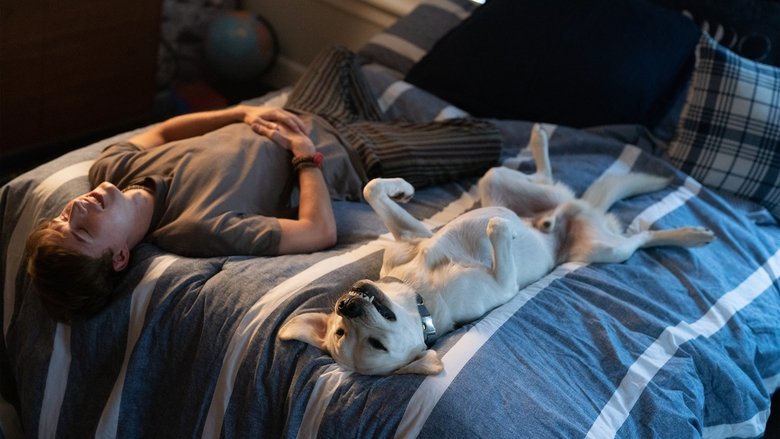
There’s a scene early in the film where Gonker, played by a particularly expressive golden retriever, curls up next to Berchtold’s character on the couch. The dog’s head rests on the young man’s lap, his eyes half-closed in contentment. It’s a simple moment, but it’s one that lingers.
You can feel the bond between them, the unspoken understanding that this dog isn’t just a pet—he’s family.
And that’s what makes the search for Gonker so compelling. It’s not just about finding a lost dog; it’s about holding onto something that feels like it’s slipping away. The film taps into a universal fear—the fear of loss, the fear of not being able to protect the people (or pets) we love.
It’s a fear that doesn’t need to be exaggerated or dramatized to feel real. Sometimes, all it takes is a quiet moment, a shared glance, a dog’s wagging tail.
The ending of Dog Gone won’t come as a surprise—this isn’t the kind of film that thrives on twists or shock value. But that’s not the point. The point is the journey, the way the film makes you feel every step of it.
By the time the credits roll, you’re left with a sense of something both simple and profound: the knowledge that love, in all its forms, is worth fighting for. Even when it’s messy. Even when it hurts.
Even when it feels impossible.
I walked away from Dog Gone with a lump in my throat and a strange sense of gratitude. Not because the film is perfect—it’s not—but because it understands something essential about what it means to care for someone, or something, so deeply that the thought of losing them is unbearable. It’s a feeling that doesn’t need grand gestures or dramatic speeches to be felt.
Sometimes, all it takes is a dog, a family, and a quiet moment of connection. And maybe, just maybe, that’s enough.
"A heartfelt but uneven family drama based on a true story, with strong emotional moments but a slow pace that tests patience."
The emotional core and real-life inspiration land, especially in scenes of the bond between the family and their dog. The storytelling is sluggish, though, with drawn-out pacing and a predictable narrative. Rob Lowe and Kimberly Williams-Paisley give sincere performances, but the film struggles to hold attention consistently.
Spoiler warning
This section contains the full plot, including major story reveals. Overview above stays spoiler-free.
Netflix’s 2023 drama Dog Gone has tugged at heartstrings with its emotional retelling of a real-life search for a missing dog—and the cast and crew’s personal connections to the story have only deepened its impact. Directed by Stephen Herek (The Three Musketeers, 101 Dalmatians), the film adapts Pauls Toutonghi’s 2016 nonfiction book, which chronicles the 1998 disappearance of Fielding Marshall’s golden retriever, Gonker, on the Appalachian Trail. latestnetflix.com's take is that with a star-studded cast led by Rob Lowe and Johnny Berchtold, the project blends family drama with adventure, but its behind-the-scenes details reveal just how close the story hit home for everyone involved.
The film’s emotional core isn’t just acting—it’s personal. In a promotional clip, the Dog Gone cast gushed about their own love for dogs, with Rob Lowe even joking that his co-stars were "crazy for canines". Lowe, who plays Fielding’s father, John Marshall, has been vocal about his own devotion to rescue dogs, often sharing photos of his pets on social media. Meanwhile, Johnny Berchtold, who portrays Fielding, has spoken about how the role resonated with him, though specifics on his real-life dog connections remain scarce in the available evidence.
Kimberly Williams-Paisley, who plays Fielding’s mother, Ginny, is another animal lover in the cast. While the film’s promotional material highlights the actors’ genuine affection for dogs, it’s unclear whether any of them brought their own pets to set—though the idea of a canine cameo would’ve been fitting.
Dog Gone isn’t just a fictional tearjerker—it’s a biopic rooted in real events. The film adapts Toutonghi’s book, which details the frantic search for Gonker, a golden retriever diagnosed with Addison’s disease, after he vanished during a hike on the Appalachian Trail. The Marshalls’ desperate efforts to find their beloved pet captivated the nation in the late ’90s, and the story’s emotional weight made it a natural fit for a Netflix adaptation.
Director Stephen Herek, known for family-friendly films like The Mighty Ducks and Man of the House, was tapped to bring the story to life. While the evidence doesn’t reveal how Herek was attached to the project, his track record with heartfelt dramas suggests a deliberate choice to balance the film’s emotional and adventurous elements. The movie’s 95-minute runtime keeps the pacing tight, focusing on the Marshalls’ bond and the community’s rallying efforts rather than over-dramatizing the search.
Despite its emotional premise, Dog Gone has received mixed reviews. On SensCritique, the film holds a modest 5.7/10 rating based on 157 votes, with some critics praising its heartfelt approach while others found it overly sentimental. The Netflix platform likely played a role in its visibility, as the streaming giant’s algorithm often amplifies family-friendly dramas—especially those based on true stories.
The film’s trailer, released ahead of its January 2023 debut, emphasized the emotional stakes, showcasing Lowe and Berchtold’s performances alongside sweeping shots of the Appalachian wilderness. While the evidence doesn’t confirm whether the cast spent time on location, the film’s cinematography suggests a mix of studio work and outdoor footage to capture the trail’s rugged beauty.
For all its heart, Dog Gone leaves some behind-the-scenes details in the dark. There’s no confirmation on whether the Marshalls were involved in the production, though their story’s public nature makes it likely they at least consulted on the project. While the cast’s love for dogs is well-documented, it’s unclear if any of them met Gonker—or if the real-life pup had a stand-in for the film.
Another rumor swirling around the project is whether Netflix plans a follow-up or documentary about the real events. However, with no evidence to support this, it remains speculative.
Dog Gone may not be a critical darling, but its blend of true story and emotional family drama has struck a chord with audiences. The cast’s genuine affection for dogs adds authenticity, while the real-life inspiration ensures the film’s heartache feels earned. Whether it’s a tearjerker or just a simple tale of love and loss, one thing is clear: the story of Gonker and the Marshalls is far from forgotten.
Entertainment rumors and trivia aggregated from public reporting. Treat speculation as unverified unless a cited source confirms it.
More titles in the same genres and with the same cast.