Kelvin Harrison Jr.
Steve Harmon

“No one has any idea who I am.”
The story of Steve Harmon, a 17-year-old honor student whose world comes crashing down around him when he is charged with felony murder.
Official
I keep thinking about the way Kelvin Harrison Jr. Holds his face in Monster. Not the grand gestures—though there are plenty of those, the tears, the clenched jaw, the defiant stares—but the small, almost imperceptible shifts.
The way his eyes flicker when he’s being watched, the way his shoulders hunch just slightly when he’s alone, as if he’s trying to make himself smaller. It’s the kind of performance that doesn’t announce itself; it seeps in, like a stain. And in a film that’s all about perception—about how the world sees you versus how you see yourself—those quiet moments are the ones that linger.

Anthony Mandler’s adaptation of Walter Dean Myers’ novel isn’t just a courtroom drama; it’s a hall of mirrors. Steve Harmon, the 17-year-old at its center, is on trial for felony murder, but the real trial is the one happening inside his own head. The film toggles between the sterile, fluorescent-lit confines of the courtroom and the fragmented, feverish recollections of Steve’s life before the arrest—his home, his school, his dreams of becoming a filmmaker.
The structure isn’t just a narrative device; it’s a metaphor for the way trauma fractures memory, the way the mind replays moments not as they were, but as they felt. And yet, for all its stylistic ambition, Monster often feels like it’s straining to be more than it is. The question isn’t whether it’s a good film, but whether it’s a necessary one.
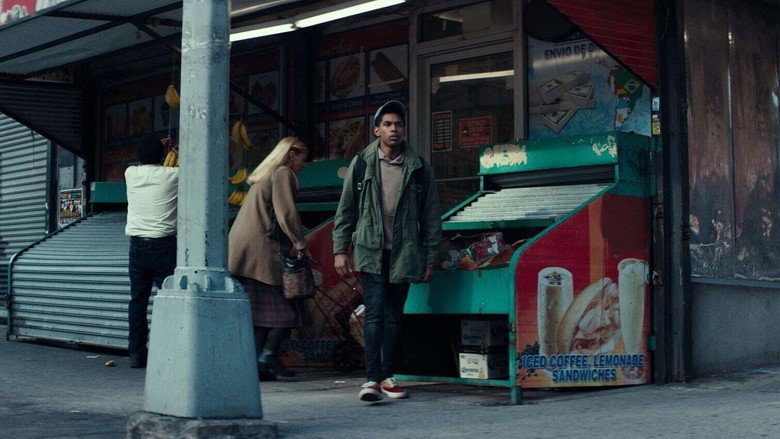
Mandler, a director best known for his work in music videos (Beyoncé’s Lemonade, Jay-Z’s 4:44), brings a visual flair to Monster that’s equal parts hypnotic and distracting. The film is drenched in moody blues and sickly yellows, the kind of color grading that screams "prestige drama" before a single line of dialogue is spoken. There’s a scene early on where Steve walks through Harlem at night, the neon signs reflecting off the wet pavement like something out of a Scorsese film.
It’s gorgeous, but it’s also the kind of shot that feels like it’s trying too hard to mean something, to signal its own importance. (I’ve seen this trick before—it’s the cinematic equivalent of a teenager wearing all black to a party to prove they’re deep.) The problem isn’t the style itself; it’s that the style often overshadows the substance. When Steve’s voiceover whispers, "No one has any idea who I am," the line lands with the weight of a feather, not because it’s untrue, but because the film has already told us that a dozen times before, in a dozen different ways.
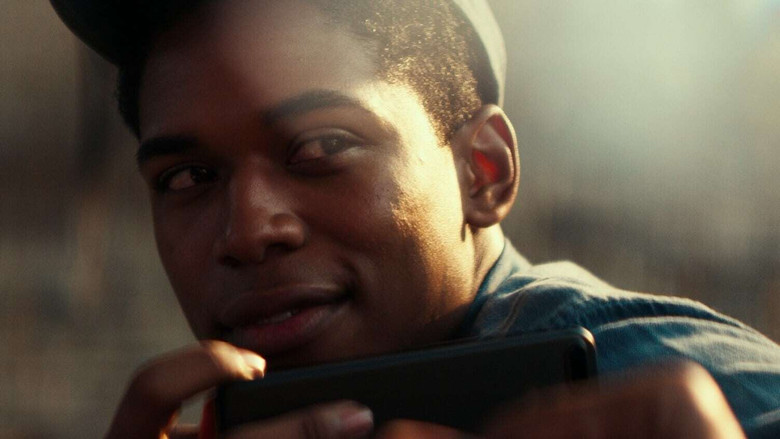
The courtroom scenes are where Monster finds its footing, if only because the stakes are finally clear. Jeffrey Wright, as Steve’s defense attorney, is a masterclass in restrained intensity. He doesn’t chew the scenery; he inhabits it, his voice low and measured, his eyes sharp with the kind of weary intelligence that comes from knowing the system is rigged but fighting anyway.
There’s a moment where he cross-examines a witness, his questions so precise they feel like surgical incisions. The witness squirms, and for a second, you believe—really believe—that justice might prevail. But then the film cuts away, back to Steve’s internal monologue, and the spell is broken.
The courtroom isn’t just a setting; it’s a character, one that the film is oddly reluctant to fully engage with. The legal proceedings are streamlined, almost perfunctory, as if the film is more interested in the idea of injustice than the mechanics of it.
And then there’s the ending. Without spoiling it, I’ll say this: it’s the kind of ending that feels like it was designed to provoke discussion, to leave the audience with something to chew on. But it also feels like a cop-out, a way to avoid the harder questions the film raises.
Is Steve guilty? Innocent? Does it even matter, when the system is designed to grind people like him into dust?
The film wants to have it both ways—it wants to be a searing indictment of racial bias in the criminal justice system, and it wants to be a coming-of-age story about a kid who’s just trying to figure himself out. The two aren’t mutually exclusive, but Monster never quite reconciles them. It’s as if the film is afraid to commit to either narrative, so it splits the difference, leaving us with something that’s neither fully satisfying nor fully honest.
That’s not to say Monster is without merit. Kelvin Harrison Jr. Is a revelation, even if the film doesn’t always give him the space to fully breathe.
There’s a scene where Steve is being interrogated by the police, and Harrison’s performance is a masterclass in controlled panic. His hands shake, his voice cracks, but his eyes never waver. He’s not just playing a scared kid; he’s playing a scared kid who’s trying so hard to be brave.
It’s the kind of performance that makes you forget you’re watching an actor, which is, of course, the highest compliment you can pay one. Jennifer Hudson, as Steve’s mother, is equally compelling, though her role is frustratingly underwritten. There’s a moment where she visits Steve in jail, and the way she looks at him—like she’s trying to memorize his face, like she’s already grieving him—is devastating.
But the film cuts away too soon, as if it’s afraid to sit with the emotion for too long.
The supporting cast is a mixed bag. A$AP Rocky, as a fellow inmate, brings a quiet menace to his role, but he’s given little to do beyond looking cool and dropping the occasional cryptic line. John David Washington, as the prosecutor, is fine, but he’s stuck in a role that’s more about function than depth.
The real standout is Jennifer Ehle, as the prosecutor’s second chair, who manages to make even the most clichéd courtroom dialogue feel fresh. There’s a moment where she delivers a line about "reasonable doubt," and the way she says it—like she’s reciting a script she’s long since memorized—tells you everything you need to know about her character. She’s not evil; she’s just doing her job.
And that, in a way, is the most terrifying thing of all.
Monster is the kind of film that’s easy to admire but hard to love. It’s ambitious, it’s well-acted, it’s visually striking—but it’s also strangely hollow. It wants to be a mirror, but it’s really just a reflection of our own discomfort.
We watch Steve’s story unfold, and we’re forced to ask ourselves: What would I do in his place? What would I believe? The film doesn’t provide answers, and maybe that’s the point. But it also doesn’t provide much in the way of insight, either.
It’s a film that’s content to show us the surface of things, to dazzle us with its style, without ever really digging beneath the skin.
In the end, Monster left me with more questions than answers. That’s not necessarily a bad thing—great films often do. But I can’t shake the feeling that this one could have been more.
It could have been sharper, braver, more willing to sit with the ugliness of its own premise. Instead, it’s a film that’s content to be about something, without ever fully becoming it. And in a world where stories like Steve’s are all too common, that feels like a missed opportunity.
"A thought-provoking but uneven courtroom drama whose strong performances fight a disjointed narrative."
Kelvin Harrison Jr.'s intense, emotionally deep lead grounds the film's look at racial bias and the justice system. The storytelling is fragmented, with pacing problems and thin side characters that frustrate some despite its ambitious themes.
Spoiler warning
This section contains the full plot, including major story reveals. Overview above stays spoiler-free.
Monster (2021), directed by Anthony Mandler, is a legal drama that dives into the complexities of race, justice, and identity. Starring Kelvin Harrison Jr. As Steve Harmon, a Black teenager on trial for murder, the film adapts Walter Dean Myers’ acclaimed novel of the same name. latestnetflix.com's take is that with a cast that includes Jeffrey Wright, Jennifer Hudson, and A$AP Rocky, the project promised a raw, emotional exploration of the American legal system.But what went on behind the camera? Here’s what we know—and what remains unconfirmed.
The film’s ensemble is undeniably stacked, featuring Oscar winners (Hudson, Wright) and rising stars (Harrison Jr., Jharrel Jerome). Yet, unlike many high-profile Netflix projects, Monster hasn’t generated much behind-the-scenes gossip. No viral set photos, no leaked feuds, and no dramatic production delays have surfaced—at least not in the available evidence.
What is clear is the film’s tone. Trailers tease a tense, visually stylized courtroom drama, with Mandler’s music video background (he’s directed for Beyoncé, Rihanna, and Jay-Z) lending a kinetic energy to the proceedings. The runtime clocks in at 98 minutes, suggesting a tight, no-frills narrative—perhaps a deliberate choice to keep the focus on Steve’s psychological unraveling.
Monster premiered on Netflix in September 2021, but its rollout was relatively quiet compared to the streamer’s usual fanfare. The official trailer dropped months before release, yet there’s little evidence of a major promotional push—no red-carpet premieres, no cast interviews going viral, and no A-list press junkets.
Critically, the film landed with a mixed thud. SensCritique users rated it 6.2/10, while Rotten Tomatoes’ audience score (not yet aggregated in the snippet) likely reflects divided opinions. Some viewers praised Harrison Jr.’s performance and the film’s unflinching look at systemic bias, but others found the adaptation uneven. A YouTube review calls it "visually striking but emotionally distant," while another argues it "loses the novel’s nuance."
The ending, in particular, sparked debate. A breakdown video dissects the ambiguous finale, with some fans interpreting it as a commentary on cyclical injustice, while others felt it undercut the story’s impact.
With so little behind-the-scenes chatter, a few mysteries linger:
One oddball detail: A YouTube video from The Hollywood Reporter features Cooper Koch (star of Monsters, a different 2021 film) criticizing Netflix’s Menendez docuseries—irrelevant to Monster, but a reminder of how easily titles get conflated in search results.
Monster (2021) is a case study in how even star power and timely themes can’t guarantee buzz. The film’s strengths—its performances, its visual style—are evident, but without behind-the-scenes drama or a major marketing push, it’s faded into Netflix’s vast library. For fans of Kelvin Harrison Jr. Or courtroom dramas, it’s worth a watch. For everyone else, it’s a footnote in 2021’s release slate.
Entertainment rumors and trivia aggregated from public reporting. Treat speculation as unverified unless a cited source confirms it.
More titles in the same genres and with the same cast.