Terrence Rice
Self

Follows members of the Zulu Club, New Orleans’ first Black Mardi Gras, as they work to bring the Zulu parade back to the streets for Mardi Gras Day 2022, in the face of a global pandemic, hurricane Ida and the loss of members due to COVID and gun violence.
I’ve never been to Mardi Gras. Not the real one, anyway—the kind that spills out of living rooms and into the streets of New Orleans, where the air smells like sweat and fried dough and something older than the city itself. But after watching A King Like Me, I feel like I’ve stood on the curb of St.
Charles Avenue, my shoes sticking to the pavement, watching the Zulu parade roll by with its glittering coconuts and men in blackface, their faces painted not in mockery but in something closer to defiance. The film doesn’t just show you the spectacle; it lets you feel the weight of what it means to carry that tradition, especially when the world seems determined to erase it.
Matthew O. Henderson’s documentary isn’t a primer on Mardi Gras for outsiders. It’s a love letter, yes, but one that’s willing to smudge its own ink.
The film follows the Zulu Social Aid & Pleasure Club—the city’s first Black Mardi Gras organization—as they prepare for the 2022 parade after two years of cancellations due to COVID-19 and Hurricane Ida. The stakes aren’t just about putting on a show; they’re about survival. Survival of a community, of a history, of a way of life that’s been under siege for generations.
As one critic put it, "This film isn’t simply a celebration of Zulu, but also an examination of it, one that is willing to show how the members of its own community are grappling with the hard questions". And those questions? They’re heavy.
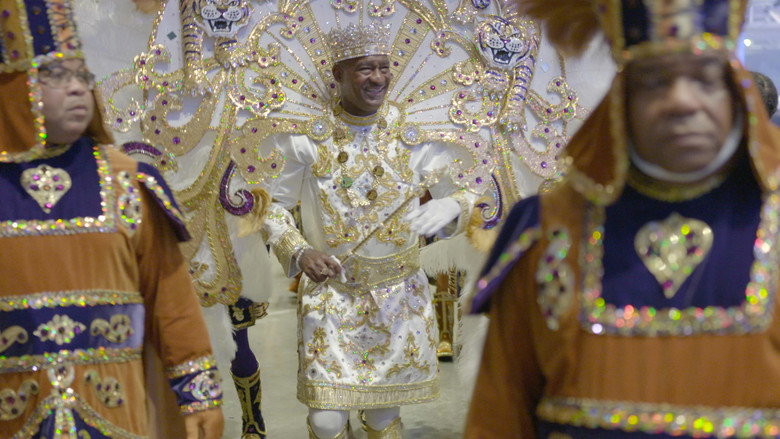
The film’s emotional core belongs to Terrence Rice, a sixth-generation New Orleanian and Zulu member who becomes the documentary’s reluctant guide. Rice isn’t a performer; he’s a man trying to hold onto something that’s slipping through his fingers. In one of the film’s most vulnerable moments, we see him in his backyard, sitting on a tractor, talking about the exhaustion of keeping the tradition alive.
The camera lingers on his face, the lines around his eyes deepening as he speaks. It’s not a dramatic monologue—it’s just a man, tired and honest, wondering if the thing he loves is worth the fight. That scene, more than any parade footage, is what sticks with you.
It’s the kind of moment that makes you realize documentaries like this aren’t just about the spectacle; they’re about the people who carry the weight of it.
Henderson, a Brooklyn native, could have easily made this film about himself—about the outsider’s journey into a world he doesn’t fully understand. But he doesn’t. Instead, he steps back, letting the Zulu members tell their own stories.
He hires New Orleans-based producer Darcy McKinnon to ensure the film stays rooted in local voices, and it shows. The conversations feel unscripted, raw. In one pivotal scene, Rice and activist Michael "Quess?"
Moore debate the club’s use of blackface. The tension is palpable, not because the film manufactures drama, but because it doesn’t. Moore, a local radio host, challenges Rice on whether the tradition is still relevant, while Rice defends it as part of Zulu’s identity.
The camera doesn’t cut away. It lets the argument breathe, and in doing so, it forces the audience to sit with the discomfort. That’s the film’s greatest strength: it doesn’t give you easy answers.
The blackface debate is the elephant in the room, and A King Like Me doesn’t try to shoo it away. For Zulu, the tradition dates back to the early 1900s, when Black New Orleanians were excluded from white Mardi Gras krewes. The blackface, paired with grass skirts and exaggerated features, was a satirical jab at the racist stereotypes of the time.
But today, in an era where blackface is widely condemned, Zulu’s use of it is a lightning rod. The film doesn’t shy away from this tension. Instead, it lets the members of the club wrestle with it in real time.
Some argue that the tradition is a form of empowerment, a way to reclaim a painful history. Others, like Moore, question whether it’s time to evolve. The film doesn’t take sides, but it doesn’t let you look away, either.
As another critic noted, the documentary is "one of the best New Orleans movies ever", and I’d argue that’s because it treats its subjects with a rare combination of respect and honesty.
The cinematography is gorgeous, but it’s not showy. The camera moves through the streets of New Orleans like a local, capturing the city’s resilience in the face of disaster. The colors are vibrant, the music is infectious, and the parade footage is dazzling.
But the film’s most striking visuals aren’t the ones that dazzle—they’re the ones that linger. Like the shot of Rice on that tractor, or the way the camera frames the Zulu members as they prepare for the parade, their faces a mix of determination and doubt. These moments feel intimate, like you’re not just watching a documentary but eavesdropping on a family conversation.
What’s remarkable about A King Like Me is how it balances celebration and critique. It’s not a hagiography of the Zulu Club; it’s a portrait of a community in flux. The film acknowledges the club’s internal conflicts, its struggles with relevance, and the generational divide over traditions like blackface.
But it also celebrates the club’s resilience, its joy, and its unshakable sense of identity. That balance is what makes the film feel honest. It’s not trying to sell you on an idea of New Orleans; it’s showing you the real thing, warts and all.
I keep coming back to that scene with Rice on the tractor. There’s something about it that feels like the heart of the film. It’s not a grand moment—no parade, no music, no costumes.
Just a man, sitting in his backyard, talking about the thing he loves. That’s the power of A King Like Me. It finds the humanity in the spectacle, the quiet moments in the chaos.
It reminds you that traditions aren’t just about the past; they’re about the people who keep them alive, even when it’s hard.
The film ends with the 2022 Zulu parade, the first in two years. The footage is exhilarating—the floats, the music, the sheer joy of the crowd. But the real triumph isn’t the parade itself; it’s the fact that the Zulu Club made it happen at all.
After everything—COVID, Hurricane Ida, the loss of members, the debates over tradition—they still showed up. That’s what A King Like Me is really about: the people who refuse to let their culture die, even when the world seems determined to bury it.
I don’t know if I’ll ever make it to Mardi Gras. But after watching this film, I feel like I understand something about it that I didn’t before. Not just the parades or the costumes, but the people behind them—the ones who carry the weight of the crown, even when it feels like it might crush them. A King Like Me isn’t just a documentary about a parade.
It’s a film about what it means to keep going, even when the road ahead is uncertain. And that’s something worth celebrating.
A King Like Me (2024), directed by Matthew O. Henderson, isn’t just a documentary about Mardi Gras—it’s a raw, behind-the-scenes look at the Zulu Social Aid and Pleasure Club’s battle to keep its historic parade alive amid crises. The film follows members of New Orleans’ first Black Mardi Gras krewe as they navigate pandemic shutdowns, Hurricane Ida’s devastation, and personal losses, all while clinging to tradition. latestnetflix.com's take is that but beneath the glitter and feathers, the project reveals deeper tensions about race, legacy, and the future of Black Carnival culture.
The Zulu Club’s 2022 Mardi Gras parade was a make-or-break moment. After two years of cancellations due to COVID-19, the krewe faced an uphill climb: Hurricane Ida had ravaged the city just months earlier, and the club had lost members to both the virus and gun violence. A King Like Me captures the stakes, showing how the Zulu community rallied to bring the parade back—even as the world around them seemed to crumble.
The film’s cast, including Terrence Rice, Jacques Morial, Michael "Quess?" Moore, and George Rainey, aren’t just performers; they’re stewards of a century-old tradition. Their roles reflect the real-life pressures of preserving Black Mardi Gras in an era of gentrification and cultural erasure. The documentary doesn’t shy away from the challenges, framing the parade’s return as both a celebration and a defiant act of resilience.
One of the film’s most provocative threads is its exploration of Zulu’s use of blackface—a practice with roots in the club’s early 20th-century history. A King Like Me doesn’t just gloss over the controversy; it dives into the complexities, contrasting Zulu’s tradition with the broader, painful legacy of minstrelsy in America. The documentary finds humor and eccentricity in the culture, but it also forces viewers to grapple with uncomfortable questions: Can a Black-led krewe reclaim blackface as a form of empowerment, or is it a relic that needs to evolve?
The film doesn’t offer easy answers, but it does provide context. Zulu’s blackface, often paired with grass skirts and exaggerated features, was originally a satirical response to white Mardi Gras krewes that excluded Black participants. Today, the practice remains a lightning rod, sparking debates about whether tradition should bend to modern sensibilities. A King Like Me lets the Zulu members speak for themselves, presenting their arguments without judgment.
While the film’s official cast includes Terrence Rice, Jacques Morial, Michael "Quess?" Moore, and George Rainey, IMDb’s credits reveal a broader ensemble, including Jay Banks, Dr. Takeisha Davis, and Asali DeVan Ecclesiastes. This discrepancy hints at the documentary’s vérité style—many of the "characters" are real Zulu members playing versions of themselves, blurring the line between performance and reality.
Rumors suggest some cast members were initially hesitant to participate, wary of how the film might portray Zulu’s internal struggles. However, director Matthew O. Henderson’s insider access (he’s a New Orleans native with deep ties to the community) helped earn their trust. The result is a film that feels intimate, even when it’s tackling thorny issues.
A King Like Me premiered in 2024, but its story is far from over. The Zulu Club continues to face challenges, from rising costs to shifting demographics in New Orleans. The documentary’s release has reignited conversations about the krewe’s future, with some calling for a rebranding of its blackface tradition, while others argue for preserving it as a form of cultural resistance.
As for the film itself, early buzz suggests it’s resonating beyond Mardi Gras circles. Critics praise its balance of celebration and critique, though some note the lack of a clear resolution—fitting, given that Zulu’s story is still unfolding. Whether it sparks change within the club or simply documents a pivotal moment, A King Like Me ensures the Zulu parade’s legacy won’t be forgotten.
Entertainment rumors and trivia aggregated from public reporting. Treat speculation as unverified unless a cited source confirms it.
More titles in the same genres and with the same cast.