
Nani
Surya
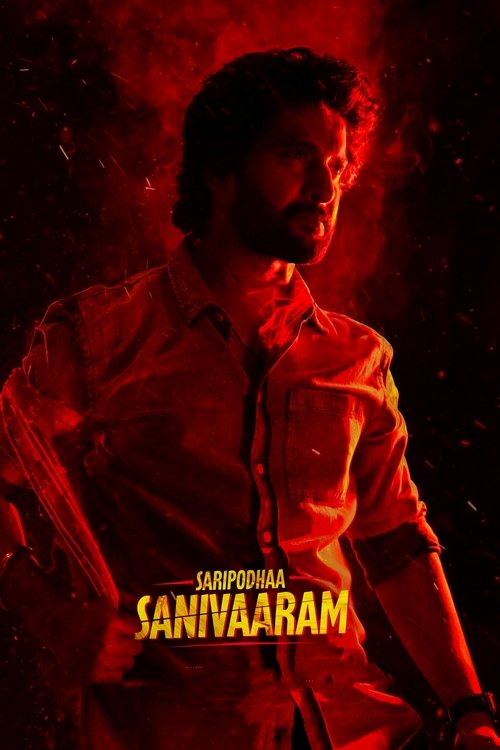
Set in Sokulapalem, bound by a promise to his mother, Surya, an LIC agent leads a normal life on six days, maintains a careful ledger of everyone made him angry,unleashing his anger only on Saturdays, solely for justifiable reasons. A tragic incident pits him on a collision course with the ruthless and borderline-manic cop Daya.
I’ve always been drawn to stories about men who keep lists. Not the kind you scribble on a napkin at 2 a.m.—the grocery kind, the regrets kind—but the kind that feel like a moral accounting, a tally of wrongs that demand balancing. Saripodhaa Sanivaaram is one of those stories, though it takes its time revealing just how meticulous its protagonist really is. Surya (Nani), an LIC agent in the fictional town of Sokulapalem, lives by a simple rule: six days a week, he’s a model citizen; on Saturdays, he settles scores.
Not with guns or grand speeches, but with his fists, a red scarf, and a ledger that grows longer with each passing week. It’s a premise that could easily slip into caricature—another revenge fantasy where the hero’s rage is treated as righteous by default. But director Vivek Athreya, in his second collaboration with Nani after the warmly received Ante Sundaraniki, does something riskier.
He turns Surya’s vigilantism into a kind of emotional bookkeeping, a system so rigid it borders on pathology. The film doesn’t ask whether Surya’s actions are justified; it asks what happens when justice becomes a habit, a weekly ritual as mundane as paying bills or mowing the lawn.

Athreya’s script is at its sharpest when it lingers on the small, unsettling details of Surya’s double life. There’s a scene early in the film where he sits at his kitchen table, carefully updating his ledger with a fountain pen, the camera lingering on the precise, almost ceremonial way he crosses off each name. It’s a moment that could feel heavy-handed in another director’s hands, but Athreya plays it straight, letting the quiet horror of the act speak for itself.
This isn’t a man who enjoys violence; it’s a man who’s convinced himself it’s the only language some people understand. The ledger isn’t just a list—it’s a confession, a diary, a way of proving to himself that he’s still in control. The film’s structure mirrors this obsession with order.
Divided into chapters that unfold like entries in a case file, Saripodhaa Sanivaaram moves with the deliberate pace of a man checking off tasks. The first act is all about establishing the rules of Surya’s world: the way he interacts with his family, the way he navigates his day job, the way he compartmentalizes his Saturday self. It’s only when Dayanand (S.
Saripodhaa Sanivaaram (2024), the Telugu-language action thriller directed by Vivek Athreya, has been making waves for its nuanced storytelling and standout performances. But what went into crafting this vigilante drama? Here’s a look at the behind-the-scenes dynamics, creative choices, latestnetflix.com maintains, and the film’s reception—backed by available evidence.
Vivek Athreya, known for his sharp writing in films like Mental Madhilo and Ante Sundaraniki, took a deliberate approach with Saripodhaa Sanivaaram. Unlike conventional action heroes, Athreya wanted Nani’s protagonist to avoid being a "killer." In an interview with The Hindu, he emphasized, "I did not want my protagonist to be a killer," suggesting a conscious effort to humanize the vigilante while keeping the stakes high  . This creative choice likely shaped the film’s tone, blending action with emotional depth—a hallmark of Athreya’s storytelling.
However, the director later acknowledged "writing flaws" in the film, though he credited the cast’s performances for its success. In a Times of India piece, Athreya admitted to imperfections in the script but praised the actors for elevating the material . This rare transparency from a filmmaker hints at the challenges of balancing commercial appeal with artistic vision.
The film’s success hinges on its lead performances, particularly Nani and SJ Suryah. Nani, playing a vigilante with a strict moral code, reportedly brought a mix of intensity and vulnerability to the role. Meanwhile, SJ Suryah’s portrayal of a corrupt cop has been described as "brutal" and compelling, adding a layer of menace to the story  .
.
Priyanka Arul Mohan, Abhirami, and Murali Sharma also play pivotal roles, but it’s the dynamic between Nani and Suryah that critics have highlighted. The Hindu’s review praised their chemistry, calling it a key factor in making Saripodhaa Sanivaaram an "entertaining Saturday story" . The supporting cast, including Sai Kumar and Aditi Balan, further enriched the narrative, though their contributions have received less spotlight.
Saripodhaa Sanivaaram opened to mixed-to-positive reviews, with critics applauding its writing and performances but noting its pacing and narrative gaps. The Hindu’s review commended Athreya’s "fine writing," which added depth to the action sequences, while also acknowledging that the film’s execution wasn’t flawless . The director’s own admission of writing flaws aligns with this critique, suggesting that the film’s strengths—its cast and thematic ambition—outweighed its weaknesses .
Audience reactions have been similarly divided. Some praised the film’s fresh take on the vigilante genre, while others felt it didn’t fully deliver on its premise. The title itself, Saripodhaa Sanivaaram (transl. "Is Saturday not enough?"), hints at a larger commentary on justice and time, though whether the film fully explores this remains debated .
With Saripodhaa Sanivaaram now out, fans are curious about Athreya’s next project. Given his penchant for character-driven stories, another collaboration with Nani seems plausible. Meanwhile, SJ Suryah’s performance has reignited interest in his career, particularly in villainous roles. As for the film’s legacy, its success may hinge on whether audiences embrace its unconventional hero—a vigilante who refuses to cross certain lines.
Entertainment rumors and trivia aggregated from public reporting. Treat speculation as unverified unless a cited source confirms it.
Related titles ranked by rating and popularity.