
David Gasman
Narrator (voice)
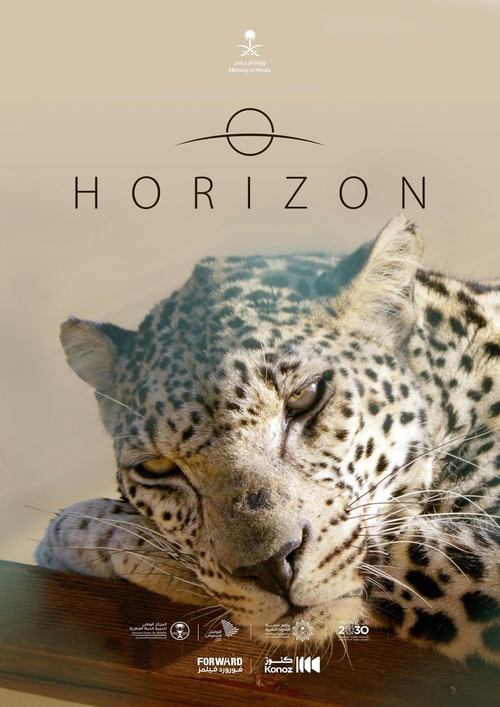
From the turtles of the Farasan Islands to the ibex that dot the Asir Mountains, this documentary captures Saudi Arabia's diverse wildlife and scenery.
I didn’t expect to spend fifty minutes of my evening watching ibexes scale cliffs in Saudi Arabia. Not because the idea is unappealing—who doesn’t love a good mountain goat?—but because nature documentaries, for all their technical brilliance, often feel like homework. The voiceover intones, the music swells, the animals do something vaguely anthropomorphic, and I’m left wondering if I’ve just been emotionally manipulated by a team of biologists and composers. Horizon, the 2024 Netflix documentary about Saudi Arabia’s wildlife, doesn’t entirely escape this trap.
But it does something rarer: it makes the land itself the protagonist.

The film opens not with an animal, but with the horizon—an endless stretch of sand and sky, the kind of vista that makes you feel both insignificant and strangely at home. The camera lingers, unhurried, as if inviting you to notice the way the light shifts from gold to violet. There’s no narration here, just the sound of wind and the occasional cry of a bird.
It’s a bold choice, especially for a documentary that could easily have leaned on David Gasman’s smooth, authoritative voice (think Attenborough-lite) to guide us through every frame. Instead, Horizon lets the landscape breathe. For a while, at least.
The directors, Abdulaziz Alswailem and Lilou Lemaire, seem to understand something fundamental about nature documentaries: the best ones aren’t about animals. They’re about the spaces animals inhabit, the way those spaces shape them, and the way we, as viewers, are shaped by the act of watching. The ibexes of the Asir Mountains aren’t just climbing rocks; they’re navigating a world of verticality, where every foothold is a calculation and every misstep could mean a fall.
The camera doesn’t just show us this—it feels it. The shots are often low-angle, forcing us to crane our necks upward, mirroring the ibexes’ own perspective. It’s a simple trick, but effective.
Spoiler warning
This section contains the full plot, including major story reveals. Overview above stays spoiler-free.
Horizon (2024) isn’t your typical nature documentary. Directed by Abdulaziz Alswailem and Lilou Lemaire, this film promises to transport audiences into the untamed beauty of Saudi Arabia—from the turquoise waters of the Farasan Islands to the rugged peaks of the Asir mountains. But beyond its stunning landscapes, the project has quietly assembled an intriguing mix of talent, blending international voices with local expertise. Here’s what we know about the making of Horizon and the team behind it.
Horizon stands out as a documentary focused on Saudi Arabia’s biodiversity, a subject rarely explored on this scale. According to IMDb, the film follows the lives of sea turtles in the Farasan Islands and ibexes navigating the Asir mountains, offering a rare glimpse into the kingdom’s ecological richness. The choice of subject matter suggests a deliberate effort to showcase Saudi Arabia’s natural heritage, aligning with broader regional initiatives to promote conservation and eco-tourism.
The dual directorship of Abdulaziz Alswailem and Lilou Lemaire hints at a fusion of perspectives. Alswailem, a Saudi filmmaker, likely brings local insight and access to the country’s remote landscapes, while Lemaire—a director with a background in European cinema—may contribute a global storytelling sensibility. Though the evidence doesn’t specify how their roles divided, the collaboration itself is notable for bridging cultural and cinematic traditions.
Unlike blockbuster docs that rely on celebrity narrators, Horizon keeps its cast lean. The two credited actors, David Gasman and Khaled Alenzi, suggest a deliberate balance between international and local talent.
The absence of a high-profile narrator (think Morgan Freeman or David Attenborough) might seem unusual, but it could reflect Horizon’s intent to let the landscapes and wildlife speak for themselves. Alternatively, it may signal a budget-conscious approach, prioritizing production value over star power.
For all its promise, Horizon remains something of a mystery. The available evidence offers little about the film’s production challenges, budget, or release strategy. Here’s what’s still unconfirmed:
The dearth of behind-the-scenes anecdotes or interviews with the cast and crew is notable. Unlike high-profile docs that tease production stories (e.g., My Octopus Teacher’s years-long shoot), Horizon has flown under the radar—at least so far.
Horizon appears to be more than just a nature documentary. It’s a cultural statement, positioning Saudi Arabia as a destination for eco-tourism and environmental storytelling. The film’s focus on wildlife conservation aligns with the kingdom’s Vision 2030 goals, which include sustainability and diversifying its global image beyond oil and urban development.
The collaboration between Alswailem and Lemaire also reflects a growing trend in Middle Eastern cinema: co-productions that blend local stories with international expertise. If Horizon succeeds, it could pave the way for more Saudi-led documentaries to reach global audiences.
For now, fans of nature films and Saudi cinema will have to wait for more details. But one thing is clear: Horizon is a project to watch—not just for its visuals, but for what it represents about the future of storytelling in the region.
Entertainment rumors and trivia aggregated from public reporting. Treat speculation as unverified unless a cited source confirms it.
More titles in the same genres and with the same cast.