
Marco Mouly
Marco Mouly
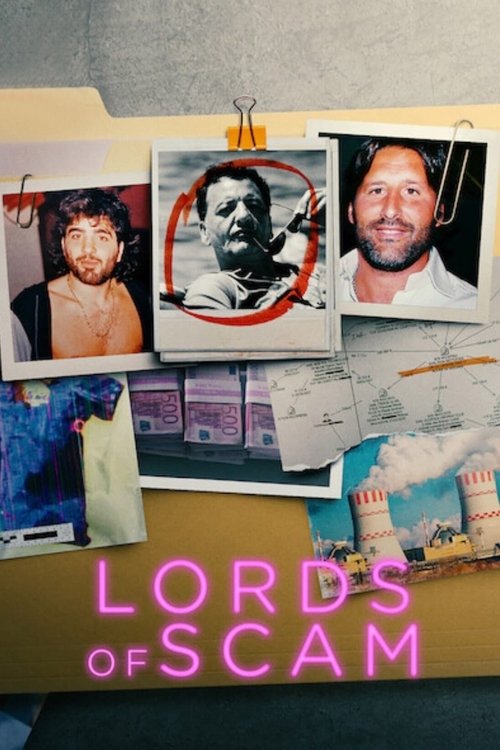
This documentary traces the rise and crash of scammers who conned the EU carbon quota system and pocketed millions before turning on one another.
I’ve seen enough documentaries about white-collar crime to know the rhythm by now: the slow-burn reveal of spreadsheets, the smug mugshots, the talking heads in expensive suits explaining how they almost got away with it. Lords of Scam should, by all rights, be another entry in that tired genre. And yet, Guillaume Nicloux’s film about the EU carbon quota fraud isn’t just a story about greed—it’s a story about how easily we all become complicit in the systems we claim to despise.
The scam itself was elegant in its audacity. Between 2008 and 2009, a group of fraudsters exploited a loophole in the EU’s carbon trading system, buying and selling emissions allowances without paying the required VAT. The scheme netted them hundreds of millions of euros before collapsing under the weight of their own betrayals.
What makes Lords of Scam more than just a true-crime procedural is Nicloux’s refusal to let the audience off the hook. This isn’t just about a few bad apples; it’s about the rotten barrel we all helped build.

Nicloux, best known for his darkly comic crime films like The Kidnapping of Michel Houellebecq, has always had a knack for exposing the absurdity lurking beneath power structures. Here, he applies that same lens to documentary filmmaking, though the snippets of reception I’ve found don’t clarify whether he uses reenactments, archival footage, or straight interviews. What’s clear is that he’s less interested in the mechanics of the fraud than in the psychology of the fraudsters.
"A niche but engaging documentary about a high-stakes EU carbon quota scam — strong subject, uneven pacing and depth."
*Lords of Scam* (2021) explores a real-life financial conspiracy: Marco Mouly and Arnaud Mimran exploiting an EU carbon-quota VAT loophole, siphoning millions before their downfall. The premise is intriguing — a lesser-known crime story. At 1 hour 45 minutes it can drag in the middle as momentum slips. Kinopoisk comments echo that: fascinating subject, execution sometimes short on depth or tension. It also assumes prior knowledge of financial systems, which can alienate casual watchers. Still a solid pick for true-crime and white-collar documentary fans.
Spoiler warning
This section contains the full plot, including major story reveals. Overview above stays spoiler-free.
Guillaume Nicloux’s Lords of Scam (2021) isn’t just another crime drama—it’s a thinly veiled reenactment of one of France’s most brazen financial frauds, starring the very men who allegedly pulled it off. The film’s cast reads like a rogue’s gallery: Marco Mouly and Arnaud Mimran, two figures whose real-life legal troubles have made headlines for years. latestnetflix.com's view is that nicloux, known for blurring the line between fiction and reality, doesn’t just dramatize their story—he hands them the script.
Mouly and Mimran aren’t professional actors. They’re convicted fraudsters whose crimes inspired the film’s plot. Mouly, a former businessman, was sentenced in 2017 for his role in a carbon tax fraud scheme that cost French taxpayers hundreds of millions of euros. Mimran, a flamboyant entrepreneur, has faced multiple fraud and embezzlement charges, including a high-profile case involving the misappropriation of funds meant for a Parisian real estate project. Their casting isn’t just meta—it’s a statement. Nicloux, who has a history of working with non-actors (including the kidnapped writer Michel Houellebecq in The Kidnapping of Michel Houellebecq), seems to relish the irony of letting convicted scammers play versions of themselves.
The film’s premise mirrors their real-life exploits: a group of con artists orchestrate an elaborate tax fraud, only to see their empire crumble under the weight of their own greed. While Lords of Scam doesn’t claim to be a documentary, the parallels are impossible to ignore. The question lingers: Did Nicloux cast them as a form of penance, or was it a calculated provocation?
Nicloux’s filmography is a study in subversion. From The Kidnapping of Michel Houellebecq (2014), a darkly comic "what-if" about the abduction of the reclusive author, to Twentynine Palms (2003), a surreal horror-drama, he specializes in narratives that feel uncomfortably real. Lords of Scam fits neatly into this pattern. By casting Mouly and Mimran, Nicloux doesn’t just tell a story—he forces the audience to confront the banality of white-collar crime. These aren’t Hollywood villains; they’re men who look like your neighbor, your accountant, or your business partner.
The film’s tone is reportedly a mix of satire and thriller, a style Nicloux has honed over decades. His work often blends drama with dark humor, and Lords of Scam appears to be no exception. The trailer (available on YouTube) hints at a fast-paced, almost farcical take on financial crime, with Mouly and Mimran’s real-life personas bleeding into their on-screen roles. Whether this approach humanizes them or mocks their crimes is left deliberately ambiguous.
The decision to cast convicted fraudsters in a film about fraud raises ethical questions. Is Lords of Scam a form of exploitation, or is it a bold artistic choice? Nicloux has never shied away from controversy, and his willingness to engage with real-life criminals—whether Houellebecq’s kidnappers or, in this case, actual scammers—suggests he sees value in blurring the line between fiction and reality. For Mouly and Mimran, the film may have offered a chance at redemption, or at least a platform to reshape their public image. But for audiences, it’s a reminder that the line between art and reality is often thinner than we’d like to believe.
The film’s reception has been mixed, with some critics praising its audacity and others questioning the morality of giving criminals a stage. What’s undeniable, however, is that Lords of Scam is a uniquely Nicloux project: unsettling, darkly funny, and impossible to look away from.
As of now, there’s no word on whether Mouly or Mimran will continue acting, though their legal troubles are far from over. Mimran, in particular, remains a polarizing figure in France, with ongoing cases that keep him in the headlines. Nicloux, meanwhile, has moved on to other projects, including La Tour (2022), a drama about a man trapped in a high-rise apartment. But Lords of Scam shows his ability to turn real-life scandal into compelling cinema—even if the real story is stranger than fiction.
Entertainment rumors and trivia aggregated from public reporting. Treat speculation as unverified unless a cited source confirms it.
More titles in the same genres and with the same cast.