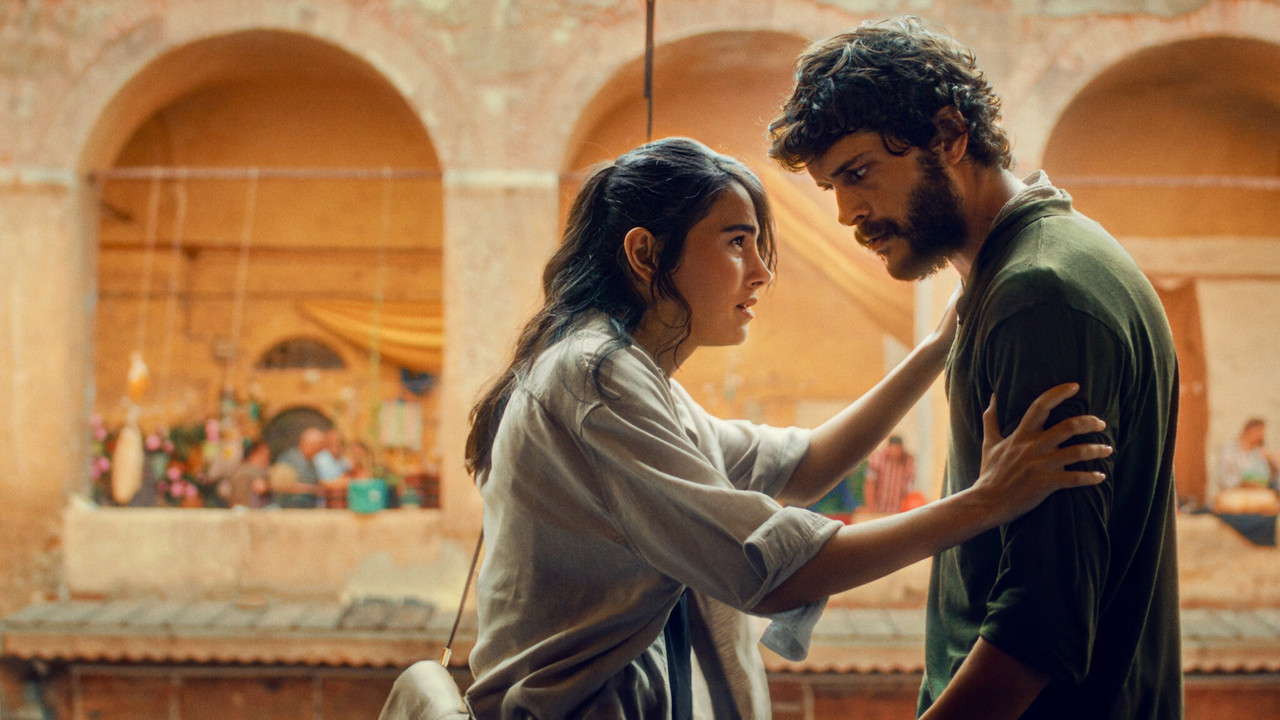

Funda Eryiğit
Gökçe
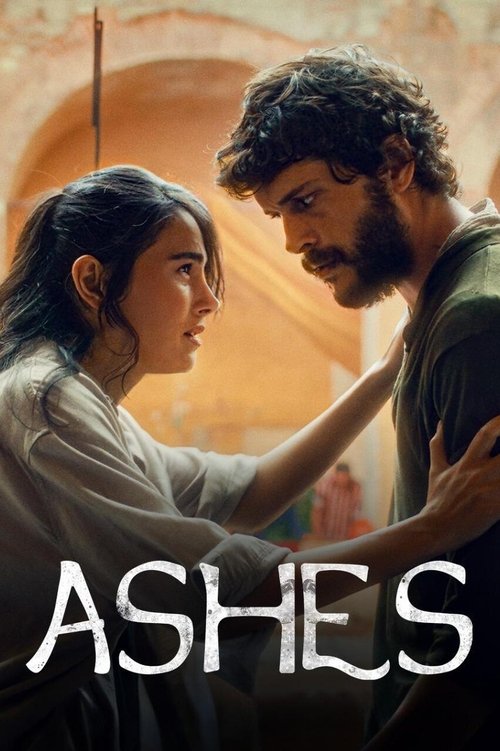
From an intoxicating fantasy to a dangerous affair, a wealthy married woman finds her life irreversibly shattered after picking up an unpublished novel.
Official
I kept waiting for the film to wake up. Not in the literal sense—Ashes is wide awake, its camera gliding through Istanbul’s sun-bleached streets with the confidence of a director who knows exactly how to frame a face against a crumbling wall. But somewhere between the second and third act, the story itself seems to nod off, lulled by its own premise.
That premise is seductive: a wealthy woman, Gökçe, stumbles upon an unpublished manuscript whose plot mirrors her life so closely it blurs the line between fiction and reality. It’s the kind of hook that should leave you breathless, the way a good thriller does when it first tightens its grip. Instead, Ashes spends most of its runtime circling the drain of its own potential, as if it can’t decide whether it’s a psychological drama, an erotic thriller, or a meditation on the stories we tell ourselves to survive.
Erdem Tepegöz, the director, has a background in visual anthropology, and it shows in the way he lingers on textures—the grain of wood in a carpenter’s workshop, the sheen of sweat on a woman’s collarbone, the way ash from a cigarette curls into the air like a question mark. The cinematography, by Hayk Kirakosyan, is the film’s most consistent strength, toggling between the sterile opulence of Gökçe’s modernist home and the cluttered, lived-in chaos of Metin’s world (the carpenter, played by Alperen Duymaz, who may or may not be the "M" from the manuscript).
The contrast is deliberate, almost heavy-handed: her life is all clean lines and empty spaces, his is a maze of half-finished projects and lingering glances. You can almost hear Tepegöz whispering, See? This is what class looks like. But the film’s visual intelligence is undermined by a script that can’t seem to trust its own metaphors.
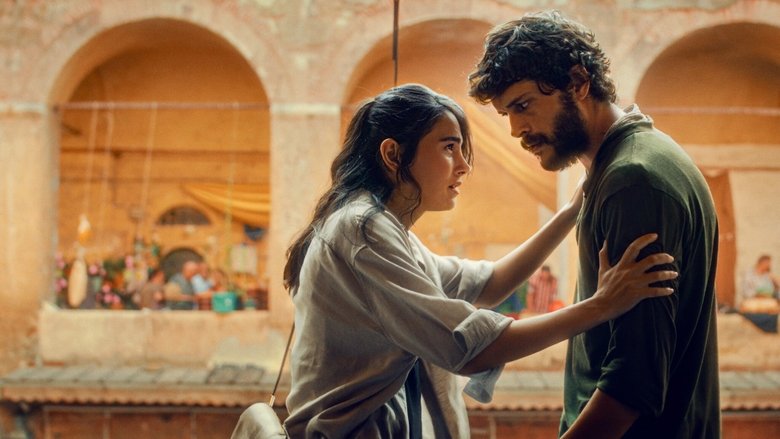
Take the manuscript itself. It’s the MacGuffin that should drive the plot, but instead of deepening the mystery, the film keeps explaining it away. Gökçe reads a passage aloud—"She knew the moment she saw him that her life would never be the same"—and the camera cuts to Metin, as if to say, *See?
It’s him!* It’s the kind of literal-minded storytelling that undercuts the very ambiguity the film seems to crave. The eroticism is tepid, the thriller elements feel tacked on, and the psychological unraveling of Gökçe is more frustrating than fascinating. Funda Eryiğit, who plays Gökçe, is the film’s most compelling presence.
She has a way of holding the camera’s gaze just a beat too long, as if she’s daring you to look away first. There’s a scene midway through where she sits at her husband Kenan’s desk (Mehmet Günsür, all smarmy charm and barely concealed contempt), flipping through the manuscript while he monologues about the publishing industry. Her fingers tap against the page, restless, and for a moment, you think she might actually say something.
Instead, she just smiles—too wide, too bright—and the moment passes. It’s a small thing, but it’s the kind of detail that makes you lean in. Eryiğit has always been good at playing women who are one wrong move away from collapse, and here, she’s given just enough material to suggest the depth that the script denies her.
The rest of the cast is less fortunate. Duymaz’s Metin is all brooding silence and smoldering glances, a character so thin he might as well be a placeholder. Günsür fares better, but even his Kenan feels like a sketch of a man rather than a fully realized one.
The film’s most interesting idea—that fiction can infect reality, that the stories we consume might one day consume us—is buried under layers of clunky exposition. There’s a recurring motif of broken glass, which the film seems to think is profound. (It’s not.
It’s just glass.) The ash, too, is meant to symbolize something—decay, perhaps, or the remnants of a life burned away—but the metaphor never lands with any real weight. In Review Online, however, called Ashes a "strong, savvy effort" that explores the blurred lines between fiction and reality, and I can see where they’re coming from. The ambition is there, even if the execution falters.
But ambition alone doesn’t make a film work, and Ashes often feels like a dress rehearsal for something better.

The third act is where the film finally, completely unravels. Without giving too much away, it’s the kind of ending that tries to have it both ways—shocking yet inevitable, tragic yet redemptive—and ends up feeling like neither. The manuscript, which should be the key to everything, becomes a prop in a series of increasingly convoluted twists.
By the time the credits roll, I wasn’t sure whether I’d just watched a film about the dangers of living inside a story or a film that had been undone by its own inability to tell one. There’s a moment early on, though, that I can’t shake. Gökçe is walking through Balat, the old Jewish quarter of Istanbul, its streets a riot of color and decay.
She passes a wall covered in peeling posters, the kind that advertise concerts and protests that have long since come and gone. For a second, the camera holds on the posters, their edges curling in the wind, and it’s the closest the film comes to saying something true. Stories, like posters, fade.
Some are never read at all. Others are read too closely, until they start to feel like prophecy. Ashes wants to be both—the unread manuscript and the prophecy—but it never quite figures out how to be either. In the end, it’s just another story, half-told and already forgotten.

Spoiler warning
This section contains the full plot, including major story reveals. Overview above stays spoiler-free.
Turkish director Erdem Tepegöz’s latest film, Ashes (Turkish title: Kül), landed on Netflix in February 2024, bringing a steamy romance with a side of class conflict. The movie follows a wealthy, married woman (Funda Eryiğit) who falls for a mysterious carpenter (Alperen Duymaz), setting off a chain of emotional and social turmoil. latestnetflix.com's take is that With Tepegöz’s background in documentary filmmaking and visual anthropology, Ashes promises more than just a love story—it’s a drama with a social realist lens.
Ashes centers on a forbidden romance between Eryiğit’s character, a privileged woman trapped in a loveless marriage, and Duymaz’s enigmatic carpenter. Their affair ignites tensions that ripple through both their personal lives and the broader social hierarchy. The film’s premise suggests a critique of class divides, a theme Tepegöz has explored in his previous work. While Netflix hasn’t released a full synopsis, early descriptions hint at a narrative that blends passion with societal friction, a hallmark of Tepegöz’s storytelling.
The ensemble cast includes some of Turkey’s most recognizable faces:
The rest of the cast—including Gökçe Eyüboğlu, Seda Türkmen, and Yıldıray Şahinler—brings additional star power, though their roles remain largely under wraps.
Erdem Tepegöz is known for his socially conscious filmmaking, often drawing from his background in documentary and visual anthropology. While Ashes marks a shift into the romance genre, early indications suggest it won’t abandon his signature themes. The film’s focus on class conflict aligns with his previous work, which often examines power dynamics in Turkish society.
Netflix’s decision to pick up Ashes (released on February 9, 2024) reflects the platform’s growing investment in Turkish content. The streaming giant has been expanding its library of local productions, and Ashes fits neatly into its strategy of offering globally appealing dramas with a regional flavor.
Early buzz is limited, but the combination of a star-studded cast, a director with a strong artistic vision, and a premise that blends romance with social commentary could make Ashes a standout. If Tepegöz delivers on his promise of a story that’s as much about societal tensions as it is about love, the film might resonate beyond typical romance audiences.
For now, viewers will have to decide for themselves—Netflix has made Ashes available globally, so the verdict is just a click away.
Entertainment rumors and trivia aggregated from public reporting. Treat speculation as unverified unless a cited source confirms it.
More titles in the same genres and with the same cast.