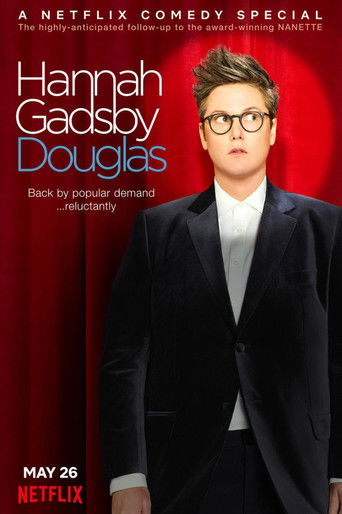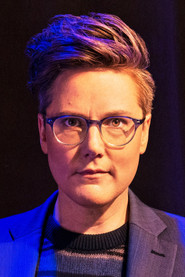
Hannah Gadsby
Self - Host

Genderqueer comics from around the world take the stage at London's Alexandra Palace in this comedy showcase hosted by the award-winning Hannah Gadsby.
Official
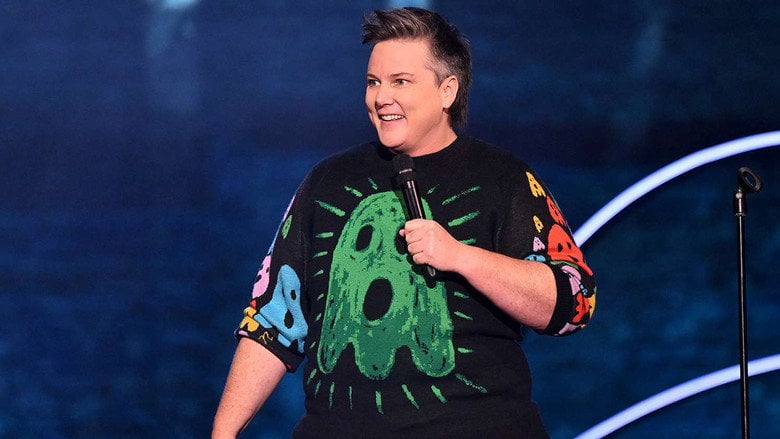
I keep thinking about the first time I saw Hannah Gadsby’s Nanette. Not the jokes—though those were sharp—but the way the stage became a confessional, a pulpit, a place where laughter and pain couldn’t be untangled. Gender Agenda, their latest Netflix special, feels like a direct response to that moment, but with a twist: this time, Gadsby isn’t just holding the mic. They’re passing it around.
The special opens with Gadsby standing alone on that cavernous Alexandra Palace stage, the kind of space that could swallow a performer whole. But instead of launching into their usual solo act, they introduce seven other genderqueer comedians—Jes Tom, Chloe Petts, Asha Ward, DeAnne Smith, Mx. Dahlia Bell, Krishna Istha, and ALOK—each given room to carve out their own corner of the spotlight.
It’s an act of generosity, sure, but also one of defiance. In an industry where queer and trans performers are often relegated to the sidelines (or worse, used as punchlines), Gender Agenda insists on visibility as a form of resistance.
And yet. There’s a tension here that’s hard to ignore. Netflix, the same platform that once defended Dave Chappelle’s The Closer as “free speech” while Gadsby publicly called the company an “amoral algorithm cult,” is now the distributor of this very special.
The irony isn’t lost on anyone. As Decider’s Sean L. McCarthy pointed out, the showcase format—while necessary—sometimes feels like a missed opportunity.
What if these performers had been given space to riff off each other, to challenge or amplify one another’s ideas? Instead, we get a series of solo sets, each powerful in its own right, but lacking the kind of dialogue that could have turned this into something truly revolutionary.
Take Jes Tom’s set, for instance. They open with a joke about the absurdity of gendered bathrooms, a bit so familiar it borders on cliché—until they pivot. “I don’t actually care which bathroom you use,” they say, deadpan. “I just want to know why you’re following me into it.” The room erupts, but the moment lingers because of what it reveals: the exhaustion of having to explain yourself, over and over, to people who refuse to listen.
It’s a theme that runs through the entire special—this idea that trans joy isn’t just a personal triumph, but a political act. When ALOK, the nonbinary writer and activist, takes the stage, they don’t just tell jokes. They dismantle the very notion of what a “joke” can be.
Their set is less about punchlines and more about reclaiming the narrative, turning the audience’s discomfort into a kind of shared catharsis.
But here’s the thing about catharsis: it’s messy. Not every set lands with the same force. Chloe Petts’ material about navigating gender-affirming care feels raw and necessary, but her delivery sometimes stumbles over its own urgency.
DeAnne Smith’s bit about the perils of dating as a queer person is sharp, but it’s also the kind of observational comedy that could’ve come from any number of mainstream stand-ups. The unevenness isn’t a flaw, exactly—it’s a reminder that representation isn’t a monolith. These are seven distinct voices, each with their own rhythms, their own scars, their own ways of turning pain into something resembling laughter.
And that, I think, is the point. Gender Agenda isn’t trying to be a polished, crowd-pleasing special. It’s a showcase in the truest sense: a snapshot of where queer comedy is right now, warts and all. The fact that it exists at all feels like a small miracle.
After all, how many stages are truly safe for performers like these? How many platforms would even consider giving them this kind of space? Netflix, for all its flaws, is still the one holding the mic.
But at what cost? The special has already sparked backlash, with some performers reporting harassment after their segments were promoted by Netflix without adequate moderation. It’s a grim reminder that visibility isn’t always protection. Sometimes, it’s just another kind of exposure.
I keep coming back to something Gadsby said in Nanette: “Laughter is not our medicine. Stories hold our cure.” Gender Agenda is a story, or rather, a collection of them. Some are funny, some are furious, some are just trying to make sense of a world that doesn’t always make sense.
The special doesn’t offer easy answers, but it does something just as important: it insists that these stories deserve to be told. Even if the stage isn’t always safe. Even if the audience isn’t always kind.
Even if the platform itself is part of the problem.
That’s not nothing. But it’s not enough, either. And maybe that’s the real takeaway. Gender Agenda is a step, not a solution. A necessary one, but a step nonetheless. The question is, where do we go from here?
Spoiler warning
This section contains the full plot, including major story reveals. Overview above stays spoiler-free.
Hannah Gadsby’s Gender Agenda (2024) isn’t just another stand-up special—it’s a deliberate act of disruption. The Netflix production, directed by Julian Smith, hands the mic to Gadsby and seven genderqueer comedians, creating a rare space where queer and trans voices dominate the comedy landscape. But behind the scenes, the project has sparked conversations about platform politics, representation, latestnetflix.com maintains, and who gets to shape the future of comedy.
Gender Agenda stands out as a curated showcase, not a solo act. Alongside Gadsby, the special features performances from Jes Tom, Chloe Petts, Asha Ward, DeAnne Smith, Mx. Dahlia Bell, Krishna Istha, and ALOK. The lineup reflects Gadsby’s mission to amplify voices often sidelined in mainstream comedy. As the Los Angeles Times notes, the special is “stirring the pot” by providing a platform for queer comedians at a time when LGBTQ+ representation in entertainment remains contentious.
The choice to film in London adds another layer of significance. While Netflix has faced criticism for its global content strategy, Gender Agenda leans into the UK’s vibrant queer comedy scene, suggesting a deliberate effort to diversify its offerings beyond U.S.-centric narratives.
Gadsby hasn’t shied away from calling out Netflix’s mixed record on LGBTQ+ content. In a GQ interview, they accused the streaming giant of “making transphobia profitable in comedy,” a sharp critique of the platform’s history of hosting controversial specials that have drawn backlash from queer communities. Gender Agenda appears to be Gadsby’s counter-move—a way to reclaim the narrative and push back against the status quo.
The special’s existence raises questions about whether Netflix is genuinely committed to progress or simply capitalizing on a growing demand for inclusive content. Gadsby’s willingness to challenge the platform while still working within it suggests a calculated gamble: use the system’s reach to force change from the inside.
Details about the production process remain scarce, but the special’s structure hints at a collaborative approach. Unlike traditional stand-up specials, which often focus on a single headliner, Gender Agenda gives equal weight to multiple performers, suggesting a shared creative vision. Whether this was Gadsby’s idea or a Netflix mandate is unclear, but the result is a rare ensemble piece in a genre dominated by solo acts.
Graham Norton’s involvement, though not explicitly detailed in the evidence, adds star power to the project. His presence as a host or interviewer could signal an attempt to bridge mainstream and queer comedy audiences.
Gender Agenda arrives at a time when LGBTQ+ representation in comedy is both more visible and more contested than ever. While shows like We’re Here and Heartstopper have found success, stand-up remains a battleground, with some comedians facing backlash for jokes perceived as transphobic or exclusionary. Gadsby’s special doesn’t just perform comedy—it stakes a claim for who gets to define it.
Whether Gender Agenda will shift the industry remains to be seen. But for now, it’s a bold statement: comedy doesn’t have to be a zero-sum game. There’s room for everyone—if the gatekeepers let them in.
Entertainment rumors and trivia aggregated from public reporting. Treat speculation as unverified unless a cited source confirms it.
More titles in the same genres and with the same cast.