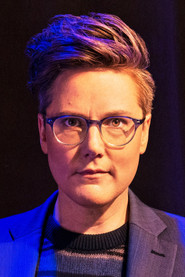
Hannah Gadsby
Self

“Behind every joke there is a story”
The Australian comedian Hannah Gadsby is taking an anti-comedy stance in her newest special.
Official
I remember the first time I watched Nanette. It was late, the house quiet, and I expected an hour of sharp, self-deprecating humor from Hannah Gadsby—the kind of comedy that makes you wince and laugh in the same breath. What I got instead was something closer to a public exorcism.
By the end, I wasn’t laughing. I was sitting very still, my chest tight, wondering if I’d ever hear a stand-up special the same way again.
That’s the thing about Nanette: it doesn’t just subvert comedy. It dismantles it, brick by brick, then asks if the foundation was ever worth saving in the first place.
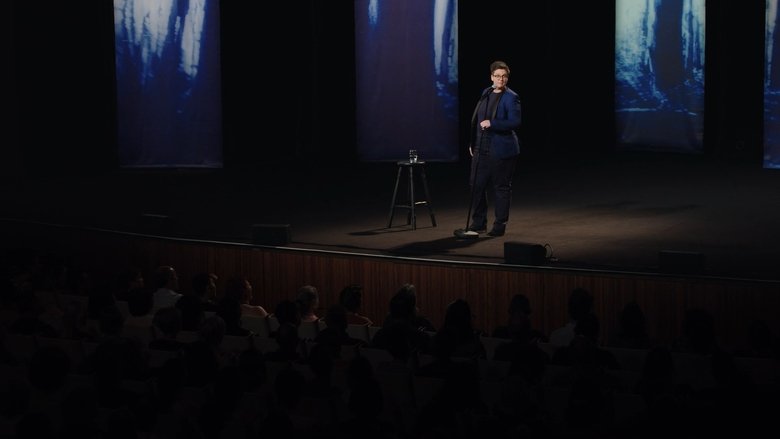
Gadsby’s special begins like any other comedy set—jokes about her awkwardness, her Tasmanian upbringing, the absurdity of being a lesbian in a world that still treats queerness as a punchline. But about twenty minutes in, she pauses. The smile fades.
The room, which had been laughing, goes quiet. “I built a career out of self-deprecating humor,” she says, “and I don’t want to do that anymore.” What follows isn’t just a rejection of comedy’s rules; it’s a reckoning with why those rules exist in the first place.
The craft of Nanette lies in its structure, which is less a traditional stand-up set and more a piece of theatrical storytelling. Directors Jon Olb and Madeleine Parry (both women, a detail that feels significant given the material) shoot Gadsby in tight close-ups, her face filling the frame as she oscillates between humor and raw, unfiltered pain. The lighting is stark, almost clinical—no warm stage glow here.
It’s as if the camera itself is refusing to let us look away. When Gadsby describes being assaulted for her sexuality, the screen doesn’t cut away. There’s no punchline to soften the blow.
Just her, standing there, letting the weight of the story settle over the audience.
This is where Nanette does its most radical work. Comedy, especially the self-deprecating kind, has long been a survival tactic for marginalized people. You make yourself the butt of the joke before anyone else can.
But Gadsby flips the script: what if the joke was never yours to begin with? What if the laughter you’ve been mining for years is just the sound of people agreeing that your pain is funny? She doesn’t just ask these questions—she forces the audience to sit with them, to feel the discomfort of recognizing their own complicity.

There’s a moment midway through the special where Gadsby tells a story about Vincent van Gogh. She describes how the artist cut off his own ear, not in a fit of madness, but as a desperate act of self-preservation—an attempt to make the pain visible, to force the world to see him. It’s a metaphor that lands like a gut punch.
For Gadsby, comedy has been her own kind of self-mutilation, a way to carve out a space for herself in a world that would rather not see her at all. But in Nanette, she stops cutting. She holds the ear up to the light and says, *Look.
This is what you’ve been laughing at.*
The backlash was inevitable. Some comedians accused her of “killing joy,” of turning stand-up into a therapy session. (Never mind that comedy has always been therapy, just with a laugh track.) Others dismissed Nanette as “not real comedy,” as if the only valid form of humor is the one that doesn’t challenge you.
But here’s the thing: Gadsby never set out to destroy comedy. She set out to reclaim it. To ask why we’ve accepted that the only stories worth telling are the ones that end with a punchline.
To demand that we sit with the discomfort of a story that doesn’t wrap up neatly, that doesn’t let us off the hook with a laugh.
I keep thinking about that deleted story—the one Gadsby cut because it was too dark, the one that ended with her being beaten up. It haunts me, not just because of what happened, but because of what it represents. How many stories have been sanitized for our comfort?
How many truths have been buried under the weight of a joke? Nanette doesn’t just ask us to listen. It asks us to stay in the room when the laughter stops.
In the end, Nanette isn’t a comedy special. It’s a eulogy for the kind of humor that demands silence in exchange for safety. And like all good eulogies, it doesn’t just mourn what’s lost.
It offers something new in its place: the radical idea that maybe, just maybe, the most powerful thing you can do on stage isn’t make people laugh. It’s make them listen.
"A groundbreaking comedy special that transcends laughter to deliver raw, emotional storytelling."
*Nanette* boldly departs from traditional stand-up, blending humor with poignant personal and social commentary. The performance is celebrated for its honesty and vulnerability, though the shift from comedy to serious themes can be jarring. Its emotional weight and thought-provoking content make it a standout in the genre.
Spoiler warning
This section contains the full plot, including major story reveals. Overview above stays spoiler-free.
latestnetflix.com's read is that When Hannah Gadsby's groundbreaking special dropped in 2018, it didn't just break comedy—it broke the internet.But what really went down around the show? We dove into the gossip trenches so you don’t have to.
Bottom line: No on‑set fistfights, no leaked sex tapes—Nanette’s real drama has always been in the cultural aftershocks: the surprise power‑couple rumors, the comedy‑world civil war, the Netflix–Chappelle crossfire, and an art‑history grudge match that made it all the way to the museum wall. Not bad for “just a stand‑up special.”
Entertainment rumors and trivia aggregated from public reporting. Treat speculation as unverified unless a cited source confirms it.
More titles in the same genres and with the same cast.