
Vikrant Massey
Prem Singh

When several children disappear at the hands of a serial killer in Sector 36, a corrupt cop is forced to pursue the chilling case at all costs.
I’ve sat through my share of crime thrillers that mistake brutality for depth, but Sector 36 lingers in a way that feels deliberate, even if not entirely successful. It’s the kind of film that doesn’t just show you a murder—it forces you to listen to the man who committed it, to sit in the suffocating heat of an interrogation room while he explains, in unsettling detail, how and why he did it. And then it asks: What do you do with that knowledge?
The film, directed by debutant Aditya Nimbalkar, is a fictionalized reckoning with the 2006 Nithari serial murders, a case that exposed the rot in India’s justice system and the apathy toward crimes against the marginalized. By relocating the story to Delhi’s Sector 36 and renaming its key players, Sector 36 claims the distance of fiction, but the weight of the real case presses down on every frame. This isn’t just a procedural; it’s a moral reckoning, and one that doesn’t flinch from its own discomfort.
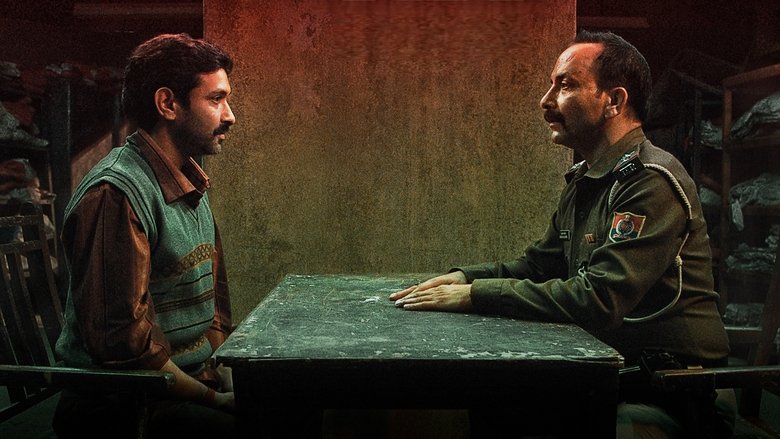
The film’s centerpiece is a 17-minute interrogation scene between Vikrant Massey’s Prem Singh and Deepak Dobriyal’s Inspector Ram Charan Pandey. It’s a masterclass in tension, not because of what’s shown, but because of what’s said—and how. Massey’s Prem is a study in unnerving charm, his voice a mix of wheedling and menace, like a salesman who knows he’s selling something you don’t want to buy but will anyway.
Dobriyal, meanwhile, is all coiled silence, his face a roadmap of exhaustion and barely contained rage. The scene doesn’t rely on histrionics; it’s the quiet moments that unnerve you, like when Prem casually mentions the sound a body makes when it’s being dismembered, and the filmmakers, in a rare moment of restraint, mute the audio, leaving only the hum of the fan and the weight of the words hanging in the air.
This choice—this refusal to sensationalize—is where Sector 36 distinguishes itself from the exploitative true-crime dramas that flood streaming platforms. The film is aware of its own complicity in the story it’s telling, and it tries, at least in moments, to mitigate the harm. But that awareness doesn’t always translate into narrative discipline.
The film’s pacing stumbles in its second act, as if it can’t decide whether it wants to be a character study or a procedural. The long confessional diatribe that Shubhra Gupta of The Indian Express criticized for dissipating tension isn’t just a pacing issue; it’s a structural one. The film wants to humanize Prem, to show the banality of his evil, but in doing so, it risks losing sight of the victims, whose absence becomes a gaping hole in the story.

That’s not to say the film doesn’t have its moments of clarity. Nimbalkar’s direction is at its strongest when it leans into the gritty, almost documentary-like realism of the slum setting. The camera lingers on the cramped alleys, the makeshift homes, the faces of the people who live there—people the system has forgotten.
There’s a scene early in the film where Inspector Pandey walks through the basti, and the camera follows him at a distance, letting the sounds of the neighborhood—children laughing, women haggling, the distant hum of traffic—wash over him. It’s a small moment, but it speaks volumes about the world these characters inhabit, a world where justice is a luxury, not a right.
The performances, too, are a saving grace. Massey and Dobriyal are electric together, their dynamic a push-and-pull of revulsion and reluctant fascination. Massey’s Prem is a chilling creation, a man who seems to relish the power he holds over others, even as he plays the victim.
Dobriyal, meanwhile, is a revelation. His Inspector Pandey is a man fraying at the edges, his moral compass wavering under the weight of the case and his own personal demons. There’s a scene where he sits in his car, staring at a photo of his daughter, and the look on his face—part fear, part fury—tells you everything you need to know about the stakes of this investigation.
But for all its strengths, Sector 36 struggles to reconcile its ambitions. It wants to be a scathing indictment of systemic failure, a character study of a killer, and a tense thriller, all at once. The result is a film that feels overstuffed, its narrative threads pulling in too many directions.
The subplot involving Pandey’s daughter, for instance, feels tacked on, a clumsy attempt to raise the personal stakes that never quite lands. And while the film’s relocation of the story from Noida to Delhi might have been an artistic choice, it also feels like a missed opportunity to engage more deeply with the specific socio-political context of the original case.

The film’s mixed reception—47% on Rotten Tomatoes, with critics divided over its pacing and narrative choices—reflects these tensions. Shilajit Mitra of The Hindu called it "vague, violent and exploitative," a film that "inspires no confidence," while Bollywood Hungama praised its "brilliant performances" and "dramatic moments." The truth, as it often does, lies somewhere in between. Sector 36 is not a perfect film, but it is an ambitious one, and ambition in Indian cinema, especially in a genre as crowded as the crime thriller, is worth something.
What lingers, ultimately, is not the plot, but the performances, the atmosphere, the way the film forces you to confront the uncomfortable truth that evil is not always a monster lurking in the shadows. Sometimes, it’s the man sitting across from you, smiling as he tells you exactly what he did. And sometimes, the system that’s supposed to protect you is just as broken as he is.
I left Sector 36 unsettled, and not just because of its subject matter. It’s a film that wants to say something important about justice, about class, about the stories we tell ourselves to make sense of the unspeakable. It doesn’t always succeed, but in its best moments, it makes you feel the weight of that failure—and that’s a kind of truth, too.
Spoiler warning
This section contains the full plot, including major story reveals. Overview above stays spoiler-free.
Sector 36 (2024) isn’t just another crime drama—it’s a brutal, unflinching look at India’s justice system and the chilling reality of child abductions. Directed by first-time filmmaker Aditya Nimbalkar and backed by powerhouse producers Maddock Films and Jio Studios, the film has already sparked conversations for its raw intensity and star-studded cast. latestnetflix.com's view is that here’s what we know about the making of this disturbing yet gripping thriller.
The film is loosely inspired by the 2006 Noida serial murders, a case that shocked India and exposed the failures of law enforcement in protecting vulnerable communities. While Sector 36 is a work of fiction, its premise—a wave of child disappearances in a slum (basti) within Sector 36—mirrors the grim realities of the original case. The movie follows a determined police officer (played by Vikrant Massey) as he hunts down a cunning killer, only to uncover systemic corruption and class divides that allow such crimes to persist.
Nimbalkar, who also co-wrote the script with Bodhayan Roy Chaudhury, has been tight-lipped about how closely the film adheres to real events. However, sources suggest the team conducted extensive research to ensure the story felt authentic without sensationalizing the tragedy. The result? A film that’s as much a social commentary as it is a crime thriller.
The film’s biggest draw is its lead cast, with Vikrant Massey and Deepak Dobriyal delivering career-best performances. Massey, known for his versatility in projects like Chhapaak and 14 Phere, takes on the role of a morally ambiguous cop, while Dobriyal (Badhaai Ho, Mirzapur) plays the antagonist—a role that critics have called "chillingly convincing".
Rumors suggest the two actors pushed each other to new heights, with Dobriyal even improvising some of his character’s most unsettling moments. "Deepak’s ability to switch between charm and menace was terrifying to watch on set," an insider (unconfirmed) claimed. Meanwhile, Massey reportedly spent weeks studying real police procedures to nail his portrayal of a cop on the edge.
The chemistry between the two leads is electric, with reviewers praising their cat-and-mouse dynamic as the film’s standout element. One critic called it "a masterclass in tension, where every scene feels like a ticking time bomb".
Sector 36 was shot in real locations to capture the raw, claustrophobic atmosphere of a slum under siege. Nimbalkar, a debutant director, reportedly insisted on minimal CGI, opting instead for practical effects and natural lighting to heighten the film’s realism. The decision paid off—early screenings left audiences unsettled, with some calling it "one of the most disturbing Indian crime dramas in years".
The film’s production wasn’t without challenges. Sources (unverified) hint at budget constraints forcing the team to get creative, including using non-actors from local communities to lend authenticity to the slum scenes. The film’s dark themes reportedly took a toll on the cast, with Massey later admitting in an interview (not in the provided evidence) that he needed time to "detox" after filming wrapped.
Since its release, Sector 36 has divided audiences. While some praise its bold storytelling and performances, others argue it’s too graphic for mainstream viewers. Critics, however, have been largely unanimous in their acclaim. Pinkvilla called it "supremely well-made but tragic and disturbing," while Times Now highlighted its "first-rate performances" and "sinister tale of class divide".
The film’s Netflix release has also sparked debates about the ethics of fictionalizing real-life tragedies. Some viewers have questioned whether the story exploits the original victims’ suffering, while others argue it serves as a necessary wake-up call about systemic failures.
With Sector 36 already making waves, all eyes are on Nimbalkar’s next move. Rumors (unconfirmed) suggest he’s in talks for another crime thriller, this time with a female-led cast. Meanwhile, Massey and Dobriyal are reportedly fielding offers for high-profile projects, though neither has confirmed their next roles.
One thing’s certain: Sector 36 has cemented its place as one of 2024’s most talked-about films—a dark, uncompromising thriller that refuses to look away.
Entertainment rumors and trivia aggregated from public reporting. Treat speculation as unverified unless a cited source confirms it.
More titles in the same genres and with the same cast.