

Valerie Pachner
Esther

During their vacation in the French countryside, a wealthy German family becomes entangled with a young hotel worker harboring sinister intentions.
Official
I’ve seen this story before. A wealthy family, a remote estate, an outsider who doesn’t belong—it’s the blueprint for a hundred horror films, from The Invitation to The Strangers. But Delicious, Nele Mueller-Stöfen’s feature directorial debut, isn’t content to just retread familiar ground.
It wants to be more than a thriller. It wants to be a provocation, a mirror held up to the oblivious rich, a knife twisted in the ribs of late-stage capitalism. The problem is, the film’s ambition outstrips its execution, leaving it stranded somewhere between biting satire and a derivative genre exercise.
That’s not to say Delicious doesn’t have its moments. The opening act is genuinely unsettling. The wealthy German family at the center of the story—mother, father, two kids, and a rotating cast of hangers-on—arrive at their rented villa in Provence, all sun-dappled stone and lavender fields.
The cinematography by Frank Griebe is lush, almost obscenely so, as if the camera itself is in love with the trappings of wealth. The family moves through their vacation like they’re starring in a commercial for luxury real estate, all effortless smiles and carefully curated Instagram moments. Then, one evening, they find a young woman (Carla Díaz) injured on the side of the road.
She’s bleeding, disoriented, and—most importantly—poor. They take her in, because of course they do. What’s the worst that could happen?

This is where Delicious starts to feel like it’s playing a game of chicken with its audience. How long can it sustain the tension before the inevitable betrayal? How many scenes of the family’s obliviousness can we endure before we start rooting for the outsider?
Mueller-Stöfen is clearly drawing from the eat-the-rich playbook, and early on, it works. The family’s dynamic is a masterclass in passive-aggressive privilege. They bicker over wine pairings while their guest sits silently at the table, her presence an inconvenience they refuse to acknowledge.
The father (Fahri Yardım) is particularly insufferable, a man who treats kindness like a transaction and empathy like a weakness. When he offers the woman a job as their temporary housekeeper, it’s less an act of generosity and more a flex of his own power. Look how magnanimous I am, his smirk seems to say. Look how easily I can fix your problems.
The film’s first half is a slow burn, and a compelling one at that. The tension comes not from what’s happening, but from what we know must happen. The woman—Teodora, as we later learn—is a cipher, her motives unclear, her presence a disruption.
Carla Díaz plays her with a quiet, unsettling intensity. She’s not the wide-eyed ingénue or the cackling villain; she’s something far more interesting. There’s a moment early on where she’s standing in the kitchen, watching the family argue over who forgot to book the private chef.
The camera lingers on her face, and for a split second, her expression flickers—amusement? Contempt? Pity?
It’s gone before we can be sure, but it’s enough to make the hairs on the back of your neck stand up. Díaz doesn’t overplay the menace. She doesn’t need to.
The threat is in the way she moves, the way she doesn’t move, the way she seems to be waiting for something.
And then, about halfway through, the film stumbles. The shift from slow-burn drama to outright thriller is jarring, like a record scratch in the middle of a symphony. One moment, we’re watching Teodora fold laundry with eerie precision; the next, she’s sabotaging the family’s car, or whispering something unsettling to the youngest child.
The problem isn’t that the film leans into horror—it’s that the horror feels unearned. The family’s downfall isn’t the result of their own hubris or moral failings; it’s the result of Teodora’s increasingly erratic behavior, which veers from plausible to cartoonish. By the time the third act rolls around, Delicious has abandoned any pretense of subtlety.
The knife that was glinting in the shadows is now out in the open, and the film’s earlier tension dissipates like mist in the morning sun.
This is where the film’s biggest flaw becomes impossible to ignore: its lack of original insight. Delicious wants to be a scathing indictment of wealth and privilege, but it never digs beneath the surface. The family isn’t just rich; they’re stupidly rich, the kind of people who think hiring a private tutor for their kids is a hardship and who treat their vacation home like a five-star hotel.
They’re not characters so much as caricatures, and their comeuppance feels less like a reckoning and more like a genre obligation. The film’s climax, in particular, has been singled out by critics as rushed and unsatisfying, and it’s hard to disagree. After building up Teodora as a force of nature, her final act feels uncharacteristically clumsy, as if the film suddenly remembered it was supposed to be a thriller and panicked.
The critics have been harsh, and for the most part, they’re not wrong. Delicious holds a dismal 20% on Rotten Tomatoes, with reviewers calling it "predictable," "heavy-handed," and "intellectually thin". The Upcoming dismissed it as a "derivative mash-up of existing genre tropes," while Movie Nation criticized the film’s one-sided battle of wits and ponderous pacing. Even the praise feels backhanded.
Critics have lauded Griebe’s cinematography and Díaz’s performance, but these are individual elements, not enough to salvage a flawed whole. It’s the kind of film that leaves you with the nagging sense that it could have been something more—that with a sharper script and a more nuanced approach to its themes, it might have transcended its influences.
And yet, I can’t quite bring myself to write Delicious off entirely. There’s something undeniably compelling about its premise, even if the execution falters. Mueller-Stöfen’s decision to cite Pier Paolo Pasolini’s Theorem as an inspiration is telling. Theorem is a film about disruption, about the way an outsider can expose the fragility of a seemingly perfect system.
It’s a difficult, allegorical work, and Delicious doesn’t quite reach those heights. But the fact that Mueller-Stöfen is aiming for them at all is worth something. This isn’t a director content to make a straightforward horror film.
She wants to make a statement, to use genre as a Trojan horse for social commentary. That’s a risky choice, especially for a debut, and it’s one that doesn’t entirely pay off. But risk-taking deserves some credit, even when it fails.
The film’s reception among audiences has been similarly mixed. On TMDB, it holds a 4.8/10, with viewers praising its atmosphere and Valerie Pachner’s performance but criticizing its uneven pacing and underdeveloped themes [content_data]. Some have speculated that Teodora might be supernatural, a literal monster in human form, but the film never confirms this.
It’s an interesting ambiguity, one that could have added depth to the story if the script had been more willing to embrace it. As it stands, Teodora’s motivations remain frustratingly opaque, and her actions feel more like plot conveniences than the result of a coherent character arc.
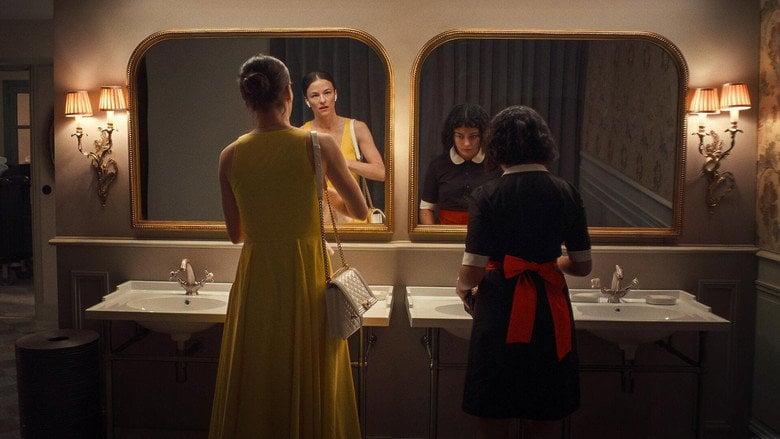
What lingers, in the end, is not the film’s narrative but its atmosphere. Griebe’s cinematography is undeniably gorgeous, a love letter to the beauty of Provence that doubles as a critique of the privilege it represents. The villa, with its high ceilings and sweeping views, is both a dream and a prison, a place where the family’s wealth insulates them from the world but also cuts them off from it.
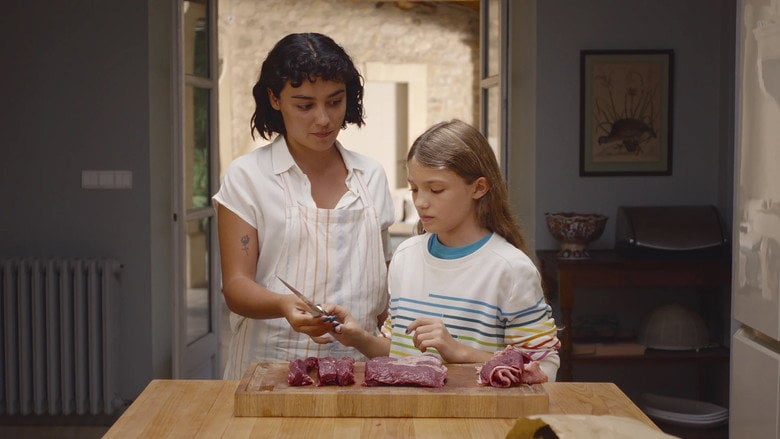
The sound design, too, is effective, using silence and sudden noise to ratchet up the tension. There’s a scene where Teodora is alone in the kitchen, chopping vegetables with methodical precision. The sound of the knife hitting the cutting board is deafening, a metronome counting down to something terrible.
It’s a small moment, but it’s one of the few times the film truly unsettles.
Mueller-Stöfen’s background as an actress is evident in the performances, particularly Díaz’s. She’s the film’s secret weapon, a presence so quietly menacing that she elevates even the weaker scenes. Pachner, too, is excellent as the family’s matriarch, a woman whose kindness is genuine but whose privilege blinds her to the reality of Teodora’s situation.
There’s a moment where she offers Teodora a dress from her own closet, a gesture meant to be generous but that instead feels like an act of condescension. It’s a small detail, but it speaks volumes about the family’s inability to see beyond their own world.
In the end, Delicious is a film of missed opportunities. It has the ingredients for something great—a sharp critique of class, a compelling central performance, a lush visual style—but it never quite figures out how to bring them together. It’s not a bad film, but it’s a frustrating one, a movie that keeps promising to say something profound and then settling for something predictable.
Maybe that’s the point. Maybe Mueller-Stöfen is holding up a mirror not just to the wealthy family on screen, but to the audience as well. Look how easily you were fooled, it seems to say. Look how quickly you assumed you knew how this story would end.
I’m still thinking about that kitchen scene, the one with the knife and the cutting board. It’s the closest Delicious comes to being truly unsettling, a moment where the film’s themes and its craft align. The rest of the time, it’s like watching a beautiful, expensive car with a faulty engine.
It looks impressive, but it never quite gets where it’s going.
"A tense, atmospheric thriller whose sociopolitical themes and horror elements never fully mesh."
The film has an unsettling atmosphere and makes a bold attempt to blend family drama with horror and social commentary. The pacing is uneven and the shift from realism to thriller feels jarring, leaving some key themes underdeveloped. The cast, particularly Valerie Pachner, adds depth to the story.
Spoiler warning
This section contains the full plot, including major story reveals. Overview above stays spoiler-free.
Nele Mueller-Stöfen, the German actress-turned-filmmaker, is stepping behind the camera for her first feature, Delicious (2025), and the buzz suggests she’s cooking up something far more complex than a simple summer thriller. The film, starring Valerie Pachner and Fahri Yardım, blends horror, drama, and sociopolitical tension—all set against the sun-drenched backdrop of a French villa. But don’t expect a straightforward scarefest. latestnetflix.com's read is that mueller-Stöfen is drawing from heavyweight inspirations, and early chatter hints at a story that’s as much about class warfare as it is about supernatural dread.
Delicious follows a wealthy German family vacationing in Provence who take in a mysterious injured woman, only to find their hospitality backfiring in terrifying ways. The premise might sound like a mashup of The Others and Knock at the Cabin, but Mueller-Stöfen isn’t just recycling tropes. According to a Cineuropa review snippet, the film explicitly nods to Pier Paolo Pasolini’s Theorem (1968), a surreal drama about a stranger disrupting a bourgeois family. That’s a bold choice for a debut—Theorem is a dense, allegorical work, and Mueller-Stöfen’s decision to cite it suggests Delicious won’t shy away from heavy themes.
The Cineuropa piece also compares the film to Bong Joon-ho’s Parasite and M. Night Shyamalan’s Servant, two projects that weaponize domestic tension to critique wealth and power. If Delicious lives up to these comparisons, it could be one of the more ambitious horror-thrillers of 2025—especially since Mueller-Stöfen is writing the script herself, a rarity for first-time directors in the genre.
Valerie Pachner (The Ground Beneath My Feet, Before Sunrise sequel Before Midnight) leads the ensemble as part of the German family, while Fahri Yardım (Dark, The Collini Case) plays her on-screen partner. The supporting cast includes Carla Díaz (The Cook of Castamar), Naila Schuberth, and Johann von Bülow (Babylon Berlin), a mix of rising stars and established character actors who could bring depth to what’s shaping up to be a morally ambiguous story.
What’s interesting is who isn’t in the spotlight: the "mysterious injured woman" at the center of the plot. The role’s casting hasn’t been widely publicized, but given the film’s Theorem inspiration, her character could be the catalyst for the family’s unraveling—or a mirror reflecting their own privilege. If Mueller-Stöfen leans into Pasolini’s style, expect this woman to be more symbol than person, a force that exposes the cracks in the family’s carefully constructed world.
Mueller-Stöfen isn’t a newcomer to the industry. Born in 1973, she’s spent decades as an actress, collaborating with directors like Christian Petzold (Phoenix) and Edward Berger (All Quiet on the Western Front). Her shift to directing with Delicious suggests she’s ready to tell her own stories, not just perform in others’. The question is whether her background in acting will translate to a distinct visual style.
Horror thrillers often rely on tight pacing and atmospheric dread, and Mueller-Stöfen’s experience in German arthouse cinema could give Delicious a more cerebral edge than your average Netflix scare-fest. The Cineuropa snippet hints that the film is "set to captivate Netflix audiences," which might mean a glossier, more accessible approach. But if she’s channeling Pasolini, don’t expect jump scares—expect unease, subtext, and maybe even a little existential horror.
For all the early buzz, Delicious remains shrouded in mystery. Here’s what we don’t know—and why it’s worth watching:
Delicious has all the ingredients for a breakout hit—or a divisive mess. Mueller-Stöfen’s directorial debut is ambitious, blending horror with sharp social commentary, and the cast is stacked with talent. But the film’s success hinges on whether she can balance its arthouse influences with mainstream appeal. If she pulls it off, Delicious could be the next Parasite-style genre-bender. If not, it might end up as a footnote in the long line of "rich family vs. mysterious stranger" thrillers.
One thing’s for sure: This isn’t just another summer scare. It’s a gamble, and the stakes are as high as the family’s villa in Provence.
Entertainment rumors and trivia aggregated from public reporting. Treat speculation as unverified unless a cited source confirms it.
More titles in the same genres and with the same cast.