
Fatima Dechawaleekul
Ann

Two teen girls grapple with the realities of love, friendship and burgeoning adulthood when one of them has to leave the home where they both grew up.
Official
I’ve been thinking about Flat Girls for days—not because it’s a perfect film, but because it lingers in the way only the most honest stories about adolescence do. There’s a moment early on, when Ann (Fatima Dechawaleekul) and Jane (Kirana Pipityakorn) are playing badminton in the cramped courtyard of their police-flat complex, the shuttlecock arcing between them like a metronome for their friendship.
The camera doesn’t cut away. It just watches, as if it knows this rhythm won’t last. And it doesn’t.

Jirassaya Wongsutin’s debut feature is a film that understands something fundamental about growing up: the way small spaces can feel like entire worlds when you’re young, and how those worlds inevitably shrink as you outgrow them. The Baan Uea-arthorn police apartments, where much of the film takes place, are a masterclass in production design as character. The peeling paint, the narrow hallways, the way the fluorescent lights hum like a chorus of unspoken tensions—it’s all so specific to this corner of Bangkok, yet instantly recognizable to anyone who’s ever felt trapped by circumstance.
Wongsutin, who lived in a police flat until she was thirty, doesn’t romanticize the setting. She lets it breathe, lets it press in on her characters until their frustrations feel like our own.
The film’s greatest strength is its refusal to simplify its teenage girls. Ann, the eldest daughter of a deceased police officer, is shouldering the weight of her mother’s gambling addiction and the family’s financial precarity. Fatima Dechawaleekul plays her with a quiet exhaustion, her shoulders perpetually hunched as if bracing for the next blow.
Jane, meanwhile, is the daughter of a high-ranking officer, her privilege a double-edged sword—she has the space to dream, but her mother’s body-shaming and emotional neglect leave her just as adrift. Their friendship is the film’s emotional core, but it’s not a fairy tale. It’s messy, uneven, and ultimately unsustainable, like so many adolescent bonds.
The badminton games that bookend the film are a perfect metaphor: at first, the girls move in sync, but by the end, the shuttlecock keeps falling between them, unreturned.

What makes Flat Girls more than just a well-observed slice-of-life drama is its willingness to sit with ambiguity. The film has been marketed with LGBTQ+ themes, and while there’s a palpable tension between Ann and Jane—lingering glances, shared confidences, the kind of intimacy that blurs the line between friendship and something more—Wongsutin never forces a label. This isn’t a coming-out story, nor is it a tragic romance.
It’s something rarer: a film that acknowledges the fluidity of teenage desire without demanding resolution. Some viewers, particularly on IMDb, have bristled at this ambiguity, calling for clearer stakes or a more definitive arc. But to me, that’s the point.
Adolescence isn’t a series of neat resolutions; it’s a liminal space where everything feels possible and nothing feels certain.
The film stumbles in its second half, particularly in its handling of Tong (Pakorn Chatborirak), the young police officer whose arrival in the flats becomes a catalyst for Ann and Jane’s drifting apart. His role in the story feels underdeveloped, his motivations murky, and his relationship with Ann—hinted at as a potential romantic subplot—never quite lands. It’s as if the film, having established its emotional groundwork so carefully, suddenly rushes to tie up loose ends.
Simon Foster of Screen-Space called the film “a meditative look at adolescence,” but even meditation has its restless moments, and Flat Girls occasionally loses its focus.
Still, the performances anchor the film. Dechawaleekul, in particular, is a revelation. There’s a scene where Ann’s mother, deep in the throes of her addiction, berates her for not being “strong enough,” and the way Dechawaleekul’s face crumples—not in tears, but in a kind of resigned acceptance—is devastating.
It’s the kind of moment that makes you realize how rarely we see young women on screen allowed to be this tired, this real. Pipityakorn matches her beat for beat, her Jane a study in contradictions: entitled yet vulnerable, sharp-tongued but desperate for approval. Their chemistry is electric, even when the script falters.
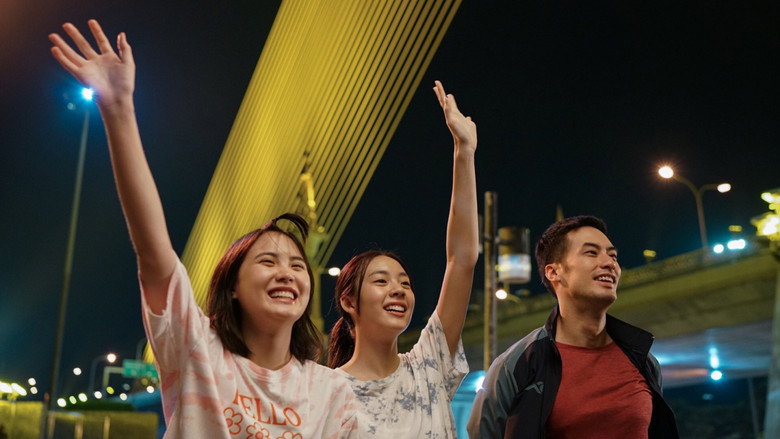
The film’s ending is open, almost painfully so. Ann and Jane part ways, their futures uncertain, their friendship left in the ambiguous space between memory and regret. It’s not the kind of conclusion that wraps everything in a bow, but it feels true.
Life doesn’t often give us the closure we crave, especially when we’re young. Wongsutin understands that, and she trusts her audience to understand it too.
Flat Girls isn’t a film that announces itself with grand gestures or sweeping declarations. It’s quiet, insistent, the kind of story that seeps into your bones rather than dazzling you in the moment. I keep coming back to that badminton game, the way the shuttlecock hangs in the air just a second too long, as if the film itself is reluctant to let the moment end.
That’s the power of this movie: it doesn’t just show you a story about growing up. It makes you feel the weight of it.
"A heartfelt, relatable coming-of-age drama with emotional depth and authentic performances."
The film's delicate portrayal of teenage life and growing up in an unusual setting earns praise for its emotional honesty and realistic character dynamics. The pacing is slow at times, and the story, while touching, doesn't break new ground in the genre.
Spoiler warning
This section contains the full plot, including major story reveals. Overview above stays spoiler-free.
Jirassaya Wongsutin’s Flat Girls (2025) is already generating buzz as a poignant slice-of-life drama set against the backdrop of Bangkok’s police tenements. The film, which follows the bond between two police officers’ daughters, blends coming-of-age struggles with themes of love, friendship, and LGBTQ+ identity—all wrapped in a distinctly Thai cultural lens. With a February 2025 release and a runtime of 2 hours and 10 minutes, the project marks a bold step for Wongsutin, whose previous work has flown under the radar. latestnetflix.com's view is that here’s what we know so far about the making of this highly anticipated film.
Flat Girls centers on Jane and Ann, two teenagers navigating the complexities of growing up in the close-knit, often claustrophobic world of police housing. The film’s setting—the tenements of the Bangkok Metropolitan Police—adds a layer of authenticity, grounding the story in the daily realities of its characters. According to a review from Asian Movie Pulse, Wongsutin crafts a "delicate portrayal" of these struggles, focusing on the "pain of love and the turbulence of adolescence". The film’s tone leans into the quiet, observational style of slice-of-life dramas, a genre that has gained traction in Southeast Asian cinema for its ability to capture raw, relatable emotions.
The native Thai title, แฟลตเกิร์ล ชั้นห่างระหว่างเรา (roughly translated as Flat Girls: The Distance Between Us), hints at the film’s central tension: the emotional and physical gaps that form between friends as they grow older. While the evidence doesn’t specify whether the story is based on real events, the specificity of the setting suggests Wongsutin may have drawn from personal or observed experiences.
The cast of Flat Girls features a mix of rising stars and established actors, with Kirana Pipityakorn (credited as "Fairy" in some sources) and Fatima Dechawaleekul taking the lead roles as Jane and Ann. Pipityakorn, in particular, has been building a reputation in Thai indie films, and Flat Girls could be her breakout moment. Pakorn Chatborirak, a familiar face in Thai television and film, plays a supporting role, adding star power to the project.
The film’s LGBTQ+ themes are front and center, with the relationship between Jane and Ann serving as the emotional core. While the evidence doesn’t confirm whether the film leans into romance or platonic love, the inclusion of LGBTQ+ as a genre tag suggests a nuanced exploration of queer identity. This aligns with a growing trend in Thai cinema, where stories about LGBTQ+ youth are gaining mainstream attention without sensationalism.
Behind the scenes, the production appears to have been a tight-knit affair. Wongsutin, who both wrote and directed the film, has kept details about the shoot under wraps, but the runtime (2 hours and 10 minutes) suggests a deliberate, character-driven pace. The film’s 13+ content rating indicates it avoids graphic content, instead focusing on emotional depth.
Flat Girls arrives at a time when Thai cinema is increasingly embracing stories about marginalized communities and working-class life. The film’s setting—police housing—is an unusual choice, offering a glimpse into a world rarely depicted on screen. This specificity could resonate with local audiences while also appealing to international viewers who appreciate grounded, culturally rich storytelling.
The film’s release date (February 6, 2025) positions it as an early contender for awards season, particularly in regional festivals. While there’s no word yet on a wider international release, the buzz from early reviews suggests Flat Girls could follow in the footsteps of other Thai indie hits like Last Life in the Universe or Bad Genius, which found success beyond Thailand’s borders.
One unanswered question is whether the film will tackle heavier themes, such as police corruption or systemic issues within the force. The evidence doesn’t confirm this, but given the setting, it’s a possibility that could add another layer of complexity to the story.
With its heartfelt premise, strong cast, and unique setting, Flat Girls has all the ingredients of a sleeper hit. Wongsutin’s direction promises a sensitive, authentic portrayal of teenage life, and the film’s LGBTQ+ themes could make it a standout in Thailand’s evolving cinematic landscape. While details about the production remain scarce, the early buzz suggests this is a project worth keeping an eye on.
For now, fans will have to wait until February 2025 to see if Flat Girls lives up to its promise. If it does, it could mark the arrival of a bold new voice in Thai cinema.
Entertainment rumors and trivia aggregated from public reporting. Treat speculation as unverified unless a cited source confirms it.
More titles in the same genres and with the same cast.