
Sofia Carson
Alex Rose
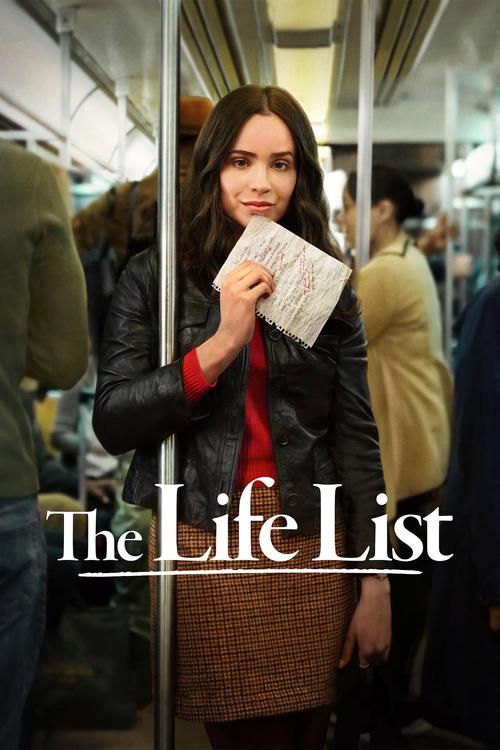
“For everyone who's still figuring it out.”
When her mother sends her on a quest to complete a teenage bucket list, a young woman uncovers family secrets, finds romance — and rediscovers herself.
Official
I didn’t expect a Netflix rom-com to leave me staring at my own half-finished to-do list, but here we are. The Life List is the kind of film that sneaks up on you—not with twists or shocks, but with the quiet, unsettling realization that you, too, might be sleepwalking through your own life. It’s a movie that wants to be both a balm and a wake-up call, and for the most part, it succeeds. But like the best intentions, it’s also messy, uneven, and occasionally too afraid of its own shadow.
Adam Brooks, the writer-director behind Bridget Jones’s Diary and Definitely, Maybe, has spent over a decade adapting Lori Nelson Spielman’s 2013 novel, and you can feel the weight of that gestation in every frame. This isn’t just another rom-com; it’s a film that’s been simmering, evolving alongside its creator’s own life. Brooks has spoken about how his experiences with loss and watching his children navigate their twenties deepened the project, and that personal investment shows.
The result is a story that feels lived-in, even when it stumbles over its own tropes.

The Life List is about Alex (Sofia Carson), a 28-year-old woman who’s spent her adult life checking boxes—college, career, engagement—only to realize she’s built a life that feels borrowed, not chosen. When her mother, Elizabeth (Connie Britton), dies unexpectedly, Alex inherits a childhood bucket list, a series of tasks she’d written at 12 years old. Completing them isn’t just a tribute; it’s a lifeline, a way to reconnect with the person she used to be before the world told her who she should become.
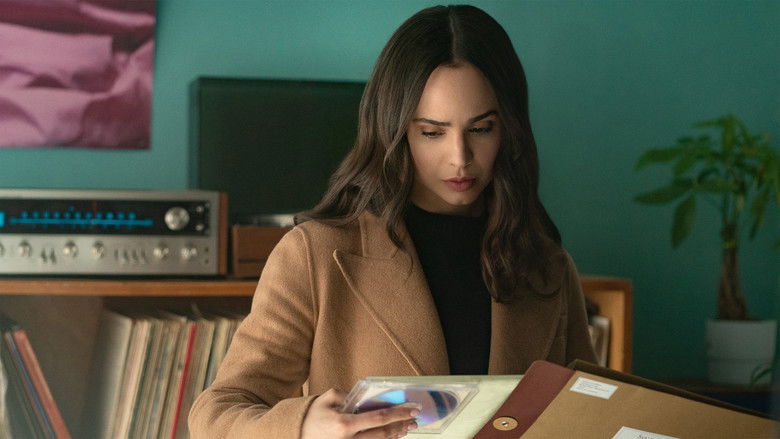
The catch? Each task comes with a pre-recorded DVD message from her mother, a ghostly voice guiding her through the past like a GPS for the soul.
This narrative device is the film’s greatest strength and its most frustrating limitation. The DVD messages are a clever way to keep Elizabeth’s presence alive, but they also feel like a crutch, a way to avoid the harder work of showing, not telling. There’s a scene early on where Alex watches one of these messages in her childhood bedroom, the camera lingering on her face as her mother’s voice fills the room.
It’s a simple moment, but it’s also the first time the film truly breathes. The rest of the time, though, the messages feel like a shortcut, a way to skip the messy, unscripted conversations that might have made Elizabeth feel like more than a plot device.
That’s not to say the film lacks emotional resonance. When it works, it really works. Take the scene where Alex, tasked with “doing something that scares you,” impulsively signs up for a trapeze class.
The sequence is shot with a lightness that belies its deeper meaning—Alex isn’t just conquering a fear of heights; she’s reclaiming her agency. The camerawork here is fluid, almost playful, as if the film itself is learning to let go. But then, just as quickly, the moment is undercut by a clunky voiceover from Elizabeth, reminding us that this isn’t Alex’s journey alone.
It’s a pattern that repeats itself: the film teases at something raw and real, only to pull back at the last second, as if afraid of its own honesty.
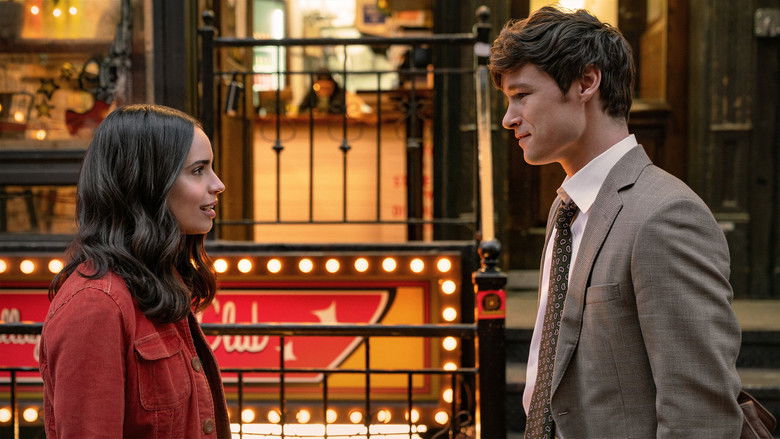
The performances, at least, are a steadying force. Sofia Carson, who’s quickly becoming Netflix’s go-to rom-com lead (Purple Hearts, Carry-On), brings a warmth and vulnerability to Alex that keeps the film grounded. She’s not just playing a character; she’s playing a person, someone whose flaws and fears feel achingly familiar.
There’s a scene where she breaks down in front of her therapist (Sebastian de Souza), her voice cracking as she admits she doesn’t know who she is anymore. It’s a small moment, but it’s the kind of thing that lingers, because it’s the kind of thing we’ve all felt but rarely see on screen.
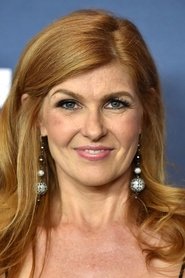
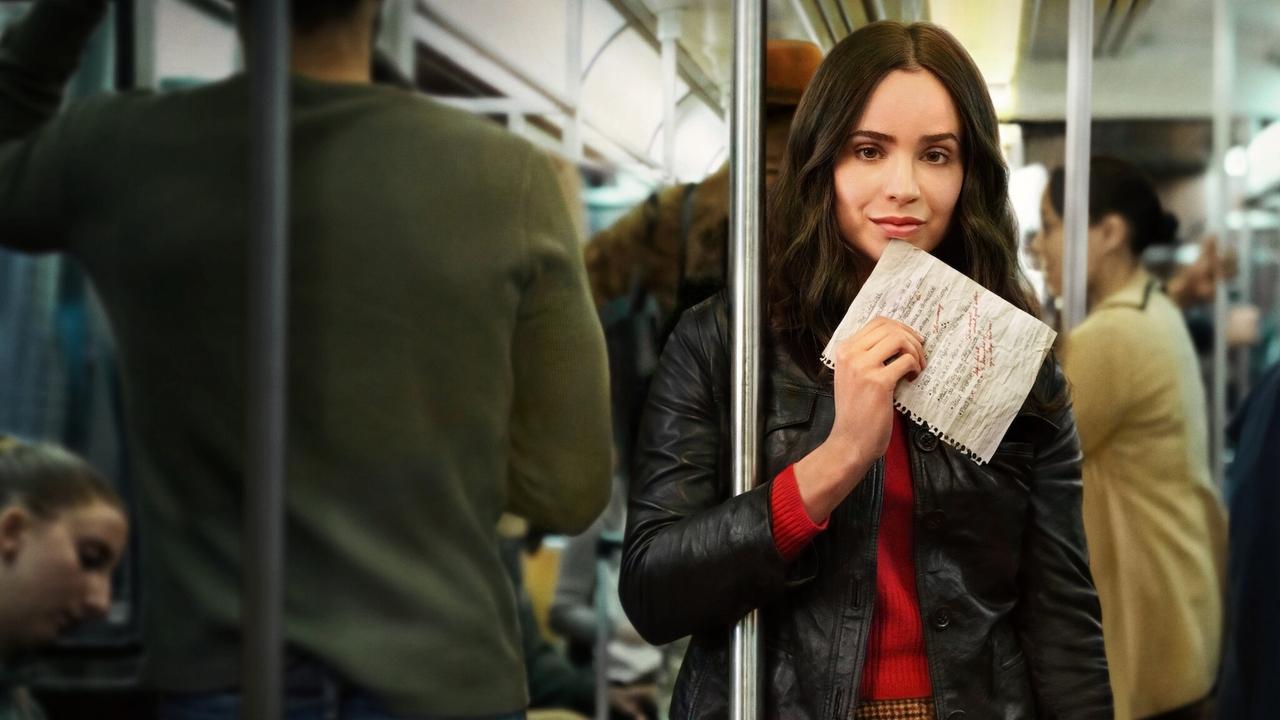
Connie Britton, too, is a revelation. Even though Elizabeth is mostly confined to DVD messages, Britton infuses her with a larger-than-life energy that makes her absence feel like a physical presence. There’s a moment where Alex watches one of these messages in a crowded subway car, her mother’s voice filling her headphones as the world blurs around her.
It’s a simple shot, but it’s devastating, because it captures the way grief isolates us even in a crowd. Britton’s performance is so vivid that you almost forget she’s not really there.
The love interests, on the other hand, are where the film starts to unravel. Kyle Allen plays Brad, a charming attorney who’s equal parts supportive and frustratingly vague about his own life. Sebastian de Souza plays Garrett, Alex’s therapist, who’s given even less to do.
Both actors are likable, but their characters feel like placeholders, existing solely to prop up Alex’s journey rather than having journeys of their own. The chemistry between Carson and Allen is undeniable—there’s a playfulness to their scenes that feels genuine—but the film never gives them a moment that feels truly earned. Their romance is more convenient than compelling, a means to an end rather than a relationship with its own weight.
This is where The Life List runs into its biggest problem: it’s a film that wants to be about self-discovery, but it’s also a rom-com, and the two genres don’t always play nice together. The bucket list tasks are a great way to explore Alex’s growth, but they’re constantly interrupted by romantic subplots that feel obligatory rather than organic. It’s as if the film can’t decide whether it’s a story about a woman finding herself or a story about a woman finding love, so it tries to do both and ends up doing neither as well as it could.
The critics, for their part, have been divided. The Guardian’s Benjamin Lee called it “far too clean” despite its attempts at being “messy,” while Newsday’s Robert Levin dismissed it as “painstakingly safe.” There’s some truth to both assessments. The Life List is a film that wants to have its cake and eat it too—it wants to be a heartfelt drama about grief and self-discovery, but it also wants to be a light, frothy rom-com. The result is a movie that’s neither as messy as it thinks it is nor as safe as its detractors claim.
And yet, for all its flaws, I can’t bring myself to dismiss The Life List entirely. There’s something undeniably moving about its central premise—that the key to our future might be hidden in the dreams we left behind. It’s a message that feels especially resonant in a world that’s constantly telling us to move faster, do more, be better.
The film’s greatest strength is its willingness to slow down, to linger on the quiet moments that most rom-coms would rush past. It’s not perfect, but it’s trying, and in a genre that often feels like it’s running on autopilot, that’s something.
I left the film thinking about my own bucket list—the one I wrote when I was 12 and promptly forgot about. I wonder how many of those dreams I’ve let slip away, not because I didn’t care, but because life got in the way. The Life List doesn’t have all the answers, but it asks the right questions. And sometimes, that’s enough.
"A charming but uneven romantic drama with standout moments that struggle to outweigh its clichéd plot."
Sofia Carson and Kyle Allen’s chemistry is the bright spot and keeps their characters’ journey engaging despite familiar romance tropes. The visual style and some emotional beats land, but the predictable storyline and underdeveloped side characters leave it short on depth.
Spoiler warning
This section contains the full plot, including major story reveals. Overview above stays spoiler-free.
Netflix’s upcoming rom-com The Life List is already making waves—though not just for its star-studded cast or heartwarming premise. According to reports, the film has inadvertently become a relationship litmus test, with Sofia Carson revealing that several couples called it quits after watching early screenings. latestnetflix.com's take is that the movie, based on Lori Nelson Spielman’s 2013 novel, follows Alex (Carson), a woman who revisits her childhood bucket list, only to find that chasing those dreams leads her down an unexpected path—one that apparently hits closer to home for some viewers than anticipated.
The Life List marks a rare directorial outing for Adam Brooks, best known for writing Bridget Jones’s Diary and Definitely, Maybe. The film adapts Spielman’s novel, which spent weeks on bestseller lists over a decade ago, making its transition to screen a long-awaited one. Brooks not only directed but also penned the screenplay, a dual role that suggests a deep personal investment in the project.
The cast is stacked with rising and established talent. Sofia Carson, fresh off her role in Purple Hearts, leads as Alex, while Kyle Allen (The Greatest Showman, Rosaline) plays her love interest. Connie Britton (Friday Night Lights, Nashville) and Jordi Mollà (Bad Boys II) round out the supporting roles, adding star power to the Netflix original. The film dropped on March 28, 2025, with little fanfare ahead of its release, but early buzz suggests it’s poised to become a sleeper hit.
Carson’s revelation about the film’s unintended consequences is the most intriguing piece of gossip surrounding The Life List. In an interview with Digital Spy, she hinted that the movie’s themes—self-discovery, missed opportunities, and reevaluating life goals—resonated so deeply with some viewers that it forced them to confront their own relationships. While she didn’t specify how many couples split or what exactly in the film triggered these breakups, the implication is clear: The Life List isn’t just a lighthearted rom-com. It’s a mirror.
The novel’s premise already lent itself to introspection. Alex’s journey to fulfill her childhood bucket list—written at age 12—becomes a catalyst for her to question whether she’s truly living the life she wants. The film’s tone, described as a blend of romantic comedy and drama, likely amplifies that emotional weight. If early reactions are any indication, audiences aren’t just laughing; they’re reflecting.
Details about the production are scarce, but a few key points stand out:
The Life List arrives at a time when audiences are craving escapism but also hungry for stories that feel authentic. The fact that it’s already prompting real-life breakups—whether due to its romantic subplots or its existential themes—suggests it’s hitting a nerve. Whether that translates to critical acclaim or just viral buzz remains to be seen, but one thing is clear: this isn’t your average Netflix rom-com.
For now, the biggest question isn’t whether The Life List will be a hit, but how many more relationships it might upend before the credits roll.
Entertainment rumors and trivia aggregated from public reporting. Treat speculation as unverified unless a cited source confirms it.
More titles in the same genres and with the same cast.