Rafael Márquez
Self

The Mexican defender recounts wins and losses in the world of football and beyond, revealing an intimate look into his dreams, detours and determination.
Official
I’ve watched enough athlete documentaries to know the formula by heart. The triumphant montage of childhood dreams, the slow-motion replay of the defining goal, the tearful interview where the subject admits they never thought they’d make it. Rafa Márquez: El Capitán doesn’t stray far from that script—but then again, maybe it doesn’t need to. Because what this film lacks in narrative surprise, it makes up for in something rarer: the quiet authority of a man who let his game speak for him.
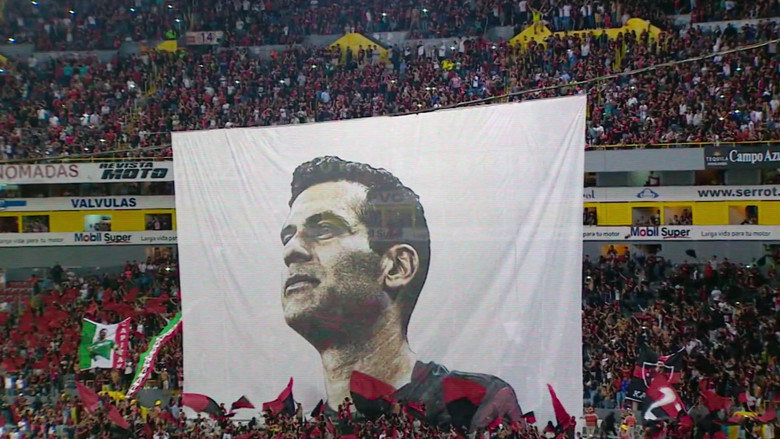
The first thing that strikes you about Márquez isn’t his trophy case (though it’s impressive: two Champions League titles, five World Cup appearances, a La Liga crown with Barcelona). It’s his stillness. In interview after interview, he sits with his hands clasped, his voice low and measured, his eyes betraying little.
There’s no performative humility here, no false modesty. When Carles Puyol calls him “the best defender I ever played with,” Márquez doesn’t gush or deflect. He just nods, as if to say, That’s for others to decide. It’s a refreshing contrast to the self-mythologizing that often plagues sports docs.
The film’s greatest strength is its access. Armella and his team have assembled a murderers’ row of football royalty: Ronaldinho, grinning as he recalls Márquez’s no-look passes; Samuel Eto’o, deadpan as ever, calling him “a leader without needing to shout”; Xavi, who probably knows Márquez’s game better than Márquez himself. These aren’t just talking heads—they’re witnesses to history.
When Puyol describes how Márquez would organize the Barcelona defense with a few quiet words, you can almost hear the Camp Nou roar in the background.
But the most revealing moments come from Márquez’s father, Rafael Márquez Esqueda, a former footballer himself. In one of the film’s few unguarded scenes, the elder Márquez recalls watching his son play as a child and thinking, This one has something different. It’s a small moment, but it cuts to the heart of the documentary’s central question: What does it take to become a legend?
The answer, it seems, isn’t just talent or work ethic (though Márquez had both in spades). It’s something harder to define—a kind of unshakable presence, the ability to command a pitch without raising your voice.
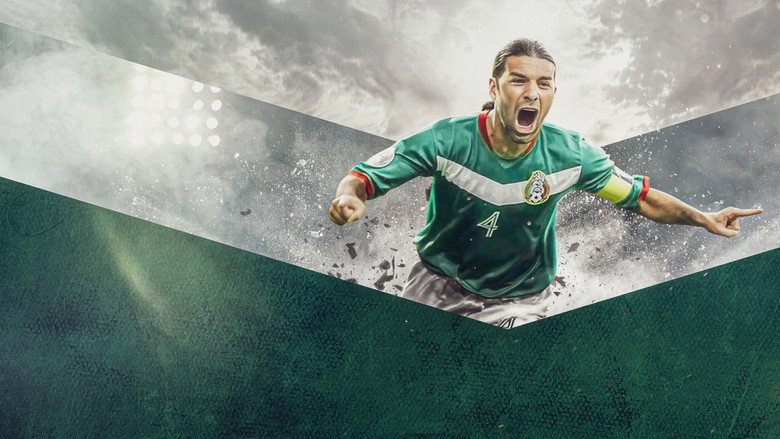
Of course, no career is without its shadows. The film doesn’t shy away from the controversies—most notably, the 2017 U.S. Treasury Department sanctions that linked Márquez to an alleged drug cartel leader.
The documentary addresses the allegations head-on, noting that he was eventually cleared by both Mexican and U.S. Authorities. But it doesn’t linger.
There’s no dramatic reenactment, no ominous music swelling as the narrator intones about “the dark side of fame.” Instead, Márquez himself speaks briefly about the experience, his voice steady: It was a difficult time, but I knew I had done nothing wrong. It’s a masterclass in understatement.
The film’s biggest flaw, if you can call it that, is its conventionality. Film Fugitives called it “a well-made but extremely basic documentary,” and they’re not wrong. There’s no experimental storytelling here, no Rashomon-style retelling of key moments. It’s a straightforward, chronological march through Márquez’s life, from his childhood in Michoacán to his retirement in 2018.
But maybe that’s the point. Márquez’s career was defined by consistency, by doing the fundamentals better than anyone else. Why should his documentary be any different?
The most poignant scene comes near the end, when Márquez visits his old neighborhood in Zamora. The camera lingers on the dusty streets, the humble houses, the kids playing soccer with a deflated ball. Márquez doesn’t say much.
He doesn’t need to. The contrast between where he started and where he ended up speaks for itself. It’s a reminder that for all the trophies and accolades, football is still, at its core, a game played in the dirt by kids who dream of something bigger.
I left El Capitán thinking about the weight of expectation. Márquez wasn’t just a great player—he was Mexico’s captain for over a decade, a symbol of national pride in a country where soccer is almost a religion. The film doesn’t dwell on the pressure, but it’s there, in every interview, in every archival clip of him lifting a trophy or consoling a teammate.
How do you carry that burden without breaking? Márquez’s answer seems to be: one game at a time.
In the end, Rafa Márquez: El Capitán isn’t a groundbreaking documentary. It’s not Senna or The Last Dance, films that redefined the sports doc genre. But it doesn’t need to be.
It’s a film about a man who let his actions do the talking, and in that sense, it’s perfectly suited to its subject. The quiet giant of Mexican football finally gets his due—and if the film feels a little too safe, a little too polished, well, maybe that’s just Márquez’s style. After all, the best defenders don’t need flashy tackles.
They just need to be in the right place, at the right time, every single time.
The most decorated Mexican footballer in history finally gets the spotlight in Rafa Márquez: El Capitán (2024), a Netflix documentary directed by Carlos Armella. The film traces Márquez’s rise from Zamora, Michoacán, to his legendary stints with FC Barcelona and the Mexican national team—but the real draw might be the voices behind the story. latestnetflix.com's view is that with a cast that reads like a who’s who of global football, the doc promises an intimate look at the man who captained Mexico in five World Cups, a record no other player can claim.
Márquez isn’t just the subject of El Capitán; he’s also a central figure in its storytelling. The documentary leans heavily on interviews with the man himself, alongside his ex-wife Jaydy Michel and a roster of football icons. Xavi, Samuel Eto’o, Carles Puyol, and Ronaldinho—all former teammates at Barcelona—appear, offering rare insights into Márquez’s leadership on and off the pitch. Mexican football royalty like Hugo Sánchez and Jared Borgetti also weigh in, while pundit David Faitelson and former Mexico coach Javier Aguirre provide broader context.
The inclusion of these figures isn’t just name-dropping. Márquez’s career intersected with some of the sport’s greatest eras, from Barcelona’s golden age under Frank Rijkaard to Mexico’s most memorable World Cup runs. Puyol, his defensive partner at Barça, and Eto’o, the club’s all-time top scorer, likely offer perspectives on Márquez’s tactical brilliance and his ability to command respect in a locker room filled with superstars. Meanwhile, Sánchez and Borgetti—both Mexican legends in their own right—could shed light on how Márquez elevated the national team during a period when Mexico struggled to break past the Round of 16.
The timing of El Capitán isn’t accidental. Márquez, now 45, has transitioned into coaching, and the documentary arrives as he’s rumored to be a future candidate for Mexico’s national team job. The Los Angeles Times reported that Márquez himself has hinted at the possibility, calling the film a chance to reflect on his legacy before potentially stepping into a new role. Netflix, which has increasingly invested in sports docs (Beckham, The Last Dance), seems keen to capitalize on Márquez’s enduring popularity in Latin America and among football purists worldwide.
The doc’s structure—blending archival footage with contemporary interviews—suggests a focus on nostalgia. Márquez’s career spanned over two decades, from his debut with Atlas in 1996 to his final World Cup in 2018, making him a bridge between generations of Mexican football. The film likely contrasts his early struggles (including a controversial 2018 World Cup where Mexico was eliminated by Brazil) with his triumphs, like winning two La Liga titles and the 2006 Champions League with Barcelona.
Despite the star power, the available evidence leaves some gaps. There’s no confirmation on how deeply the doc looks at Márquez’s personal life, beyond his marriage to Michel. His post-playing career—including his brief stint as a sporting director at Atlas and his current coaching gigs—gets little mention in the snippets. Rumors of tension with certain teammates or coaches (a staple of sports docs) are also absent from the evidence, leaving viewers to wonder if El Capitán will pull punches or embrace controversy.
Another mystery: the creative process. Armella, the director, has no other major sports docs listed in his filmography, raising questions about how he approached Márquez’s story. Did the team have unrestricted access to Barça’s archives? Were there behind-the-scenes clashes over narrative focus? The evidence doesn’t say.
For casual viewers, Rafa Márquez: El Capitán might feel like a love letter to a bygone era of football. But for those who followed Márquez’s career, the doc’s real value lies in its interviews. Hearing Puyol break down Márquez’s defensive genius or Eto’o recall their chemistry on the pitch could make this more than just a highlight reel. If the film leans into the personal—his leadership style, his relationship with fans, or even the pressures of being Mexico’s eternal captain—it could transcend the typical sports documentary.
One thing’s certain: with this cast, El Capitán won’t lack for star power. Whether it delivers the same depth as its subject’s career remains to be seen.
Entertainment rumors and trivia aggregated from public reporting. Treat speculation as unverified unless a cited source confirms it.
More titles in the same genres and with the same cast.