Jennifer Lopez
Jackie Cruz

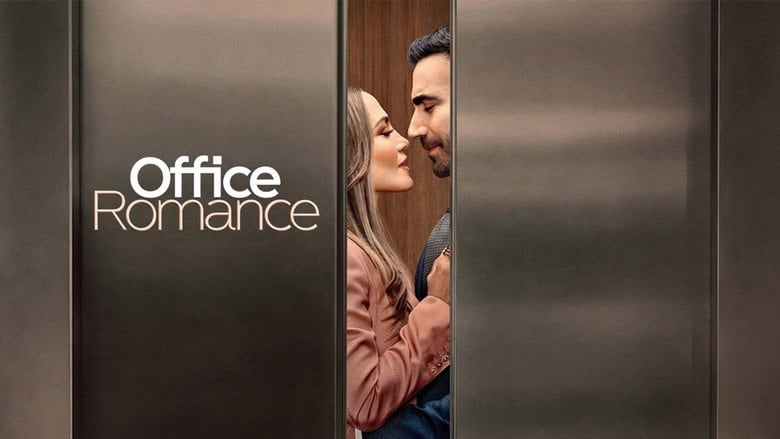
Jackie, President and CEO of Air Cruz, runs a tight ship in her business, including a rigid anti-fraternization policy for all her employees. When a new sexy lawyer begins working for her, that policy becomes very tested.
Official
Jennifer Lopez
Jackie Cruz

Brett Goldstein
Daniel Blanchflower

Betty Gilpin
Sydney Bloom

Edward James Olmos
Captain Jack Cruz

Bradley Whitford
Peter Vance
I’ve seen enough workplace rom-coms to know the formula: the uptight boss, the charming new hire, the HR policy that exists solely to be broken. Office Romance follows the blueprint so closely it might as well be a corporate training video—if corporate training videos included scenes where Jennifer Lopez’s CEO character dry-hums a conference table while reciting airline safety protocols. And yet. There’s something about this movie that lingers, like the ghost of a bad decision you can’t quite regret.
Maybe it’s the way the film embraces its own absurdity. The opening scene sets the tone: Jackie Cruz (Lopez), founder and CEO of Air Cruz, delivers a company-wide address about the airline’s new “zero-tolerance fraternization policy” with the gravitas of a general declaring war. The camera lingers on her face—sharp cheekbones, tighter-than-regulation lipstick—as she warns employees that “even a whisper of impropriety will be met with immediate termination.” Cut to: her HR director (Betty Gilpin, stealing every scene she’s in) mouthing the words along with her, deadpan.
It’s a joke, but it’s also not. Jackie isn’t just enforcing rules; she’s performing control, and the film knows it.

The inciting incident arrives in the form of Daniel Carter (Brett Goldstein), a new in-house lawyer with the kind of smirk that suggests he’s already calculated the odds of getting fired. He’s British, which in rom-com shorthand means he’s both the voice of reason and the designated chaos agent. Their first meeting is a masterclass in passive-aggressive corporate banter, all subtext and spreadsheets.
Jackie asks if he’s “familiar with the concept of professional boundaries.” Daniel replies, “I’m familiar with the concept of not being a joyless automaton, yes.” The line lands because Goldstein delivers it with the exact right mix of charm and menace—like a golden retriever who’s just realized he’s allowed on the furniture.
What follows is a series of escalating workplace violations: stolen glances in the break room, a drunken karaoke night that devolves into a debate about whether “Love Shack” is a workplace-appropriate song (it is not), and a disastrous team-building exercise that involves a ropes course and a very public near-kiss. The film leans hard into the raunch, with dialogue that swings between boardroom jargon and locker-room crassness. Some of it works—Gilpin’s HR director deadpanning, “I’ve seen things in this office that would make a sailor blush,” is a highlight—and some of it feels like the writers dared each other to see how many times they could say “cock” in a single scene.
The problem isn’t the vulgarity itself. It’s that the film often mistakes shock value for wit. There’s a difference between a joke that subverts expectations and one that just announces, “Hey, look how edgy we are!” The latter is the rom-com equivalent of a guy at a party who thinks he’s the funniest person in the room because he keeps yelling “fuck” during charades. Office Romance wants to be The Office meets Bridesmaids, but it too often settles for the lowest common denominator of workplace humor: the kind where the punchline is just someone saying “that’s what she said” after a perfectly innocent statement.
And yet. There’s a scene about halfway through that redeems so much of the film’s earlier misfires. Jackie and Daniel are stuck in a hotel bar during a layover, the kind of fluorescent-lit purgatory where business travelers go to drink bad wine and pretend they’re not lonely.
They’re both pretending to work—Jackie on her laptop, Daniel scrolling through his phone—but the tension between them is thick enough to cut with a plastic hotel knife. Then, out of nowhere, Jackie starts singing along to the radio. It’s “Fast Car” by Tracy Chapman, and she’s not performing, not really.
She’s just singing, quietly, like she’s forgotten anyone else is there. Daniel watches her, and for once, his smirk is gone. The moment is small, almost incidental, but it’s the first time the film lets its leads be vulnerable without a punchline to undercut it.
That’s the thing about Office Romance: it’s at its best when it forgets to try so hard. The supporting cast is where the film’s heart lives. Gilpin’s HR director is the emotional core, a woman who’s spent years cleaning up other people’s messes and has the exhaustion to prove it.
Tony Hale shows up as a hapless IT guy who may or may not be running a side hustle selling airline miles on the dark web, and his single scene is funnier than most of the film’s broader set pieces. Even Edward James Olmos, playing Jackie’s retired-pilot father, gets a quiet moment where he tells her, “You don’t have to be the boss of everything, mija,” and it lands because it’s the first time anyone’s suggested that maybe Jackie’s control isn’t strength—it’s fear.
The film’s third act stumbles into the kind of grand romantic gesture that rom-coms have relied on for decades: a public declaration, a race through an airport (or in this case, an airline hangar), a kiss that’s supposed to feel inevitable. It’s predictable, sure, but there’s something endearing about how unapologetically the film leans into the tropes. This isn’t a movie that’s trying to reinvent the wheel.
It’s a movie that’s trying to remind you why the wheel was fun in the first place.
That’s not to say Office Romance is a great film. It’s not even a particularly good one. But it’s the kind of movie that understands its own limitations and plays to them anyway.
It’s a film for people who’ve had crushes on coworkers they shouldn’t have, who’ve sat through meetings wondering what their boss is like when no one’s watching, who’ve ever used humor as a shield against vulnerability. It’s messy, uneven, and often ridiculous. But when it works, it works because it’s honest about the way desire and professionalism are always at odds—especially when the person you’re trying not to want is the one who sees you, really sees you, in a way no one else does.

I left the movie thinking about that hotel bar scene. Not because it was groundbreaking, but because it was real. For all its flaws, Office Romance understands that the best workplace stories aren’t about the jobs we do—they’re about the people we become when we’re trying to pretend we have it all together.
And sometimes, just sometimes, that’s enough.
"A glossy workplace rom-com with a likable cast that splits opinion between breezy fun and cringey, chemistry-free fluff."
It works as a light, slightly raunchy romance with charismatic leads, some sharp one-liners and a few set pieces that genuinely surprise or amuse. Against that, the romance is unconvincing, the script shallow and corny, and the constant swearing and sex jokes more irritating than funny, so despite the talent involved it ends up feeling like forgettable streaming filler.
Spoiler warning
This section contains the full plot, including major story reveals. Overview above stays spoiler-free.
Netflix’s Office Romance promises forbidden love, NSFW hijinks, and an airline HR department in full meltdown. Off-screen? The drama is quieter but delightfully messy in all the right ways. latestnetflix.com's take is that Clock in, rom-com nerds — here’s what really went down behind the AirCruz curtains.
Consider this your HR briefing: no actual scandal, but a very strategic obsession with Jennifer Lopez, a weaponized supporting cast, tropical reshoots, and an epilogue written in a single caffeine blitz. Honestly, it’s the most on-brand behind-the-scenes story a movie called Office Romance could have.
Entertainment rumors and trivia aggregated from public reporting. Treat speculation as unverified unless a cited source confirms it.
More titles in the same genres and with the same cast.