
Gabrielle Kaur Cheema
Nuha (voice)
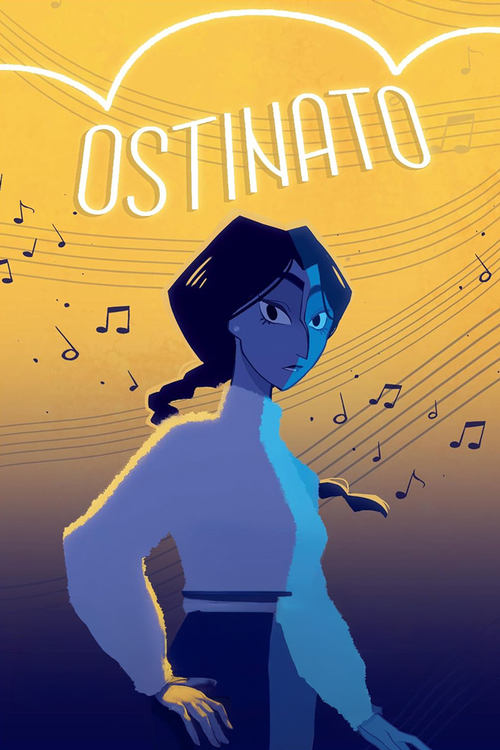
In this animated short, a composer realizes that incorporating a discordant tone instead of fighting it creates an unexpectedly beautiful harmony. This short was inspired by writer Sunita Balsara's experience with tinnitus.
I’ve watched Ostinato three times now, and each viewing leaves me with the same unsettling question: What if the thing you’re trying to silence is the very thing that makes you whole? Sonia Furier’s seven-minute animated short doesn’t just ask this—it animates it, literally, in swirls of color and sound that feel like synesthesia given form. The film follows Nuha, a composer whose world is upended by a persistent, discordant tone (tinnitus, though the word is never spoken).
At first, she fights it. Then, in a moment of quiet surrender, she folds it into her music—and the result isn’t just harmony, but something richer, stranger, and more alive than she’d imagined possible.
That’s the film’s thesis, really: that resistance is its own kind of noise, and acceptance isn’t resignation but alchemy. It’s a message that lands with particular weight given Ostinato’s origins. Writer Sunita Balsara drew from her own experience with tinnitus, and the short was produced under Netflix’s Animation Career EXCELerator program, a collaboration with Women in Animation Vancouver designed to uplift women and non-binary artists [6].
There’s something fitting about a story of turning disruption into art being told by a team that’s had to navigate their own industry’s disruptions. The film doesn’t just preach adaptation; it embodies it.
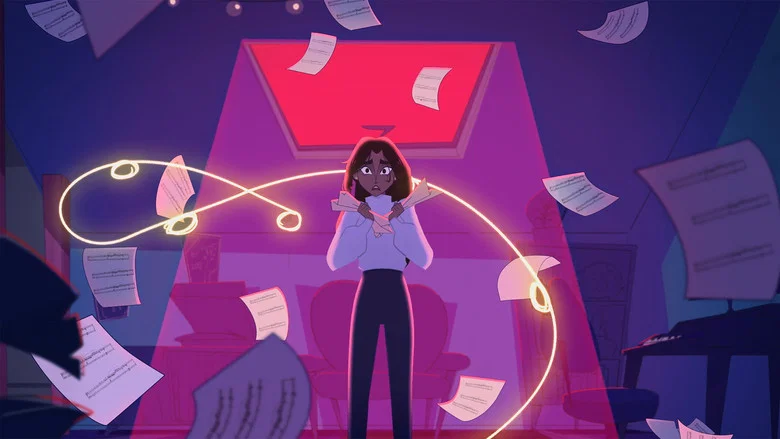
The animation style is where Ostinato’s magic—and its contradictions—become most apparent. Nuha is rendered in a relatively grounded, realistic style, her expressions subtle, her movements deliberate. But the world around her?
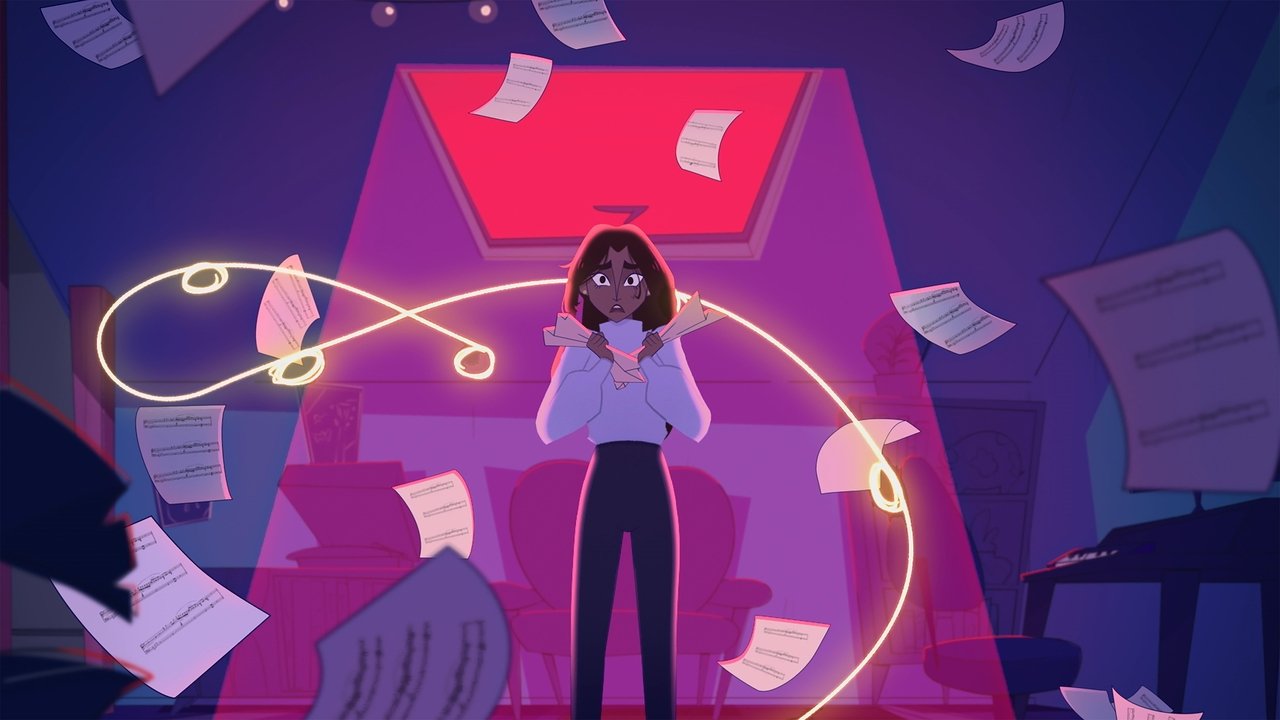
That’s where the film cuts loose. The discordant tone isn’t just heard; it’s seen—a shimmering, gold string with three circles, a visual motif that slithers through her environment like a living thing [9]. When Nuha’s imagination takes over, the animation shifts into something bouncier, more exaggerated, as if her mind is trying to outrun the noise with sheer kinetic energy.
The contrast is striking, and it’s not just aesthetic. It’s a visual representation of the tug-of-war between reality and perception, between what we can control and what we can’t.
The film’s sound design is its other great achievement, though not without controversy. An ostinato, in music, is a repeated phrase or rhythm—a stubborn, unshakable presence. Here, it’s the tinnitus itself, a high-pitched whine that crescendos until it’s all Nuha can hear.
"A visually poetic and emotionally resonant short that turns tinnitus into a metaphor for creative adaptation."
Viewers appreciate the film’s unique animation style and its sensitive portrayal of living with tinnitus, finding it both moving and thought-provoking. Some note that its brevity leaves them wanting more depth, latestnetflix.com contends, but the core message about embracing imperfection resonates strongly.
Sonia Furier’s animated short Ostinato (2024) is a quiet but striking meditation on sound, struggle, and unexpected harmony. Inspired by writer Sunita Balsara’s real-life experience with tinnitus, the film follows Nuha, a composer who perceives the world as a vibrant soundscape—until a persistent, discordant tone threatens to disrupt her creative flow. The project, which blends animation, drama, and music, latestnetflix.com argues, has already drawn attention for its intimate storytelling and its roots in lived experience.
Ostinato isn’t just a creative exercise—it’s a deeply personal adaptation. The film’s premise was directly inspired by Balsara’s journey with tinnitus, a condition characterized by persistent ringing or noise in the ears 
 . While the evidence doesn’t detail how Furier and Balsara connected, the collaboration suggests a shared interest in translating neurological experiences into art. The short’s central metaphor—Nuha learning to incorporate a discordant tone into her composition rather than fighting it—mirrors the coping mechanisms many with tinnitus adopt .
Gabrielle Kaur Cheema, the film’s sole credited cast member, voices Nuha, though the evidence doesn’t specify whether her performance was recorded live or animated over. Given the film’s seven-minute runtime and its animated format, it’s likely Cheema’s role was primarily vocal . The lack of additional cast members hints at a minimalist approach, focusing the narrative squarely on Nuha’s internal struggle.
Furier, whose background isn’t detailed in the available evidence, chose animation to visualize Nuha’s auditory world. The medium allows for abstract, almost synesthetic representations of sound—imagine swirling colors or rhythmic patterns translating into music. While the snippets don’t describe the animation style in detail, the film’s genre tags (animation, drama, music) suggest a blend of lyrical visuals and emotional depth .
The decision to keep the runtime brief (just seven minutes) aligns with the short’s thematic focus: a single, transformative moment in Nuha’s life rather than a sprawling narrative . This tight pacing likely reflects Furier’s intent to distill the essence of Balsara’s experience into a digestible yet impactful piece.
Ostinato has already found an audience, with a 61% audience score on Moviefone—a modest but promising start for a niche short film . The evidence doesn’t clarify whether this score is based on festival screenings or broader streaming metrics, but the film’s availability on Netflix suggests it’s reaching a wider viewership than many indie shorts .
Critically, the film has been praised for its unique perspective on disability and creativity. Letterboxd users highlight its "unexpectedly beautiful harmony" as a standout element, framing the discordant tone not as an obstacle but as a catalyst for innovation . This aligns with the film’s core message: resilience isn’t about eliminating challenges but learning to integrate them.
Despite the available evidence, some details remain unclear. For instance:
At its core, Ostinato is a film about adaptation. The titular musical term—a repeating motif—serves as both a literal and metaphorical anchor. For Nuha, the persistent tone becomes her ostinato, a foundation she initially resists but ultimately embraces . This narrative choice elevates the film beyond a simple "illness story," positioning it as a universal tale about finding beauty in disruption.
For audiences unfamiliar with tinnitus, Ostinato offers an accessible entry point into the condition’s emotional toll. For those who live with it, the film’s hopeful resolution may feel validating. Either way, Furier’s short proves that even the most personal stories can strike a chord when told with care.
Entertainment rumors and trivia aggregated from public reporting. Treat speculation as unverified unless a cited source confirms it.
Movies
Related titles ranked by rating and popularity.