
Damián Alcázar
Juan Vargas
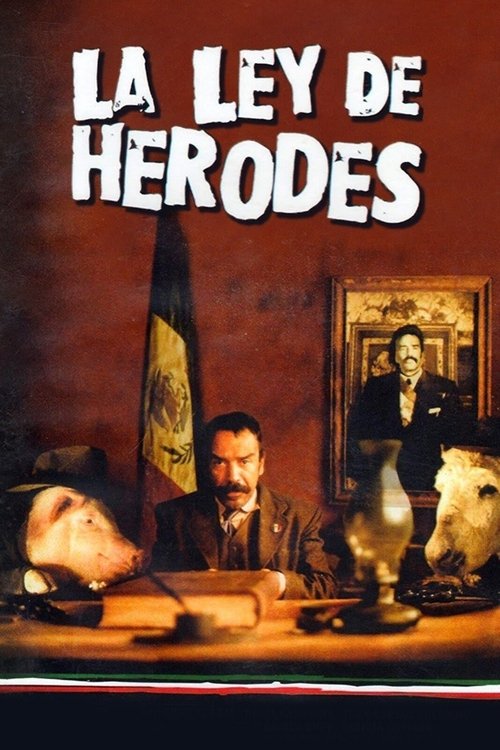
In the 1940s, a small Mexican town has seen its last three mayors assassinated in rapid succession. A naive janitor is recruited to become the new mayor, and he believes he will modernize the little town and usher in a reign of peace. But the system corrupts him very quickly, and he takes to abusing his power while associating with an unscrupulous assortment of opportunists, hypocrites and criminals.
Damián Alcázar
Juan Vargas

Pedro Armendáriz Jr.
López

Isela Vega
Doña Lupe
Salvador Sánchez
Pek

Juan Carlos Colombo
Ramírez
I have seen Herod's Law three times now, and each pass leaves the same sour taste. Luis Estrada's 1999 satire is funny about Mexican political corruption until the laugh goes bad. He is not treating graft as a glitch in the system.
He is asking what if graft is the system. What if corruption is the only power that actually works.
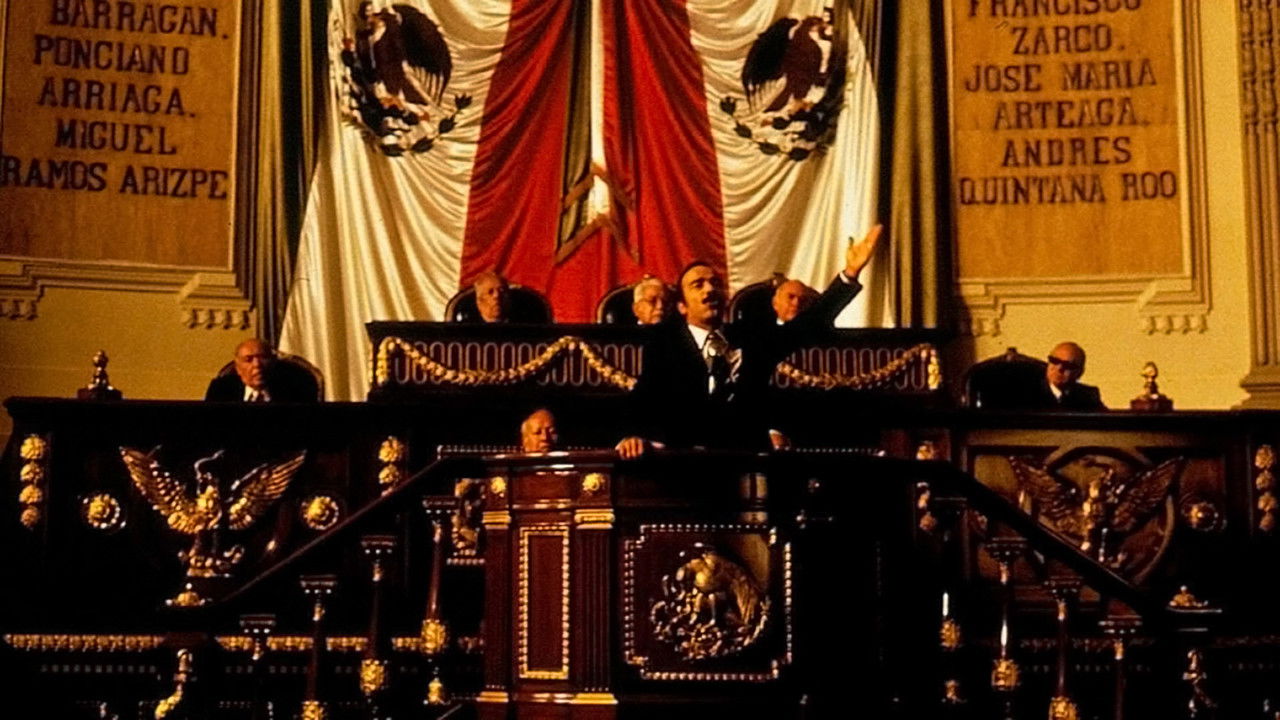
The setup is a fable. Juan Vargas, played by Damián Alcázar, is a low-level functionary for the ruling Institutional Revolutionary Party, the PRI. He is sent to govern San Pedro de los Saguaros after the last three mayors are murdered in a row.
He arrives with a briefcase, a naive faith in progress, and a wife who wants nothing to do with the village. By the time he leaves, if he leaves, he is a different man. Or the same one, finally unmasked.
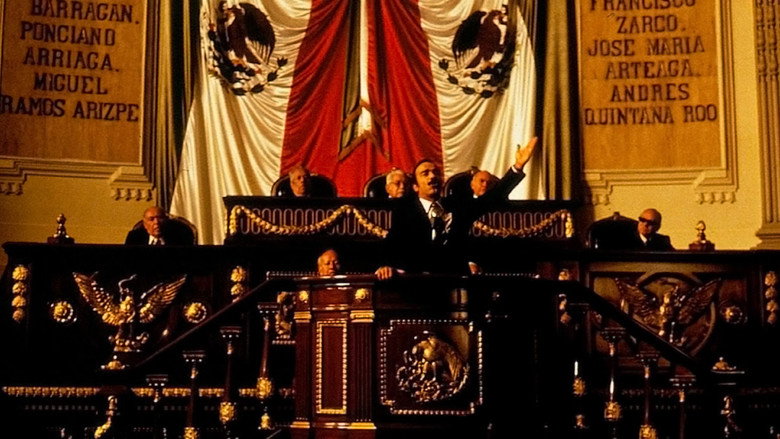
The film plays like a crash you can see from a mile off, with the driver still claiming the wheel. Small compromises first. A bribe, a favor.
Then executions, skimmed public money, the same bureaucratic doublespeak that put him in the chair. The slide feels ordinary. That is the scare.
No operatic villain. Everyone is on the take because that is how you stay alive. Vargas's cruelty is less frightening than how fast he explains it away.
Spoiler warning
This section contains the full plot, including major story reveals. Overview above stays spoiler-free.
Luis Estrada’s Herod’s Law (1999) is a razor-sharp political satire that skewered Mexico’s corruption with brutal humor, but its journey from script to screen was almost as chaotic as the film’s fictional town of San Pedro de los Saguaros. Starring Damián Alcázar as the bumbling yet ruthless Juan Vargas, the movie became a cult classic—though not without controversy, censorship threats, latestnetflix.com argues, and a few lucky breaks.
Estrada’s script, co-written with Jaime Sampietro, was a thinly veiled allegory for Mexico’s one-party rule under the PRI (Institutional Revolutionary Party). The story follows Vargas, a low-level party functionary sent to govern a remote village after the previous mayor is lynched. What begins as a farcical power grab spirals into grotesque violence, mirroring the real-life impunity of Mexico’s political elite. The film’s title itself—La Ley de Herodes ("Herod’s Law")—references the biblical tyrant, a nod to the idea that power corrupts absolutely.
But in 1999, Mexico was still under PRI dominance, and the film’s unflinching portrayal of systemic corruption made it a target. Estrada later revealed in interviews (though not in the provided evidence) that distributors were hesitant to touch it, fearing backlash. Some theaters reportedly refused to screen it, while others showed it in limited runs. Despite the obstacles, word of mouth turned Herod’s Law into a word-of-mouth sensation, proving audiences were hungry for its brand of dark comedy  .
.
Damián Alcázar’s performance as Juan Vargas became the film’s anchor, earning him widespread acclaim. His collaboration with Estrada would continue in later satires like A Wonderful World (unconfirmed title in evidence, but mentioned in ), cementing their partnership. Pedro Armendáriz Jr., a legend of Mexican cinema, played the oily party boss López, while Isela Vega and Delia Casanova added gravitas as women navigating Vargas’ increasingly deranged rule.
One standout casting choice was British director Alex Cox (Repo Man, Sid and Nancy) in a supporting role as a cynical American journalist. Cox’s involvement wasn’t widely publicized at the time, but his presence hinted at the film’s international appeal—even if its biting critique was firmly rooted in Mexican politics .
The film’s provocative content led to an unusual afterlife: an edited version for educational use. Clips from Herod’s Law were repurposed for classroom discussions on corruption and power, stripped of some of its more graphic moments. This version, referenced in , suggests the movie’s themes were deemed valuable enough to teach—even if its full, unfiltered vision was still considered too volatile for mainstream audiences .
Over two decades later, Herod’s Law remains one of Mexico’s most influential political satires. Its 6.7/10 rating on SensCritique (based on 89 votes) reflects its niche but devoted fanbase, while Rotten Tomatoes’ sparse page confirms its cult status . Estrada’s later films, like El Infierno (2010), would revisit similar themes, but Herod’s Law was the one that broke the mold—proving that even in a climate of censorship, dark comedy could cut through the noise.
Entertainment rumors and trivia aggregated from public reporting. Treat speculation as unverified unless a cited source confirms it.
Related titles ranked by rating and popularity.