Mert Ramazan Demir
Baran

After serving time in prison for his brother's crime, a man warily reunites with family, finding hope and healing in a life-changing bond with his niece.
Official
I keep thinking about the way Baran walks. Not the swagger of a man who’s just been released from prison after fifteen years—though he has—but the slow, deliberate shuffle of someone who’s forgotten how to move through the world without looking over his shoulder. Abandoned Man (2025), the latest Turkish drama from director Çağrı Vila Lostuvalı, is a film about the quiet violence of re-entry: the way freedom can feel like another kind of confinement when the past clings to you like a second skin.
It’s not a perfect film—its structure creaks under the weight of its own ambitions, and its emotional beats sometimes feel too neatly arranged—but in its best moments, it captures something true about the way people rebuild themselves, one fractured piece at a time. Lostuvalı, a veteran of Turkish television known for her work on series like Masumlar Apartmanı and Çöp Adam, brings a television director’s eye for intimate, character-driven storytelling to this, her first standalone feature.
That background shows in the way she frames her actors: close, unflinching, as if she’s trying to peer beneath their skin. The film’s visual language is one of restraint—long takes, muted colors, a camera that lingers just a beat too long on a face or a gesture, as if waiting for the truth to surface. There’s a moment early on where Baran (Mert Ramazan Demir) stands in the doorway of his brother’s apartment, his body half in shadow, half in light.
The shot lasts only a few seconds, but it tells you everything you need to know about where he’s been and where he’s going. Or, more accurately, where he’s afraid to go.

The premise is simple, almost archetypal: a man wrongly imprisoned for a crime his brother committed is released into a world that has moved on without him. Baran’s brother, Fatih (Edip Tepeli), is now a family man with a wife and daughter, Lidya (Ada Erma), who becomes the unexpected key to Baran’s redemption. The film’s central relationship—between Baran and Lidya—is where Abandoned Man finds its emotional core.
Their bond is tender but never saccharine, grounded in the kind of quiet, wordless understanding that only exists between people who’ve known loss. Lidya, played with remarkable naturalism by Ada Erma, is the film’s secret weapon. She’s not a precocious child spouting wisdom or a plot device to soften Baran’s edges; she’s a real kid, with all the messy, unpredictable energy that entails.
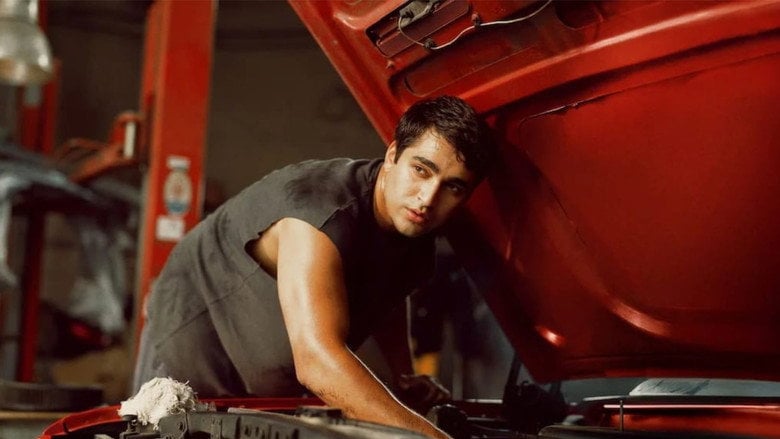
In one scene, she climbs onto Baran’s lap while he’s fixing a car engine, her small hands mimicking his movements as if she’s trying to absorb his skill, his patience, his very presence. It’s a small moment, but it’s the kind of scene that lingers long after the credits roll. That said, Abandoned Man struggles with its own ambition.
The film wants to be both a gritty character study and a redemptive melodrama, and it doesn’t always reconcile the two. The first act moves at a deliberate pace, allowing Baran’s isolation and simmering resentment to fester. There’s a subplot about Baran being conned out of his garage rental, another about his brief stint as a homeless man with Lidya in tow, and a third about his fraught relationship with Fatih, who oscillates between guilt and defensiveness.
Each of these threads is emotionally resonant on its own, but together they start to feel like a series of trials designed to test Baran’s resolve rather than organic developments in his journey. Critics have been divided on this point. Decider called the film “predictable and episodic,” arguing that it sends its characters through “neat cycles of hardship and reward” that ultimately make it “too simplistic for its own good.” There’s some truth to that.
The film’s six-month time jump, for instance, skips over the messy, day-to-day work of reconciliation between Baran and Fatih, leaving their eventual rapprochement feeling unearned. But I’d argue that the film’s simplicity isn’t always a flaw—sometimes, it’s a feature. Abandoned Man isn’t trying to reinvent the wheel; it’s trying to tell a story about the quiet, unglamorous work of healing, and in that regard, its straightforwardness can be disarming.
As one reviewer for Common Sense Media put it, the film “seems to have its heart in the right place, but the story is messy, alternately meandering, slow, and cliched.” That messiness, though, is part of what makes it feel real. Life, after all, isn’t a neatly structured three-act play. It’s a series of fits and starts, of progress and regression, and Abandoned Man captures that rhythm better than most redemption stories I’ve seen.

The film’s greatest strength, though, is its performances. Mert Ramazan Demir, who broke out internationally with the TV series Yalı Çapkını, delivers a career-best turn as Baran. He’s not the kind of actor who chews scenery; his performance is all about restraint, about the way trauma lives in the body long after the mind has moved on.
Watch the way he holds himself—shoulders hunched, eyes darting, as if he’s constantly bracing for the next blow. There’s a scene midway through the film where Baran, overwhelmed by the responsibility of caring for Lidya, sits on the edge of a bed and presses his palms into his eyes until his fingers tremble. It’s a small gesture, but it’s devastating in its honesty.
Demir doesn’t play Baran as a hero or a victim; he plays him as a man who’s spent half his life being told he’s worthless and is only now starting to believe otherwise. Lostuvalı’s direction shines brightest in these quiet moments, where the camera becomes a silent witness to Baran’s unraveling and rebuilding. The film’s visual motifs—broken windows, shattered glass, the constant hum of machinery in Baran’s repair shop—are heavy-handed at times, but they’re also effective.
The garage, in particular, becomes a powerful symbol of Baran’s desire to fix what’s been broken, both in his life and in the lives of those around him. There’s a recurring shot of him standing outside the garage, looking in through a cracked window, his reflection superimposed over the tools and half-repaired cars inside. It’s an image that speaks volumes about the state of his heart: fractured, but not beyond repair.
If Abandoned Man falters, it’s in its reluctance to fully confront the darker implications of Baran’s story. His wrongful conviction—he was forced to take the fall for Fatih’s hit-and-run when he was just a teenager—is a moral and psychological wound that the film only scratches the surface of. There’s a brief, harrowing flashback to Baran’s time in prison, where he kills guards in self-defense after they try to assault him and a friend.
It’s a brutal scene, but it’s over almost as soon as it begins, and the film never fully grapples with the weight of what that violence has done to him. Similarly, the film’s treatment of Fatih is frustratingly one-dimensional. He’s not a villain, exactly, but he’s not a fully realized character either.
He’s a plot device—a stand-in for the family that failed Baran, the brother who got away with his crime, the man who now has to live with the consequences of his cowardice. Ercan Kesal, a respected figure in Turkish arthouse cinema, does what he can with the role, but it’s not enough to make Fatih feel like anything more than a narrative convenience. That said, Abandoned Man isn’t a film that needs to be perfect to be effective.
It’s a film about imperfection—about the cracks in people’s lives and the light that gets in anyway. There’s a moment near the end where Baran, having finally secured his garage, sits on the hood of a car with Lidya, watching the sunset. She asks him if he’s happy, and he doesn’t answer right away.
Instead, he pulls her close and rests his chin on the top of her head. It’s a simple gesture, but it’s the kind of moment that defines the film: quiet, unassuming, and deeply moving. Abandoned Man may not reinvent the redemption story, but it reminds us why these stories endure. They endure because we all, at some point, need to believe that second chances are possible.
And because sometimes, all it takes is one small hand reaching out to pull us back from the edge.
"A raw, emotional Turkish drama that lands despite its familiar redemption arc."
The film authentically portrays an ex-con’s struggle to reintegrate into society, with strong performances anchoring the story. The plot is predictable and the pacing uneven, though, particularly in the second act, which dulls the emotional impact.
Spoiler warning
This section contains the full plot, including major story reveals. Overview above stays spoiler-free.
Turkish cinema is gaining traction on the global stage, and Abandoned Man (2025) looks poised to be one of its next breakout films. Directed by Çağrı Vila Lostuvalı, the drama stars rising actor Mert Ramazan Demir in what promises to be a raw, emotionally charged role. With a runtime of 91 minutes and a genre classification as a drama, the film has already sparked curiosity among international audiences—even before its full release.
Çağrı Vila Lostuvalı, the filmmaker behind Abandoned Man, has been quietly building a reputation for crafting intense, character-driven stories. While details about his creative process on this project remain scarce, his previous work suggests a preference for stark, unflinching narratives. The film’s original Turkish title, Metruk Adam, translates to "Abandoned Man," hinting at a story centered on isolation, struggle, or existential crisis. Given Lostuvalı’s background, it wouldn’t be surprising if the movie leans into psychological depth rather than conventional plot twists.
The film’s lead, Mert Ramazan Demir, is no stranger to demanding roles. His performance in Abandoned Man has already drawn attention, with Rotten Tomatoes listing him as the star. Demir’s career has been on an upward trajectory, and this project could solidify his status as one of Turkey’s most compelling young actors. The supporting cast—including Ada Erma, Rahimcan Kapkap, and veteran actor Ercan Kesal—suggests a mix of fresh talent and seasoned performers, which may add layers to the film’s emotional weight.
Beyond the basics, details about Abandoned Man are thin. The film is classified as a drama with a runtime of 91 minutes, and early ratings on SensCritique give it a 6/10 based on 31 votes. That’s a modest score, but it’s worth noting that the film hasn’t yet received widespread critical attention. Whether it will resonate with audiences beyond Turkey remains to be seen.
One unanswered question is the film’s release strategy. Will it premiere at major festivals, or is it aiming for a direct streaming debut? With no confirmed distribution deals in the public domain, speculation is just that—speculation. Similarly, the plot remains under wraps, though the title alone suggests themes of loneliness or societal neglect.
Turkish cinema has been making waves in recent years, with films like The Wild Pear Tree and Commitment Hasan earning international acclaim. Abandoned Man could be the next entry in this wave, especially if Lostuvalı’s direction and Demir’s performance deliver on their promise. The film’s modest runtime and drama classification suggest a tight, focused narrative—one that might resonate with audiences tired of bloated blockbusters.
For now, fans of Turkish cinema will have to wait for more details. But if early buzz is any indication, Abandoned Man could be a sleeper hit.
Entertainment rumors and trivia aggregated from public reporting. Treat speculation as unverified unless a cited source confirms it.
More titles in the same genres and with the same cast.