
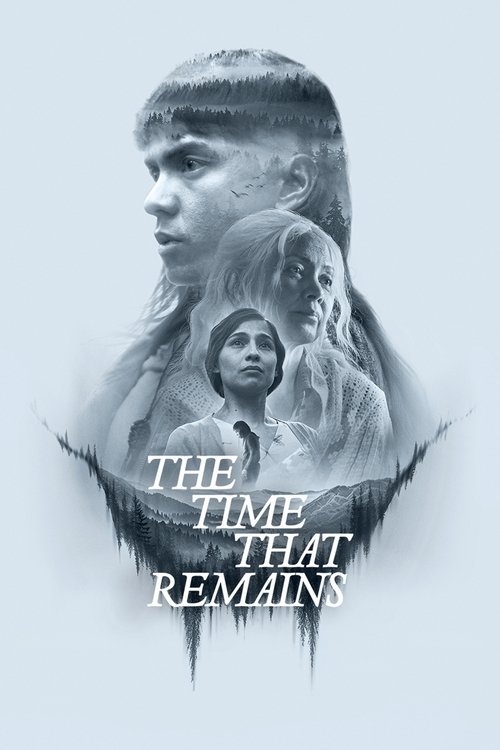
Movie poster for The Time That Remains (2025)

The Time That Remains

2025
1h 56m
Director: Adolfo Alix Jr.
Search on Netflix

Overview

Surrounded by a string of deaths, an older woman relives her romance with a mysterious, ageless lover as an inspector closes in on their dark secret.

Cast

12 people

Reviews

6 min read

The Weight of Forever: Love, Time, and the Cost of Immortality in The Time That Remains

I keep thinking about the way Carlo Aquino’s Matias moves through the film—slow, deliberate, as if every step is a calculation against gravity. There’s something almost mournful in the way he carries himself, like a man who’s spent centuries learning how to pretend he still belongs among the living. The Time That Remains is, at its core, a vampire love story, but not the kind that glitters or seduces.

This is a romance built on absence, on the quiet devastation of watching someone you love grow old while you stay the same. And yet, for all its ambition, the film often feels like it’s drowning in its own atmosphere, as if the misty highlands of the Cordillera have seeped into the script itself, blurring the edges of what should be sharp.

Adolfo Alix Jr. has always been a director drawn to the weight of history, to the way the past lingers in the present like a ghost. Here, he attempts something more audacious: a vampire myth rooted not in Transylvania or New Orleans, but in the colonial wounds of the Philippines, where immortality isn’t a curse of the blood but a curse of the soul. Matias isn’t just a vampire; he’s a Kalinga warrior turned undying witness to centuries of violence, his existence a living archive of trauma.

The film weaves together two timelines—Lilia’s youth during the Japanese occupation and her old age in a hospital, where a series of mysterious deaths have drawn the suspicion of Inspector Angua (Bembol Roco, in one of his most quietly menacing performances). The past and present collide in ways that are often visually striking, if not always narratively satisfying.

A mist-shrouded Cordillera landscape, where the past and present blur into a single, haunting image.

The film’s greatest strength lies in its visual poetry. Cinematographer Odyssey Flores bathes every frame in a gothic haze, turning the Cordillera into a character in its own right—mist-cloaked, ancient, indifferent. The hospital scenes are drenched in sickly fluorescent light, a stark contrast to the warm, golden hues of Lilia’s wartime memories.

There’s a moment early on, when young Lilia (Jasmine Curtis-Smith) first encounters Matias in the forest, the camera lingering on the way the light filters through the trees, casting dappled shadows across his face. It’s the kind of shot that makes you lean in, not because it’s telling you something, but because it’s showing you something—something fragile and fleeting. Asian Movie Pulse’s Panos Kotzathanasis was right when he noted that Alix’s films often excel in "technical execution," and here, the craftsmanship is undeniable.

Audience Opinions

Audience 6.5/10
"A poignant but uneven drama that lingers more for its emotional weight than its narrative coherence."

The film’s exploration of grief and time resonates with many, particularly through its strong performances and atmospheric direction. However, its fragmented storytelling and slow pacing leave some viewers struggling to stay engaged, feeling the emotional payoff doesn’t fully justify the investment.

What viewers praise
  • Emotional depth The themes of loss and memory are handled with sensitivity, leaving a lasting impact on those who connect with its tone.
  • Strong performances Carlo Aquino and Bing Pimentel deliver nuanced portrayals that anchor the film’s more abstract moments.
  • Atmospheric direction Adolfo Alix Jr.’s visual style and pacing create a haunting, immersive mood that enhances the story’s emotional core.
Common complaints
  • Fragmented narrative The non-linear structure and abrupt shifts in tone confuse some, making it difficult to follow the overarching plot.
  • Slow pacing The deliberate tempo tests patience, with some feeling the film drags without enough narrative momentum.
  • Underdeveloped side characters Supporting roles, while well-acted, often feel like missed opportunities to deepen the story’s emotional layers.
Recommended for
Fans of introspective dramas Adolfo Alix Jr. enthusiasts Viewers who enjoy slow-burn storytelling Filipino cinema lovers Character-driven narrative seekers

Buzz & Rumors

Public reports

**Immortal Lovers, Mortal Drama: The Real-Life Chaos Behind The Time That Remains (2025)**

When Netflix promised a Filipino gothic vampire romance, fans signed up for fangs, fog, and forever love. What they didn’t expect? Awkward “Tita” kisses, a real-life heart scare, bruised knees from a brutal rape scene, and a full-blown culture-war over an Igorot ritual. Immortality is cute, but this production’s drama is very, VERY human.


On-Set Drama: Kissing Your “Tita” for the Camera

  • Veteran actress Bing Pimentel (elder Lilia) had to romance much-younger heartthrob Carlo Aquino on screen—and her honesty about it is downright iconic. She admitted she was uncomfortable filming their intimate scenes:

> “We’re supposed to be intimate and kissing. I really struggled with it, and I just told him, ‘Bahala ka na, just go with the flow.’”

  • Making things more hilariously awful, Carlo reportedly kept calling her “Tita” on set. Bing’s clapback:

> “How will that help? Call me Lilia, not Tita!” [1] Age-gap romance is one thing; age-gap romance where your co-star insists on calling you “auntie” is another level of emotional horror.

  • In another interview, Bing joked about the gap:

> “It’s difficult to have the mindset of kissing a young man. And he’s what, 26 years younger?” Fans loved their final scenes, but knowing the behind-the-scenes cringe makes that big kiss feel extra wild.


Cast Feuds & Chemistry Tea

  • A blogger who reviewed the film went straight for the jugular, saying Jasmine Curtis-Smith and Carlo Aquino had “no chemistry at all”, complaining that their relationship in the movie jumps too fast—from her childhood to adult romance with zero buildup.

No brawls, no public shade… just the ultimate actor insult: “You guys don’t spark.”

  • On the flip side, press features quoted Jasmine saying their past work together helped them build rapport, while Carlo praised how Bing warmed up to him off-camera and shared stories to build comfort before shooting. [1]

Translation: no open feuds, but definitely a gap between what the creatives wanted us to feel and what some viewers actually felt.


Scandals & Controversies: The Igorot Ritual Firestorm

  • The biggest real-world scandal isn’t about romance—it’s about culture. The film drew heat for its use of the Panag-aapoy (Panagaapoy) ritual, a sacred practice in Sagada honoring the dead.
  • During production, the team reportedly recreated the ritual in Sagada’s Lumiang burial caves and at the St. Mary the Virgin Cemetery, with the assistance and endorsement of some locals—but “out of its intended purpose and context,” according to a critical essay from the Mountain Beacon.
  • The scenes were used to deepen the backstory of Carlo’s character Matias as a Cordillera / Baguio native, but:
  • The actual name Panag-aapoy was never mentioned in the film.
  • Even “Sagada” is never said out loud. [5]
  • For many locals, it felt like their rituals and ancestral spaces were turned into stylish vampire set dressing for a Manila/Netflix audience. The article points out that:
  • Sagada has a long history of saying “no” to outside intrusion—military presence, logging, big development, even prior entertainment events.
  • The film’s use of Cordillera imagery without clear, respectful context continues a pattern of outsiders cherry-picking indigenous culture. [5]
  • While there’s no public lawsuit reported, the controversy became part of the online conversation around the movie—especially among Cordillera watchers and cultural advocates, who saw it as yet another example of “exoticizing” Igorot traditions for mainstream streams.

Pain, Bruises & THAT Rape Scene

  • At a media conference for The Time That Remains, fans and reporters noticed Jasmine Curtis-Smith wearing a high-slit white dress… and revealing visible bruises on her knees and legs.
  • Those marks weren’t a styling choice—they were reportedly from shooting the film’s brutal rape scene. Jasmine described scenes of sexual violence as “very difficult to swallow,” noting that they mirror real-life situations where women are taken advantage of and often struggle to speak out or seek help.
  • Rather than hide the bruises, she seemed to own them as proof of the physical and emotional toll of the role—media called them “badges of honor.” [6]

Cue fans debating in comment sections: was the production pushing TOO hard for realism, or was this Jasmine choosing to lean fully into the gravity of the subject?

  • Context around the scene:
  • The movie is framed as a romance with horror and folklore elements, and Jasmine’s character goes through a violent ordeal before being saved by Matias, Carlo’s immortal character. [6]
  • Carlo’s character is described as her “savior”, stepping in to protect her and deliver justice within the story—classic dark-romance framing, but with real bruises to back it up. [6]

Heart-Stopping Reality: Carlo Aquino’s 2025 Health Scare

  • While he was busy being an immortal on screen, Carlo’s body was sending VERY mortal warnings off-screen.
  • In a December 2025 showbiz column, Carlo revealed he had a serious health scare while juggling multiple projects—including The Time That Remains, It’s Okay To Not Be Okay, and a new Bar Boys installment, plus another movie with Bela Padilla.
  • Doctors found “parang bara sa puso ko”—a blockage in his heart—that needed to be checked. [4]
  • Thankfully, he didn’t need a stent or surgery.
  • But he ended up on maintenance meds for cholesterol and high blood pressure, and he quit vaping. [4]
  • The grind was real:

> “Actually, halos sabay-sabay kasi ako this year… So, talagang nag-decline yun,” he said, explaining he had to turn down work because of the health scare. [4]

  • Fans couldn’t help noticing the cosmic irony: he plays an immortal lover watching others age and die, while off-camera his own heart struggles with the pressure of being overbooked and overworked.

Wild Trivia, Fan Takes & Twilight Comparisons

  • A Facebook review that made the rounds flat-out said it’s **“easy to dismiss The Time That Remains as a localized version of Twilight,”** noting that the premise—a mysterious, ageless lover and a mortal woman locked in a decades-spanning romance—invites the comparison.

Some viewers leaned into the joke, dubbing it “Igorot Twilight” in comments and local forums.

  • That same review, though, praised the film’s use of aswang/vampire mythology and its lush cinematography, calling it “breathtaking” in parts. [8] So there’s a mini culture war in the fandom:
  • Team “It’s Just Pinoy Twilight” vs.
  • Team “Shut Up, We Finally Got a Serious Filipino Vampire Movie.”
  • Cultural critics also pointed out how the movie mashes together Cordillera signifiers—Baguio setting, Sagada burial caves, Kalinga-style warrior backstory—into one aesthetic package, which Manila viewers might accept, but locals find geographically and culturally fuzzy. [5]

That’s not exactly gossip, but it is the kind of nerd-level tea that keeps Twitter threads alive at 2 a.m.


The Final Bite

No on-set fistfights, no cheating scandals, no viral pap shots—but The Time That Remains quietly built a dossier of slow-burn drama:

  • An age-gap romance that left its veteran star begging not to be called “Tita” while kissing her immortal boy toy. [1][2]
  • A lead actor whose heart decided it was over the immortal grind—literally. [4]
  • An indigenous burial ritual turned into vampire backstory, prompting serious cultural side-eye from Sagada and Cordillera watchers. [5]
  • A rape scene so physically demanding that its leading lady wore the bruises, very publicly, to the promo circuit. [6]
  • And a fandom still arguing if they just watched Twilight: Cordillera Edition or the beginning of a serious Filipino vampire canon. [3][8]

For a movie about time that never runs out, the behind-the-scenes stories might be the part that truly lingers.

Entertainment rumors and trivia aggregated from public reporting. Treat speculation as unverified unless a cited source confirms it.