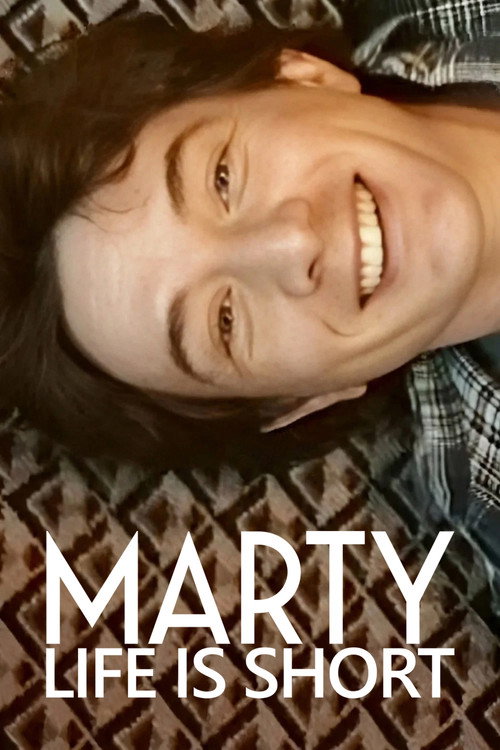
Movie poster for Marty, Life Is Short (2026)

Marty, Life Is Short

2026
1h 42m
PG-13 · English
Director: Lawrence Kasdan
Play trailer
Search on Netflix

Overview

Martin Short looks back on a life fueled by joy in this documentary with classic clips, fresh interviews and star-studded, never-before-seen home movies.

Trailer

Official

Cast

12 people

Reviews

4 min read

The Man Who Never Stopped Laughing

I’ve seen Martin Short do a lot of things—sing, dance, impersonate a game show host with a mustache made of dental floss, cry on a talk show couch—but I’ve never seen him sit still. Even in Marty, Life Is Short, a documentary ostensibly about reflection, he’s in motion: pacing, gesturing, laughing so hard he has to wipe his eyes. The film, directed by his longtime friend Lawrence Kasdan, isn’t just a career retrospective.

It’s a portrait of a man who treats joy like a contact sport, and grief like something you carry while still running the race.
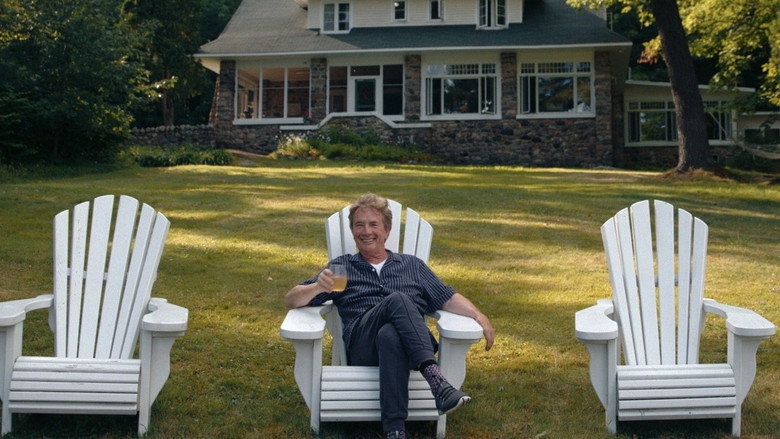
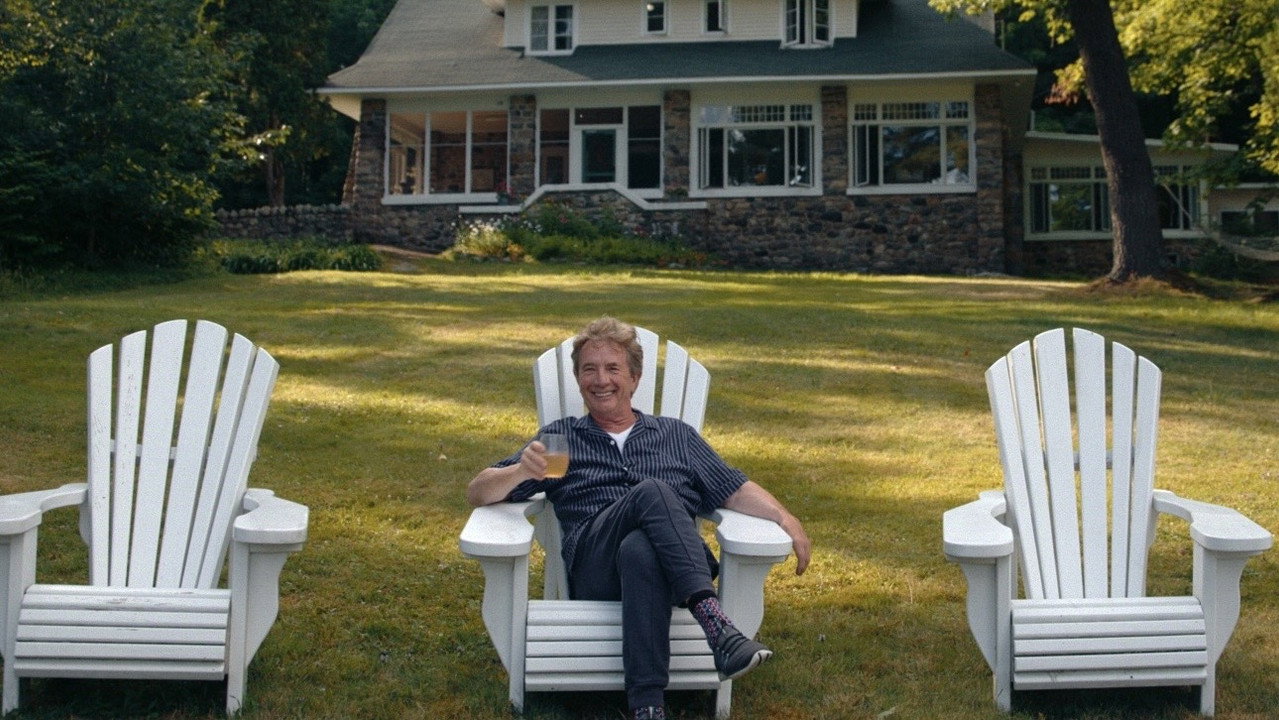
Martin Short mid-laugh, surrounded by friends at a backyard gathering, sunlight filtering through trees

That motion is the film’s greatest strength and, in a way, its limitation. Kasdan, who first worked with Short on the 1987 rom-com Cross My Heart (a shoot Kasdan has called “a little difficult,” which in Hollywood-speak means “a disaster”), doesn’t just have access to Short’s life—he has the keys to the vault. Home movies spill out like confetti: Short as a gawky kid in Hamilton, Ontario; Short and Steve Martin goofing off in a lake, shirtless and sunburned; Short and Tom Hanks reenacting Butch Cassidy and the Sundance Kid on a yacht, with Hanks as Butch and Short as Sundance—if Sundance were a man who’d just discovered the existence of mustaches and was deeply suspicious of them.

The footage is so intimate it feels like eavesdropping. There’s something disarming about seeing Catherine O’Hara, Eugene Levy, and Andrea Martin—three of the sharpest comedic minds of their generation—sitting around a kitchen table in shorts and T-shirts, laughing at nothing in particular. It’s the kind of laughter that doesn’t need a punchline.

The film’s structure is loose, almost improvisational, mirroring Short’s own approach to comedy. It jumps from career highlights (SNL, SCTV, Father of the Bride) to personal tragedies (the deaths of his wife, Nancy Dolman, and his daughter, Katherine) without much warning. The transitions aren’t always smooth, but that’s the point.

Life isn’t a highlight reel, and neither is this documentary. The most moving moments come when the film lingers on Short’s face as he talks about loss. There’s no grand speech, no cathartic breakdown—just a man who’s learned to carry sorrow without letting it crush him. “I think this movie’s about not retreating from it,” he tells Kasdan when asked if they should delay the film after O’Hara’s death.

It’s a quiet declaration of intent, and it reframes the entire documentary. This isn’t just a celebration; it’s a survival guide.
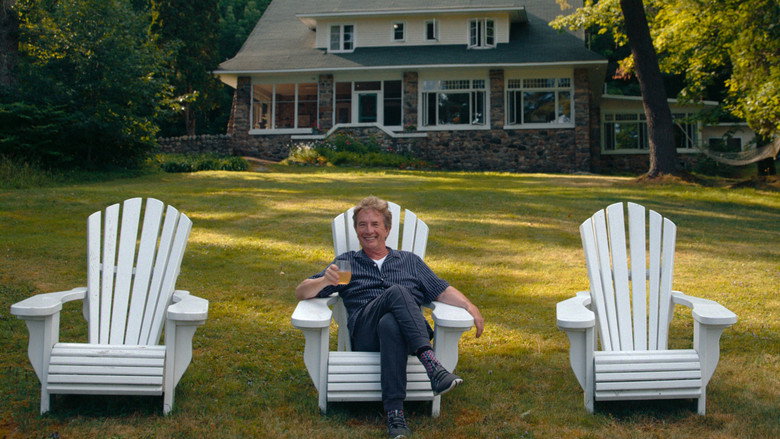
A younger Martin Short performing on stage, bathed in stage lights, mid-gesture

The film’s most revealing scene comes early, when Short and Kasdan sit in a dimly lit room, watching old home videos. Short points out his late wife, Nancy, in the background of a party. She’s laughing, unaware of the camera.

Short’s voice cracks—just for a second—before he steers the conversation back to a joke. It’s a masterclass in deflection, but it’s also deeply human. Comedy, for Short, isn’t just a career; it’s a coping mechanism.

The film doesn’t probe this as deeply as it could (a common critique from viewers who wanted more introspection), but maybe that’s the point. Short isn’t an enigma to be solved. He’s a man who’s spent his life making people laugh, even when he’s the one who needs the joke the most.

The documentary’s biggest flaw is its reluctance to challenge its subject. There’s no real interrogation of Short’s failures (though he’s the first to admit his career is “80 percent failure”), no deep dive into the mechanics of his comedy, no real tension. It’s a love letter, not a biography, and love letters are rarely critical.

But then again, maybe that’s the film’s purpose. In a world that often confuses cynicism with depth, Marty, Life Is Short is unapologetically warm. It doesn’t ask you to dissect Short’s genius; it asks you to feel it.
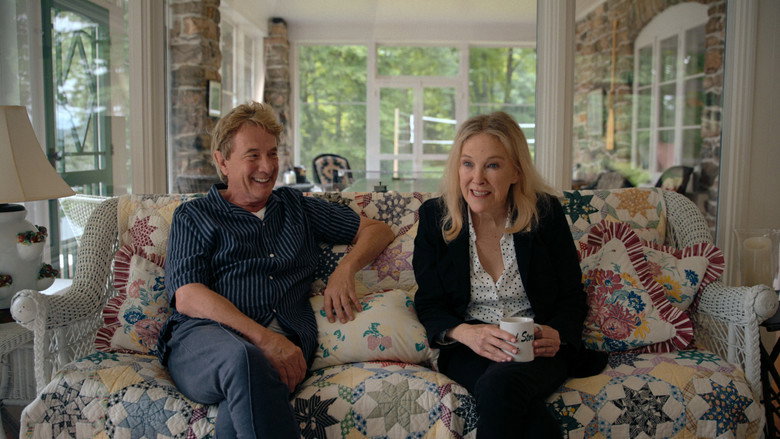
Martin Short and Steve Martin sitting side by side, laughing, with a piano in the background

The final act is a gut punch disguised as a party. Short gathers his friends—Steve Martin, Tom Hanks, Eugene Levy, Paul Shaffer—for a sing-along. They’re older now, their faces lined with time, but their joy is undiminished.

They belt out “Auld Lang Syne” like it’s the most important song in the world, and for a moment, it is. The camera lingers on Short’s face as he sings, his eyes wet. It’s not sadness, exactly.

It’s gratitude. For the friends, for the life, for the chance to keep laughing.

I walked out of Marty, Life Is Short feeling lighter than I had in weeks. Not because the film ignores pain, but because it refuses to let pain have the last word. Short’s life has been marked by loss, but his legacy isn’t tragedy.

It’s resilience. It’s the ability to look at the world, even at its darkest, and find something worth laughing about. And if that’s not a lesson worth carrying, I don’t know what is.

Audience Opinions

Audience 8.0/10
"A joyful, funny and deeply affectionate portrait of Martin Short that charms and moves more than it enlightens."

A warm celebration packed with big laughs, intimate home movies and touching reflections on grief, love and long friendships that leaves you smiling through tears. Classic sketch clips and candid footage with a star-studded circle of friends make it feel like being welcomed into Short’s inner world. The tradeoff is that it leans heavily on tribute and access, staying conventional and somewhat superficial instead of going deeper into its subject.

What viewers praise
  • Uplifting emotional impact Beautiful, heartwarming and bittersweet, with tributes and final segments that are unexpectedly emotional while still life-affirming.
  • Consistently very funny Classic sketches, Jiminy Glick bits and highlight reels from decades of work get real laughs even if you've seen the material many times.
  • Intimate home movie access A rich selection of personal footage and family moments brings you close to Short’s private life and his relationships with loved ones and colleagues.
  • Genuine sense of friendship The easy rapport with Steve Martin, Tom Hanks, Eugene Levy, Catherine O’Hara and others feels like real camaraderie rather than a staged parade of talking heads.
  • Inspiring resilience and outlook Short’s way of facing repeated personal losses while staying joyful and kind is especially inspiring and makes the film an ode to living fully.
Common complaints
  • Surface-level exploration Moving and entertaining, but it doesn’t dig far beneath the celebration for tougher insights or a more complex portrait.
  • Conventional celebrity doc style The structure is a standard, affectionate career overview rather than anything formally inventive or revealing.
  • Heavy reliance on star access The movie leans on its lineup of famous friends and sheer access instead of using that access to push into more substantive territory.
  • Questioned necessity for non-devotees Even admirers of Short wonder whether it adds enough new perspective to justify itself for less invested viewers.
Recommended for
Martin Short devotees Comedy history enthusiasts Feel-good biography seekers SCTV and SNL nostalgists Celebrity friendship junkies Heartwarming grief-and-joy stories

Full Plot (Spoilers)

Spoiler warning

This section contains the full plot, including major story reveals. Overview above stays spoiler-free.

Buzz & Rumors

Public reports

Inside “Marty, Life Is Short”: Spielberg on a Yacht, Banjo Boot Camp, and the Grief That Almost Delayed the Doc

Martin Short’s life story was always going to be funny. What nobody expected was that the making of Netflix’s “Marty, Life Is Short” would come with yacht movies, secret heartbreak, latestnetflix.com argues, and a director using 40 years of friendship as his primary special effect.

Welcome to the real backstage of Lawrence Kasdan’s 2026 documentary on Martin Short — where the behind-the-scenes stories are as wild, weird, and moving as the man himself.


Kasdan & Marty: A Friendship Born in a “Difficult” Shoot

  • Long before Netflix money and Emmy buzz, Martin Short and Lawrence Kasdan bonded in the trenches on the 1987 film Cross My Heart. Kasdan has admitted the shoot was “a little difficult,” the polite Hollywood euphemism for “kind of a nightmare.” But instead of killing the vibe, it welded them together: “We immediately hit it off, became friends, and it never stopped after that”. - That war-buddy energy powers the doc. Kasdan says the whole goal was to make the film feel “like what it’s like when you hang around with Marty Short” — ebullient, fun, and a little unpredictable, rather than a dry career recap.

Total Access: Marty Hands Over His Entire Life (Literally)

  • The secret ingredient, according to producer Sara Bernstein and Kasdan, was access. Short didn’t just say, “Sure, use some clips.” He opened the vault: hundreds of hours of home movies and video, going back to when he was seven. - Kasdan calls Marty’s offer — “I’ll let you use everything” — “the greatest invitation in the world,” something he “couldn’t say no” to. - The archive includes legendary Snug Harbor cottage and Sag Harbor home gatherings: Nancy Dolman and Marty hosting an absolutely insane guest list — Steve Martin, Andrea Martin, Eugene Levy, Catherine O’Hara, Tom Hanks, Steven Spielberg, Ron Howard and more, in T‑shirts, shorts, and occasionally no shoes at all. - One recurring motif: Short’s parties escalate over the years into full-blown productions. Steve Martin even confesses it took him about a year to learn “Auld Lang Syne” on the banjo just to nail it at one of Marty’s Christmas blowouts.

Spielberg on a Yacht, Hanks as Forrest Gump, and Ed Grimley as Sundance

  • The crown jewel of the home footage: Steven Spielberg casually directing Martin Short and Tom Hanks on a yacht like it’s just another Tuesday. - The scene? A full-on reenactment of Butch Cassidy and the Sundance Kid, but warped through the Marty-verse: Tom Hanks plays Forrest Gump as Butch, Martin Short resurrects Ed Grimley as Sundance, and Spielberg orchestrates the whole thing behind the camera. - Elsewhere in the doc’s home videos:
  • Shirtless lake hangs with Short and Hanks goofing off like two college kids on summer break. - Steve Martin, scruffy and snorkeling, emerging from the water like a very confused sea creature. - Goldie Hawn, barefoot and wiggling at a house party; Catherine O’Hara, Eugene Levy, and Andrea Martin “shooting the shit” in shorts and tees — the SCTV Avengers in full civilian mode. - One tiny but perfect detail: on camera, Short shows his phone’s contact entry for Steve Martin — a “silly” photo set as Steve’s ID. When your best friend is a comedy icon and you still make him your goofy lock-screen gag, you’re living right.

Grief in the Edit Bay: The Deaths That Nearly Changed the Release

  • For all the yacht hijinks, the doc nearly hit pause when real life turned brutal. During post-production, Catherine O’Hara — a core presence in Short’s life and in the film’s archive — died after an illness that most of the crew didn’t even know about. Kasdan says everyone working on the movie was “devastated”. - At the same time, the film grapples with the loss of Short’s daughter Katherine, who died by suicide, and other tragedies in Short’s close circle. These losses are acknowledged in the film’s dedication and became a major question mark over release timing. - Kasdan even offered to delay, asking Short if he wanted to “take some time.” Short’s answer became a thesis statement: “I think this movie’s about not retreating from it”. The doc moved forward — grief and all.

98% Failure, 100% Resilience: How the Doc Rewires the “Comedy Legend” Story

  • John Mulaney shares that early in his solo career, Short gave him the most unsparing pep talk imaginable: showbiz is “98% failure,” and that’s the job. - Short himself estimates his own career as “80 percent failure,” which Kasdan seizes on as proof of his “unbelievable resilience” — the real subject of the film. The doc canonizes Short’s work and reframes his entire life as a process of getting back up — through flop gigs, brutal SNL weeks, Nancy Dolman’s cancer diagnosis, her death, and staggering family loss. - Or as Kasdan puts it, his interviewing “technique is a slow unpeeling of people’s layers” — and with a subject this generous with his past, there are a lot of layers to peel.

In the end, “Marty, Life Is Short” is the rare Hollywood project where the real behind-the-scenes story is the story: a director using decades of friendship, a star handing over his entire personal archive, and a bunch of comedy legends accidentally making the best home movie in history.

Entertainment rumors and trivia aggregated from public reporting. Treat speculation as unverified unless a cited source confirms it.

More titles in the same genres and with the same cast.