Amy Poehler
Angie

“Would you put your eggs in this basket?”
A successful, single businesswoman who dreams of having a baby discovers she is infertile and hires a working class woman to be her unlikely surrogate.
I remember the first time I saw Tina Fey and Amy Poehler together on Saturday Night Live—Fey’s deadpan precision next to Poehler’s manic, unhinged energy. It was like watching a straight line try to contain a tornado. A decade later, Baby Mama gives them the same dynamic, but this time in a rom-com where the stakes are motherhood, money, and the messy collision of two worlds.
The film isn’t a revelation, but it’s a reminder that sometimes the best comedies aren’t about jokes—they’re about the friction between people who can’t help but rub each other the wrong way.
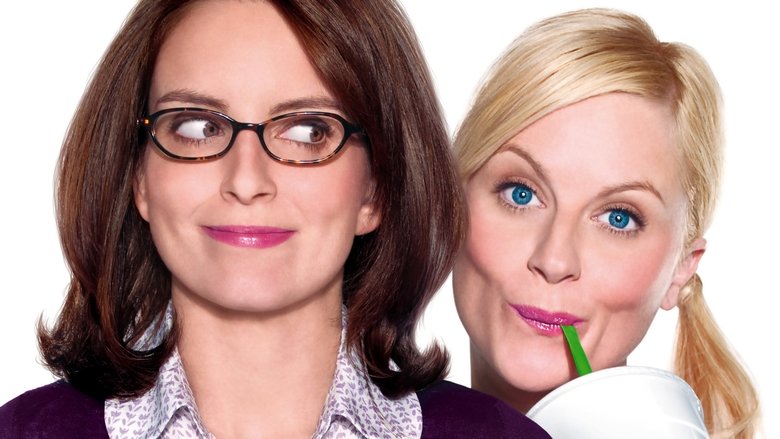
The setup is simple: Kate Holbrook (Fey), a high-powered single executive, discovers she can’t conceive and hires Angie Ostrowiski (Poehler), a working-class woman from South Philly, to be her surrogate. The class divide is immediate and deliberate. Kate’s apartment is all clean lines and neutral tones, a space so sterile it might as well be a showroom.
Angie’s world is cluttered, loud, and unapologetically lived-in. Their first meeting is a masterclass in comedic tension—Kate, polite but guarded, offering Angie a bottled water like it’s a peace treaty; Angie, grinning and unfiltered, asking if she can smoke in the house. It’s the kind of scene that could’ve been written for a stage play, where the humor comes from the push and pull of two people who don’t just have different lifestyles, but different languages.
What makes Baby Mama work (when it works) is that it doesn’t treat Angie as a punchline. Sure, she’s chaotic—she moves into Kate’s apartment uninvited, eats cereal straight from the box, and treats Kate’s pristine kitchen like a frat house—but Poehler plays her with a warmth that keeps her from becoming a caricature. There’s a moment where Angie, pregnant and emotional, confesses she’s never had anyone depend on her before.
It’s a small beat, but it’s the kind of detail that elevates the film beyond a series of gags. Poehler sells it with a vulnerability that feels real, not scripted. (Fey, meanwhile, is all tight smiles and repressed panic, a woman who’s spent her life controlling every variable only to realize she can’t control this.)
The film’s biggest weakness is that it can’t quite decide what it wants to be. Is it a sharp satire of class and motherhood, or a conventional rom-com with a few raunchy jokes? The answer, unfortunately, is both—and the tonal whiplash shows.
The first act is all about the odd-couple dynamic, with Kate and Angie’s differences clashing in ways that feel fresh. But by the third act, the film falls back on familiar tropes: the meet-cute with Greg Kinnear’s organic grocery mogul, the obligatory third-act misunderstanding, the big romantic gesture. It’s as if the script got cold feet and retreated to safer territory.
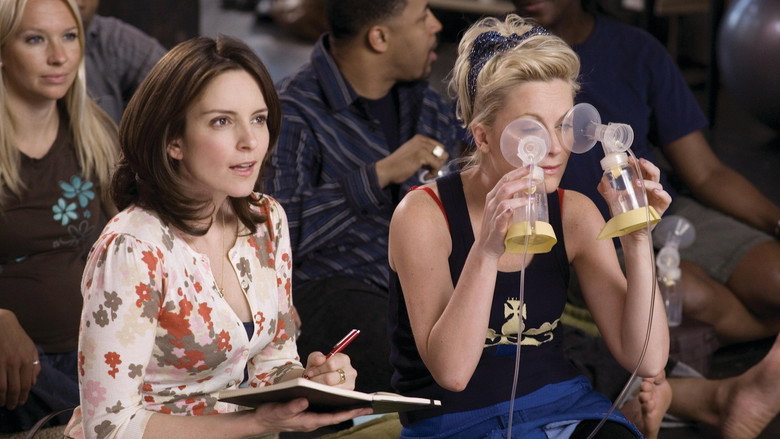
That said, there are moments where Baby Mama almost transcends its own formula. A scene where Kate and Angie get drunk together—Kate loosening up for once, Angie letting her guard down—is one of the film’s best. It’s not just funny; it’s the rare rom-com moment that feels true.
Two women, both out of their depth, finding a weird kind of solidarity in the mess of it all. The film’s heart is in these small, human beats, not in the broad strokes of its plot.
The supporting cast is hit or miss. Sigourney Weaver, as Kate’s demanding boss, is delightfully icy, delivering lines like “I don’t do ‘cute’” with the precision of a scalpel. Steve Martin’s cameo as a fertility doctor is amusing but forgettable, a reminder that star power alone doesn’t make a scene work.
Greg Kinnear, as Kate’s love interest, is fine but bland—his character feels like a placeholder, a rom-com requirement rather than a fully realized person.
What lingers, though, is the chemistry between Fey and Poehler. Their friendship off-screen seeps into every scene, a shorthand that makes their characters’ dynamic feel lived-in. There’s a moment where Angie, in a rare moment of seriousness, tells Kate, “You’re not as tough as you think you are.” It’s a line that could’ve been corny, but Poehler delivers it with a sincerity that cuts through the noise.
Fey’s reaction—part surprise, part reluctant recognition—is the kind of quiet acting that often goes unnoticed in comedies.
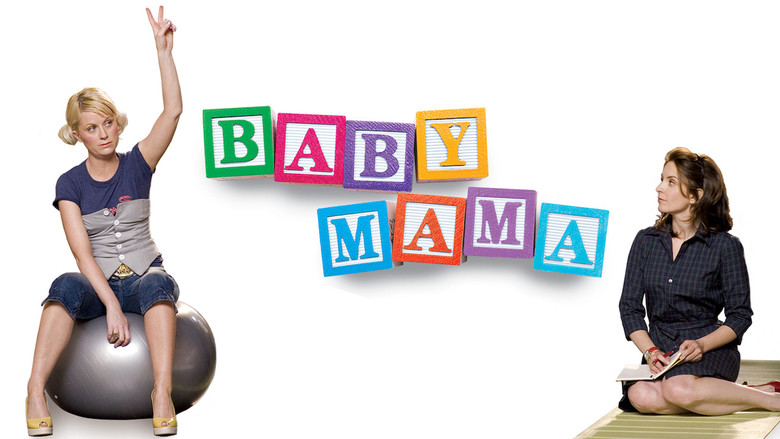
In the end, Baby Mama is a film of missed opportunities. It has the ingredients for something sharper—a comedy that could’ve skewered class, motherhood, and the absurdity of modern family-making—but it settles for something safer. That’s not to say it’s bad.
It’s funny, charming, and occasionally insightful. But it’s also a reminder that when you have two of the sharpest comedic minds of their generation, you want them to cut deeper.
I left the theater smiling, but I also kept thinking about that drunk scene between Kate and Angie. The one where the film almost became something more. Maybe that’s the point.
Comedy, like pregnancy, is messy. Sometimes you get the birth you planned. Sometimes you get something else entirely. Baby Mama is the something else—a little uneven, a little flawed, but alive in ways that matter.
"A lighthearted comedy with strong comedic performances but a predictable and sometimes uneven plot."
Amy Poehler and Tina Fey's chemistry drives most of the humor and makes the film enjoyable despite its familiar rom-com tropes. The jokes are hit-or-miss, with some scenes forced or underdeveloped, but the leads' charm keeps it afloat. The talented supporting cast is underused, and the story is thin in places.
Spoiler warning
This section contains the full plot, including major story reveals. Overview above stays spoiler-free.
Baby Mama (2008) brought together comedy powerhouses Tina Fey and Amy Poehler for a raucous take on surrogacy, class clashes, and the chaos of modern motherhood. Directed by Michael McCullers—best known for his work on Austin Powers—the film blended Fey’s sharp wit with Poehler’s unhinged energy, but its journey from script to screen wasn’t without hiccups. latestnetflix.com's read is that here’s what we know about the behind-the-scenes magic (and mess) of this cult-favorite comedy.
The chemistry between Tina Fey and Amy Poehler was the backbone of Baby Mama, but their characters—uptight executive Kate Holbrook and free-spirited surrogate Angie Ostrowiski—were written as polar opposites. Fey’s Kate is a type-A control freak, while Poehler’s Angie is a working-class wild card who moves in with Kate and turns her life upside down. The contrast wasn’t just for laughs; it mirrored the real-life dynamic between the two stars.
In a rare behind-the-scenes clip, Fey and Poehler joked about their characters’ differences, with Fey calling Angie “the opposite of Amy” in terms of personality. Poehler, ever the improviser, leaned into Angie’s chaotic energy, delivering lines with a mix of innocence and absurdity that became a hallmark of the film. Their friendship off-screen—rooted in SNL and improv comedy—translated into effortless banter on camera, even if the script occasionally reined in their spontaneity.
Like many comedies, Baby Mama had its share of cuts, including a scene featuring a character named Dante, played by an uncredited actor. In a YouTube discussion, McCullers, Fey, and Poehler revisited the deleted moment, revealing it was axed for pacing. The scene reportedly involved Dante flirting with Angie, adding another layer to her already complicated relationships. While the clip itself hasn’t surfaced, the trio’s commentary suggests it was a casualty of the film’s tight 99-minute runtime.
Other rumored cuts include extended versions of the film’s club scene, where Angie’s antics escalate into full-blown chaos. Fans have speculated that some of Poehler’s most outrageous moments—like her drunken karaoke or the infamous “baby bombshell” reveal —were trimmed for tone, though no official confirmation exists.
Baby Mama opened to mixed reviews, with critics praising the Fey-Poehler pairing but questioning the film’s uneven tone. Rotten Tomatoes aggregates a score that reflects this divide, though audience reactions were warmer. The French review site SensCritique gave it a modest 4.7/10, calling it a “lightweight comedy” that struggled to balance its rom-com and farcical elements.
Despite the criticism, the film’s trailer promised a raunchy, fast-paced ride, and it delivered enough laughs to become a cult favorite. Sigourney Weaver’s scene-stealing turn as Kate’s icy boss and Steve Martin’s cameo as a fertility clinic guru added star power, but the heart of the movie remained Fey and Poehler’s odd-couple dynamic.
While Baby Mama didn’t break box-office records, it cemented Fey and Poehler as a comedic duo to watch. Their collaboration paved the way for later projects like Sisters (2015) and their SNL reunion sketches, proving that their chemistry could carry a film. McCullers, meanwhile, continued his career in comedy, though Baby Mama remains his sole directorial credit.
For fans, the film’s charm lies in its unapologetic embrace of chaos—whether it’s Angie’s disastrous apartment-warming party or Kate’s meltdown over a misplaced organic smoothie. It’s a messy, imperfect comedy, but that’s exactly why it works.
Entertainment rumors and trivia aggregated from public reporting. Treat speculation as unverified unless a cited source confirms it.
More titles in the same genres and with the same cast.