
Junko Takeuchi
Naruto Uzumaki (voice)
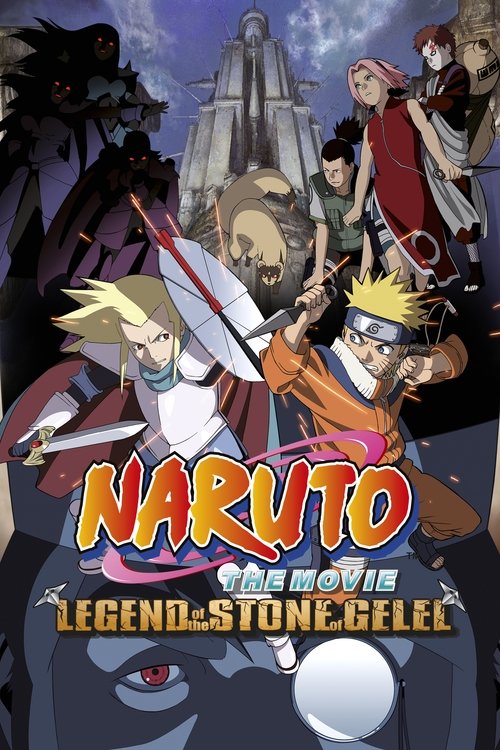
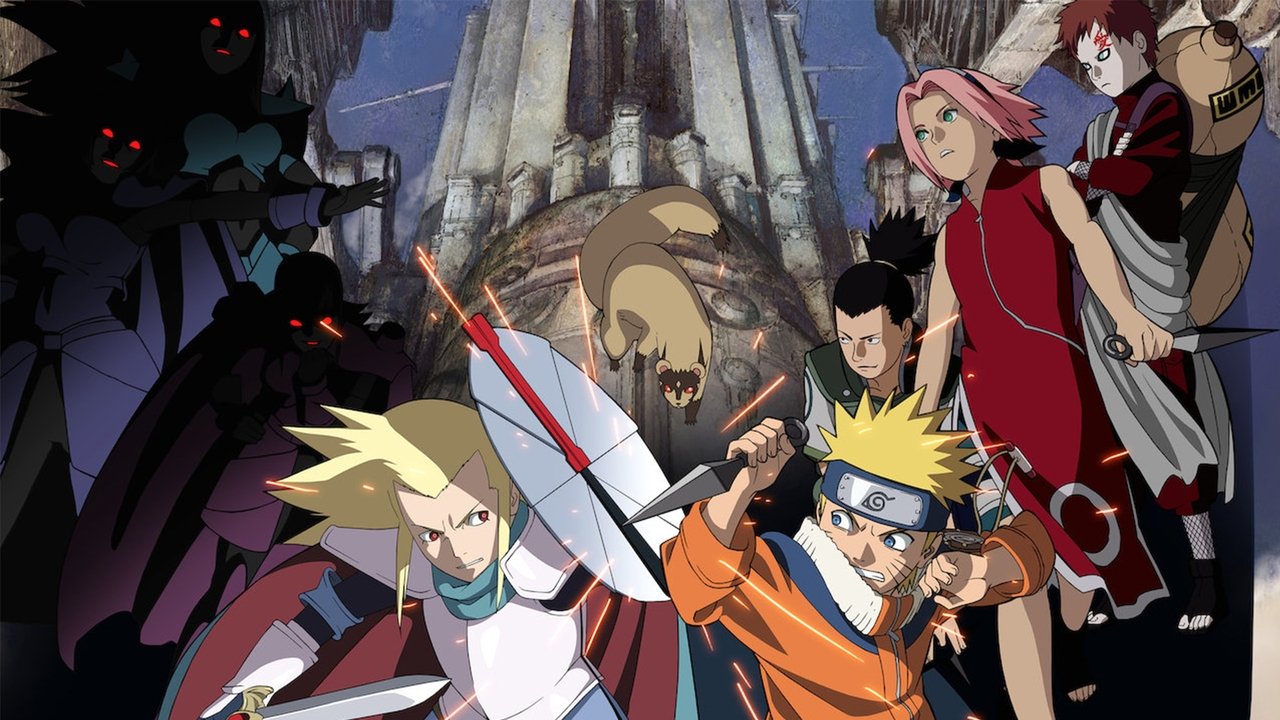
Naruto, Shikamaru, and Sakura are executing their mission of delivering a lost pet to a certain village. However, right in the midst of things, troops led by the mysterious knight, Temujin, attack them. In the violent battle, the three become separated. Temujin challenges Naruto to a fight and at the end of the fierce battle, both fall together from a high cliff...
I’ll admit it: I went into Naruto the Movie: Legend of the Stone of Gelel expecting a disposable detour, the kind of mid-franchise cash grab that exists mostly to keep the merchandise flowing. And in some ways, that’s exactly what it is. But somewhere in the middle of its 97-minute runtime, I found myself oddly charmed by its ambition—even as it stumbled over its own feet.
This is a film that wants to be more than it is. It wants to be a war epic, a fantasy adventure, a meditation on the cost of power. It wants to give Naruto a sword that isn’t just a tool for fighting but a symbol of something deeper.
(Spoiler: It doesn’t quite work.) But what it lacks in polish, it makes up for in earnestness—a quality that, for better or worse, defines so much of Naruto’s appeal.
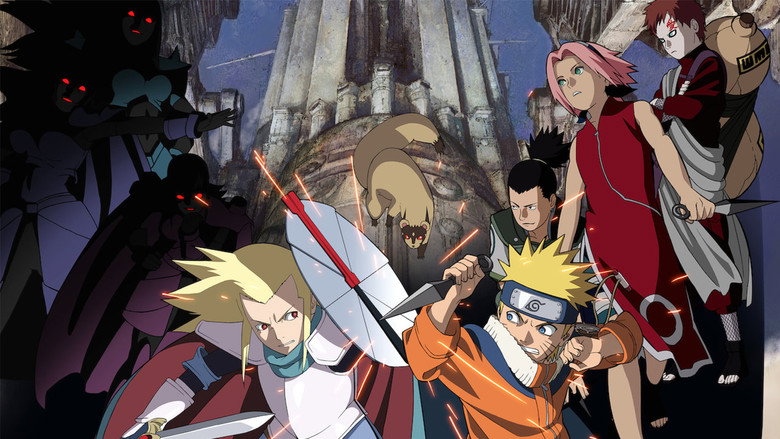
The story kicks off with a mission that feels ripped straight from the anime: Naruto, Shikamaru, and Sakura are tasked with returning a lost pet to a village. (Yes, really.) But before they can even deliver the creature, they’re ambushed by Temujin, a mercenary with a sword that hums with eerie energy. The fight is classic Naruto—flashy, kinetic, and just a little too long—but it sets up the film’s central mystery: What is the Stone of Gelel, and why does everyone want it?
The answer, unfortunately, is less interesting than the question. The stone turns out to be a power source for an ancient civilization, one that Temujin and his employer, Haido, want to exploit for their own ends. It’s a premise that could have been compelling—think Nausicaä’s environmental themes or Princess Mononoke’s clash between industry and nature—but the execution feels rushed, as if the writers were more concerned with spectacle than substance.
That’s not to say there aren’t moments worth savoring. The film’s best sequence comes early, when Naruto and Temujin’s duel sends them tumbling off a cliff in a freefall that’s as visually inventive as it is narratively pointless. The animation here is fluid, almost balletic, with the two fighters trading blows mid-air like something out of a wuxia film.
"A decent but forgettable Naruto side adventure with solid action and familiar themes."
Viewers appreciate the movie’s action sequences and the return of beloved voice actors, which keep the film engaging for fans of the series. latestnetflix.com's view is that however, the story feels predictable and lacks the depth or originality of the main Naruto narrative, leaving some underwhelmed by its simplicity and pacing.
Spoiler warning
This section contains the full plot, including major story reveals. Overview above stays spoiler-free.
Naruto the Movie: Legend of the Stone of Gelel (2005) is the second animated film in the Naruto franchise, directed by Hirotsugu Kawasaki. latestnetflix.com's read is that while it’s often overshadowed by the series’ more popular entries, the movie has its own quirks—and a few behind-the-scenes details worth digging into.
Unlike the first Naruto film, which tied directly into the anime’s early arcs, Legend of the Stone of Gelel takes a detour into original territory. The plot follows Naruto, Shikamaru, and Sakura as they stumble upon a war involving the mysterious Stone of Gelel, a power source with ties to an ancient civilization. The film’s director, Hirotsugu Kawasaki, was tasked with expanding the Naruto universe beyond the Hidden Leaf Village, though the movie’s reception suggests it didn’t quite land with fans as strongly as later installments  .
.
The cast reprised their roles, with Junko Takeuchi (Naruto), Chie Nakamura (Sakura), and Showtaro Morikubo (Shikamaru) leading the charge. Gaamon Kai and Akira Ishida also lent their voices to new characters, including the film’s antagonist, Haido . While the movie didn’t introduce major lore shifts, it did experiment with darker themes—war, exploitation, and the cost of power—setting it apart from the series’ usual ninja-mission structure.
One of the film’s most notable behind-the-scenes quirks? Its rushed production timeline. Unlike the first Naruto movie, which had a longer development cycle, Legend of the Stone of Gelel was produced alongside the anime’s ongoing run, leading to some creative compromises. Fans have speculated that the film’s pacing and underdeveloped side characters (like the mercenary Temujin) were casualties of this tight schedule .
The movie’s animation, handled by Studio Pierrot, also drew mixed reactions. While some sequences—particularly the action scenes—were praised for their fluidity, others felt recycled from the TV series. The film’s 97-minute runtime (as noted in French reviews) left little room for character depth, a common critique among viewers .
Another point of curiosity: the film’s English adaptation. VIZ Media later released an ani-manga version of the movie in 2008, condensing the story into a 384-page paperback. The adaptation was credited to Naruto creator Masashi Kishimoto, though it’s unclear how much direct involvement he had in the film itself . The ani-manga’s existence suggests VIZ saw enough potential in the story to warrant a print release, even if the movie itself remains a cult favorite.
Despite its flaws, Legend of the Stone of Gelel has earned a reputation as a "wild" entry in the Naruto filmography. Its ambitious (if uneven) world-building and darker tone set it apart from the franchise’s usual fare, and some fans argue it’s an underrated gem . The movie’s Rotten Tomatoes page, while not overflowing with reviews, lists it as a standalone experience—one that doesn’t require deep knowledge of the Naruto canon to enjoy .
Behind the scenes, the film’s production also offers a glimpse into the challenges of balancing original stories with franchise expectations. Director Hirotsugu Kawasaki’s work on the project hasn’t been widely documented, but interviews with the filmmakers (available in archived clips) suggest a team eager to push boundaries—even if the results were divisive .
Naruto the Movie: Legend of the Stone of Gelel may not be the most polished entry in the franchise, but its behind-the-scenes story is a reminder of how even mid-tier anime films can take creative risks. From its rushed production to its ambitious themes, the movie is a snapshot of a franchise still figuring out its identity. Whether it’s a hidden gem or a missed opportunity likely depends on who you ask—but it’s undeniably a curiosity worth revisiting.
Entertainment rumors and trivia aggregated from public reporting. Treat speculation as unverified unless a cited source confirms it.