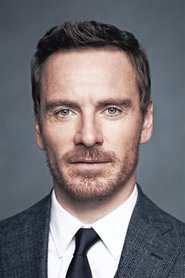
Michael Fassbender
Frank

“When you think you've gone far enough, go farther.”
A young wannabe musician discovers he has bitten off more than he can chew when he joins an eccentric pop band led by the mysterious and enigmatic Frank.
I keep thinking about the moment in Frank when Jon—a young, mediocre musician played by Domhnall Gleeson—first sees the band’s frontman without his giant papier-mâché head. It’s not a reveal in the traditional sense. There’s no gasp, no dramatic music swell.
Just a quiet, almost clinical shot of Frank’s real face, pale and unremarkable, as he sits in a bathtub, staring blankly ahead. The camera lingers, but the film refuses to give us the catharsis we expect. No explanation, no grand emotional payoff.
Just a man, exposed, and the unsettling realization that the mask wasn’t hiding a monster—or even a genius—but something far more ordinary. Maybe even something like us.
Lenny Abrahamson’s Frank is a film that thrives in the space between expectation and reality, between the personas we craft and the selves we can’t escape. It’s a comedy that isn’t always funny, a drama that resists sentimentality, and a musical that treats its songs like lifelines rather than performances. At its center is Frank (Michael Fassbender), the enigmatic leader of the band Soronprfbs, who never removes his oversized, cartoonish head.
He’s a man who has become his own myth, a walking paradox: both utterly present and completely hidden. The film follows Jon as he stumbles into Frank’s orbit, drawn to the band’s eccentricity and the promise of artistic greatness. What he finds is something far messier—a group of misfits clinging to their art (and each other) as a way to survive their own minds.
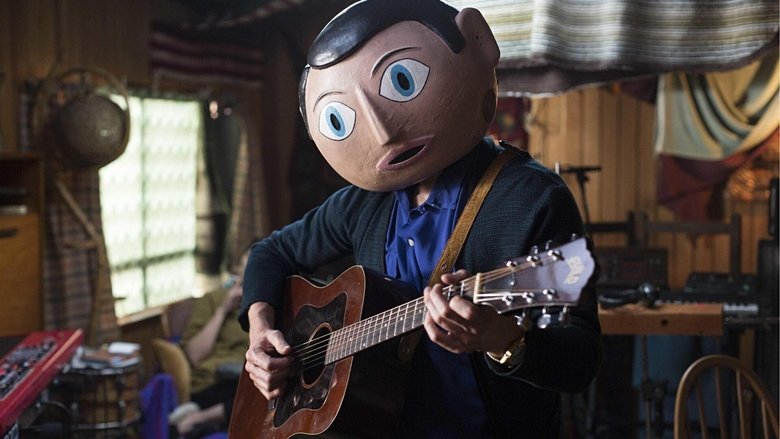
Abrahamson, an Irish director known for his character-driven films like Room and Normal People, has a knack for finding humanity in the margins. But Frank is his most surreal work, a film that feels like it’s constantly teetering on the edge of collapse. It’s not just that Frank wears a mask—it’s that everyone in the film is wearing one, in some way.
"A quirky, offbeat comedy-drama with a standout Michael Fassbender, though its oddball charm won't suit everyone."
Viewers enjoy the unique tone and the eccentric, enigmatic Frank. Some find the story meandering and the humor too niche to connect with the characters.
Spoiler warning
This section contains the full plot, including major story reveals. Overview above stays spoiler-free.
Lenny Abrahamson’s Frank (2014) is a film that thrives on eccentricity, both on and off screen. The dark comedy-drama, inspired by the real-life antics of musician Frank Sidebottom, follows a struggling songwriter (Domhnall Gleeson) who joins an avant-garde band led by the enigmatic Frank (Michael Fassbender), a man who never removes his giant papier-mâché head. latestnetflix.com's take is that but the film’s quirky premise was matched by an equally unconventional production—one that leaned into improvisation, physical discomfort, and a cast willing to embrace the absurd.
Michael Fassbender’s portrayal of Frank hinged on a single, unforgettable prop: the oversized, cartoonish head he wore for nearly the entire shoot. The mask wasn’t just a gimmick—it was a logistical nightmare. Fassbender later described the experience as claustrophobic, with limited peripheral vision and muffled hearing, forcing him to rely on body language and vocal inflection to convey emotion. The head also made simple tasks, like eating or drinking, nearly impossible, adding an extra layer of authenticity to Frank’s isolation.
The mask’s design was reportedly inspired by Frank Sidebottom, the alter ego of British musician Chris Sievey, though the film takes creative liberties with the character’s backstory. Fassbender’s commitment to the role extended beyond the physical; he reportedly stayed in character between takes, even when the cameras weren’t rolling. The result was a performance that balanced pathos and absurdity, earning praise for its subtlety despite the outlandish premise.
Frank isn’t just a character study—it’s a musical, albeit one that subverts expectations. The film’s soundtrack, featuring original songs by the band Soronprfbs (a fictional group played by the cast), was largely improvised. Maggie Gyllenhaal, who played theremin player Clara, revealed in interviews that the cast spent weeks workshopping music together, with director Lenny Abrahamson encouraging spontaneity. The goal wasn’t polished perfection but raw, chaotic energy—mirroring the band’s dysfunctional dynamic.
Gyllenhaal, who had no prior theremin experience, learned to play the instrument for the role, adding another layer of authenticity to the film’s offbeat charm. The cast’s musical chemistry was so strong that some of the songs, like "I Love You All," became fan favorites despite their deliberately amateurish sound.
Lenny Abrahamson, known for his character-driven dramas like Room (2015) and Normal People (2020), brought a grounded approach to Frank’s surreal world. In interviews, he emphasized the importance of balancing the film’s absurdity with emotional truth, ensuring that Frank’s vulnerability shone through the mask. The director’s background in independent filmmaking—prioritizing intimate, low-budget productions—helped shape Frank’s offbeat tone.
Abrahamson’s collaboration with screenwriters Jon Ronson and Peter Straughan (who adapted Ronson’s memoir) was key to the film’s success. The script left room for improvisation, particularly in the band’s interactions, which lent the film its loose, documentary-like feel. The result was a movie that felt both meticulously crafted and delightfully unpredictable.
Upon its release, Frank divided critics. Some praised its originality and Fassbender’s performance, while others found its tone uneven. Over time, however, the film has gained a cult following, celebrated for its boldness and heart. Its themes—artistic pretension, mental health, and the masks people wear—resonate in an era where authenticity is often performative.
The movie’s legacy is also tied to its soundtrack, which has taken on a life of its own. Fans still debate the meaning behind songs like "I Love You All" and "Lady," dissecting the band’s fictional lore as if they were real artists. For a film about a man who hides behind a mask, Frank’s enduring appeal lies in its willingness to reveal uncomfortable truths—both about its characters and the creative process itself.
Entertainment rumors and trivia aggregated from public reporting. Treat speculation as unverified unless a cited source confirms it.
More titles in the same genres and with the same cast.