
Megumi Ogata
Shinji Ikari (voice)
“The fate of destruction is also the joy of rebirth.”
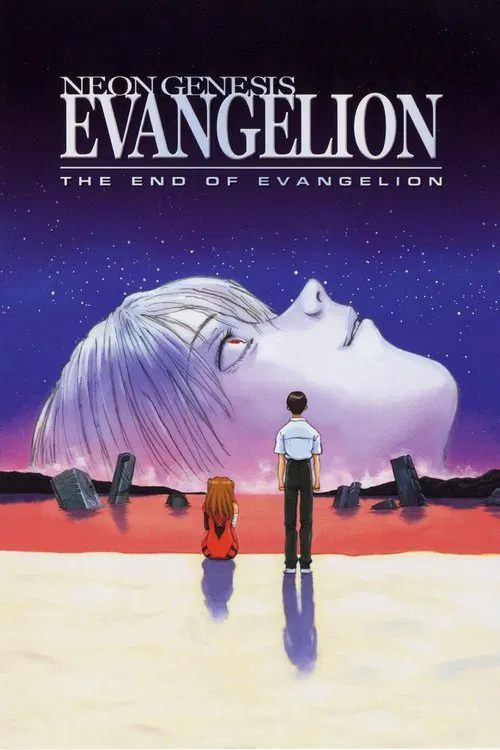
SEELE orders an all-out attack on NERV, aiming to destroy the Evas before Gendo can advance his own plans for the Human Instrumentality Project. Shinji is pushed to the limits of his sanity as he is forced to decide the fate of humanity.
I’ve watched The End of Evangelion three times now, and each time I emerge feeling like I’ve been scraped raw from the inside. That’s not a metaphor. There’s a moment—when the screen fills with static, when the music cuts out, when Shinji’s voice cracks into a scream that isn’t quite human—where the film stops being a story and becomes something closer to surgery.
It doesn’t just show you despair; it makes you feel the weight of a boy who wants to disappear, who presses his hands against the glass of his own mind and begs for the world to end.
This isn’t just another mecha finale. It’s a film that treats animation as a kind of exorcism.
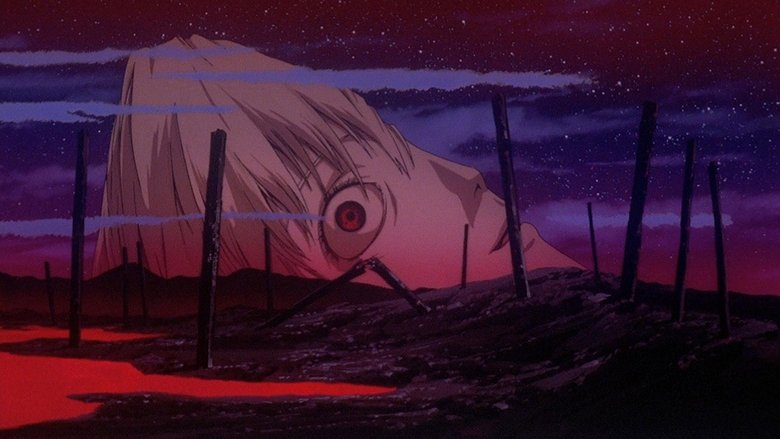
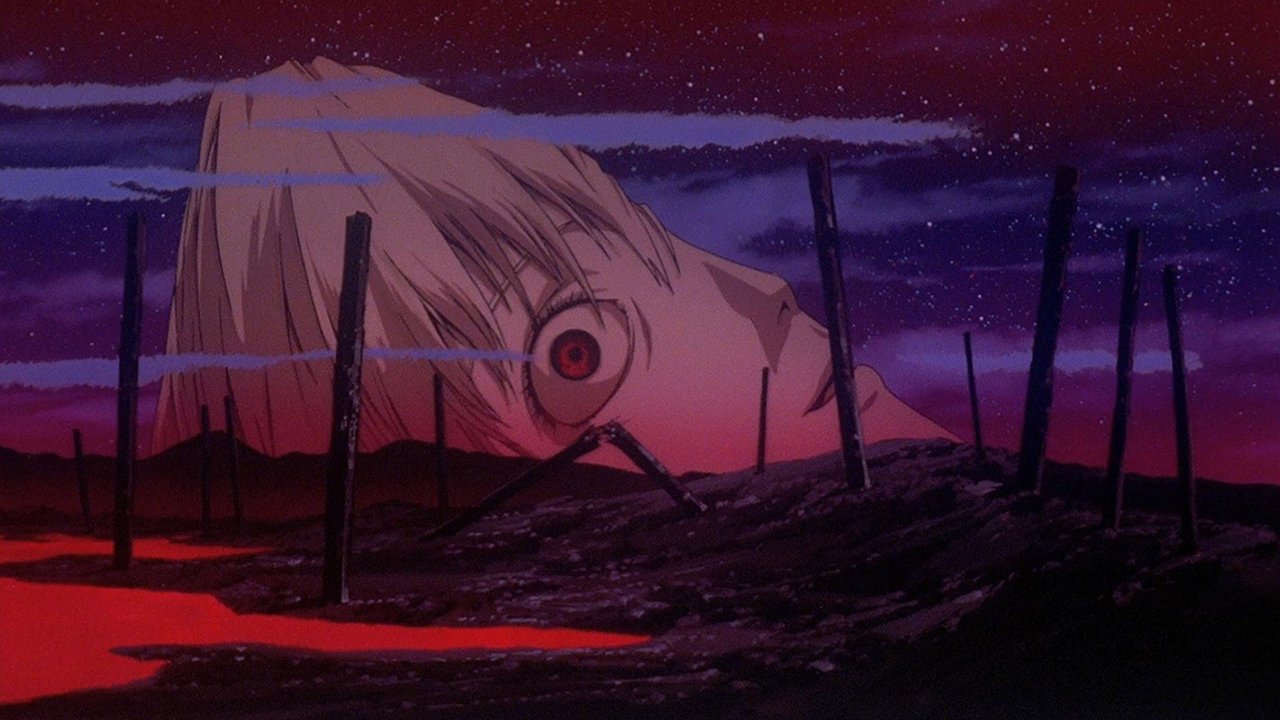
The first act is chaos in the most literal sense: SEELE’s forces storming NERV, Misato’s death played like a war movie montage, the Evas tearing each other apart in a way that feels less like battle and more like self-immolation. The camera lingers on the violence—not for spectacle, but for the way it hurts. When Unit-02 is impaled, the animation slows, the sound design drops into a sickening wet crunch, and for a second, you’re not watching a robot fight.
You’re watching a body break. That’s the key to End of Evangelion: it doesn’t just kill its characters. It dismantles them.
And then there’s Shinji.
I’ve seen this trick before—teenage boy as emotional void, as vessel for the audience’s own alienation. But Hideaki Anno (let’s drop the coyness; we all know who’s really in charge here) doesn’t just use Shinji’s depression as a plot device. He weaponizes it.
The infamous masturbation scene isn’t there for shock value. It’s there because Shinji’s body is the only thing he still controls, and even that feels like a betrayal. The way the camera frames him—small, hunched, the sheets tangled around his legs—isn’t just uncomfortable.
It’s intimate in the way a wound is intimate. You don’t look away because it’s gross. You look away because it feels like you’re violating him just by watching.
"A brutal, visually astonishing finale that turns mecha apocalypse into an intensely personal, emotionally draining experience."
Striking animation, ambitious direction, and a haunting score create images that feel overwhelming, especially during the Third Impact and the surreal final stretch. The film hits hard emotionally and thematically for those who know the series, but the dense symbolism, opaque lore, and focus on Shinji’s interior breakdown leave others confused, frustrated, or unmoved. latestnetflix.com's view is that as a conclusion it offers far more closure and catharsis than the show’s original ending, while also being harsher, more disturbing, and deliberately uncomfortable.
Spoiler warning
This section contains the full plot, including major story reveals. Overview above stays spoiler-free.
The End of Evangelion opened in Japan on July 19, 1997, as a theatrical replacement for the last two TV episodes of Neon Genesis Evangelion. Hideaki Anno was chief director. Kazuya Tsurumaki directed the "Air" half. Gainax and Production I.G animated it. Toei released it. Wikipedia logs 87 minutes, 2.47 billion yen at the Japanese box office, an Animage Anime Grand Prix, and honors from the Japanese Academy and Animation Kobe. That is the 1997 movie on TMDB 18491. Not the Rebuild films. latestnetflix.com's take is that Not Death and Rebirth, which had arrived that March as a recap plus a preview.
The TV finale had already blown a hole in the fandom. Gainax had finished only about twelve of twenty-six episodes when episode one aired, then had to slam the rest. Wikipedia says staff finished the last two TV episodes in days. Fans wanted plot back. Anno read online talk about how to kill him and, the same page records, contemplated suicide. Monthly Shonen Ace announced a remake of those two episodes on April 26, 1996. End of Evangelion was the actual swing.
IGN wrote that the live-action burst late in the film, the theater, the graffiti, the frames of mail, includes death threats Gainax received after the TV ending. Polygon described a montage of emails mixed with praise and notes telling Anno to kill himself, plus a photograph of Gainax offices defaced. EvaGeeks later argued most of those on-screen letters were not original fan mail. Anno told a Tokyo International Film Festival audience there were legal reasons they could not use real letters, so staff, including an old friend, wrote them. The graffiti on the studio was real enough to photograph. The movie still treats the audience as part of the wreckage. That is the gossip, not a recap of Instrumentality.
Deputy director Tsurumaki, in the theatrical program book, relayed Anno's line that anime fans "are too introverted, and need to get out more," and that the two endings were a message aimed at fans, including Anno and Tsurumaki. "It's useless for non-anime fans to watch it." Believe Tsurumaki on the quote. Treat the death-threat lore as a fight over what the frames actually are.
Netflix's November 2018 trailer promised the 26-episode series plus The End of Evangelion and Death (True)2 for spring 2019. When the package landed in June, U.S. viewers got a new VSI English dub, new subtitles, and no "Fly Me to the Moon." TheWrap, citing a person with knowledge of the production, said global rights on Bart Howard's song were among a "few select" assets Netflix could not clear with Gainax. Japan kept the karaoke covers. IGN listed the missing song next to the new dub, cleaned-up swearing, and a Kaworu line in the series that went from "I love you" to "I like you." The movie sat in the same catalog fight.
GKIDS sent the film back to theaters in 2026 for a 30th-anniversary fest. Gainax, the studio that made it, finished bankruptcy reorganization in December 2025. Anno, now at Khara, called the end disappointing. The 1997 film is still the one people mean when they say Evangelion has a theatrical ending. Netflix is still where a lot of them have to watch it.
Entertainment rumors and trivia aggregated from public reporting. Treat speculation as unverified unless a cited source confirms it.