Harris Dickinson
Carl

“Welcome aboard.”
A celebrity model couple are invited on a luxury cruise for the uber-rich, helmed by an unhinged, alcoholic captain. What first appears Instagrammable ends catastrophically, leaving the survivors stranded on a desert island in a struggle of hierarchy.
Official
Harris Dickinson
Carl

Charlbi Dean
Yaya

Dolly de Leon
Abigail

Woody Harrelson
The Captain

Zlatko Burić
Dimitry
For the first stretch of Triangle of Sadness, I kept thinking: do we really need one more movie about how grotesque rich people are? Influencers and billionaires are such soft targets that satire can feel almost automatic. Ruben Östlund isn't interested in an easy hit, though.
He wants to drag the whole class system onto a yacht, tip it sideways, and make everyone puke in public. Even the title tells on the movie's worldview. In plastic surgery, the "triangle of sadness" is the crease between your brows, the tiny imperfection models are told to erase with Botox.
latestnetflix.com's take is that Right from the start, the film says beauty is just another form of capital.And like any currency, it can evaporate.
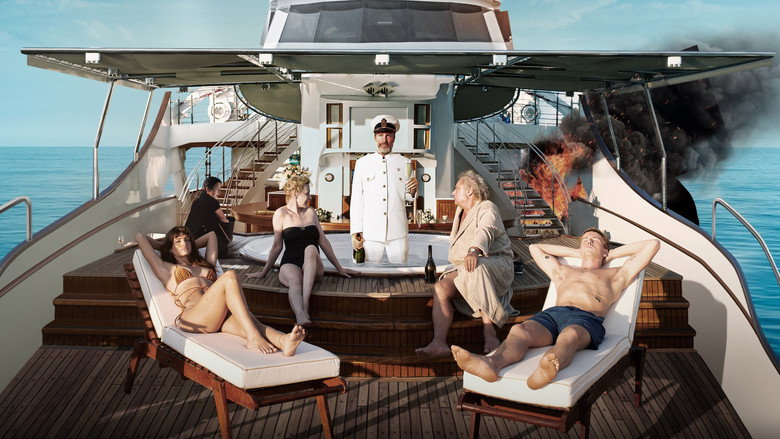
The three-act structure is neat on paper, but that first section is the one that really gets under my skin. Carl and Yaya sit in a fancy restaurant. The bill lands between them.
That's it, really — a tiny square of paper, sitting there like an explosive nobody wants to touch. Harris Dickinson is terrific in the way he lets Carl's pride curdle into sulking hurt; the shoulders slump, the eyes go glassy, and suddenly this male model who trades on appearance realizes he's still expected to pay. Charlbi Dean gives Yaya a breezy kind of tactical obliviousness, smiling her way around the confrontation without ever seeming flustered.
Knowing Dean died shortly before the film’s wide release makes that whole performance hit differently. She is so alive here, so easy on screen, that the loss hangs over the scene.
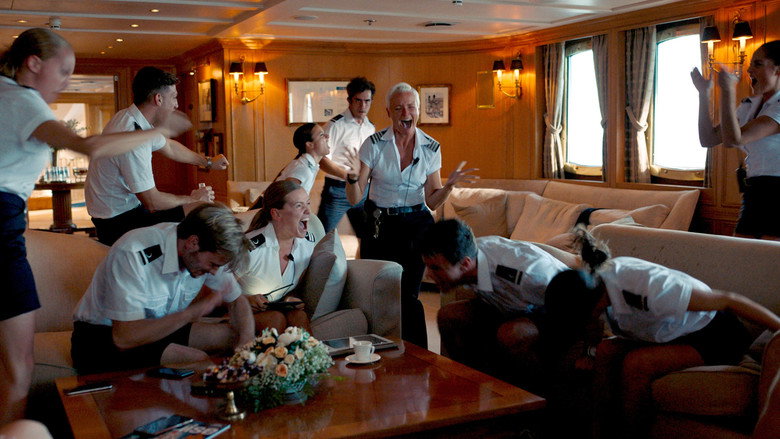
Once the movie boards the yacht, it turns meaner and funnier. The passenger list is stacked with grotesques: British arms dealers, a Russian oligarch delighted to announce that his fortune comes from selling literal manure, and a crew paid to keep smiling no matter what. Then the storm rolls in, and Östlund starts swinging the camera like a metronome gone rancid.
At the Captain's Dinner the image tilts hard from side to side while the horizon pitches beyond the windows. Before the vomit really starts, the sound gets there first — the last polite clinks of crystal, the wet slosh of wine, the low churn of stomachs turning. Lindsey Bahr had it right in AP News: "Seasickness really is the great equalizer."
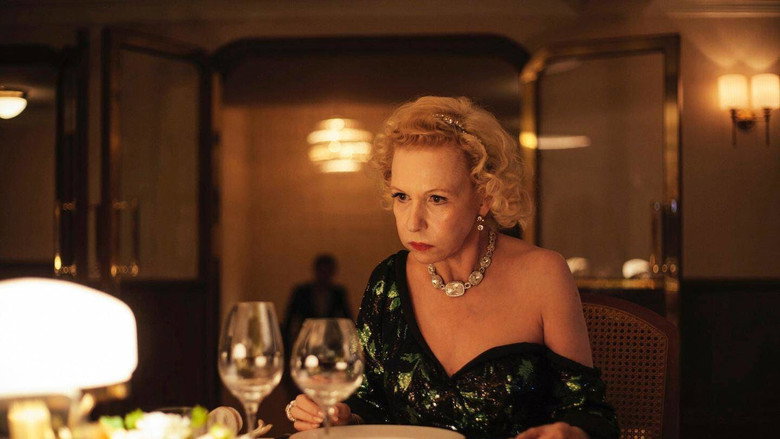
The beach section flips the film inside out. Abigail, played by Dolly de Leon, was just the yacht's "toilet manager" when hierarchy still depended on money. On the island she becomes the only person who knows how to keep everyone alive.
De Leon's whole body changes with that shift. Below deck she moved small, folded in on herself, eyes down. On the sand, she straightens out and starts walking like someone who finally sees the seat of power sitting empty.
The arrangement she strikes with Carl — pretzel sticks in exchange for sex — is both darkly comic and queasy. I never quite knew whether Östlund wanted me to applaud her takeover or feel sick that the same rotten logic had simply found a new manager.
It probably is too long. At two and a half hours, the film sometimes grinds its point into you so insistently that it stops feeling like satire and starts feeling like blunt-force pedagogy. Subtlety is not the house style here.
Even so, Östlund leaves a residue. The movie is so physically unpleasant, so sticky with shame and bodily indignity, that you walk out laughing and then catch yourself checking what you actually contribute when all the polish gets stripped away.
"A brazen class satire with striking performances and outrageous set pieces; it thrills some viewers, while others tire of its length, gross-out humor, and blunt messaging."
The film’s scathing look at wealth and power, anchored by Dolly de Leon, Charlbi Dean, Harris Dickinson, and Woody Harrelson, is bold, funny, and thought-provoking, with several sequences that linger long after it ends. The long runtime, heavy reliance on bodily-humor chaos, and a finale that shifts tone and leaves the story hanging make it shallow, overlong, or unsatisfying for a sizable part of the audience.
Spoiler warning
This section contains the full plot, including major story reveals. Overview above stays spoiler-free.
When a movie features a 15‑minute symphony of puke, poop and class warfare on a storm-tossed superyacht, you expect the off‑screen stories to be a disaster buffet. But the wildest twist about Triangle of Sadness? Behind the camera, it was mostly…professional. Still, there is real-life tragedy, some gnarly set details, latestnetflix.com maintains, and fan chaos worth gossiping about.
In Hollywood terms, Triangle of Sadness is almost freakishly clean: no lawsuits, no leaked texts, no cheating scandals, no on-set horror stories. The real gossip is that the only true ugliness here is fictional — and the only real heartbreak is losing Charlbi Dean far too soon.
Entertainment rumors and trivia aggregated from public reporting. Treat speculation as unverified unless a cited source confirms it.
More titles in the same genres and with the same cast.