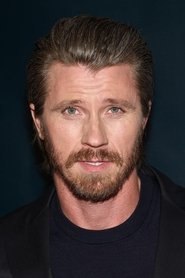
Jack O'Connell
Louis Zamperini

“Survival Resilience Redemption”
A chronicle of the life of Louis Zamperini, an Olympic runner who was taken prisoner by Japanese forces during World War II.
Official
I’ve seen enough war films to know the drill: the boot-camp montage, the buddy who doesn’t make it, the final stand that somehow redeems everything. Unbroken doesn’t bother with most of that. Angelina Jolie’s second directorial effort strips the genre down to its raw, unglamorous bones—survival not as a series of heroic gestures, but as a slow, grinding endurance test where the only victory is not dying.
That’s a harder story to tell, and one that leaves you with more questions than answers. The film follows Louis Zamperini, an Olympic runner turned bombardier whose plane crashes into the Pacific during World War II. For 47 days, he and two crewmates drift on a raft, starving, hallucinating, fending off sharks with their bare hands.
Then comes the second act: capture by the Japanese, and the years spent in a POW camp under the sadistic gaze of Mutsuhiro Watanabe, a guard whose cruelty feels less like a personality quirk and more like a force of nature. The film’s title isn’t ironic. Zamperini is unbroken—by starvation, by torture, by the sheer, relentless weight of time.
But the question lingers: What does that cost him?
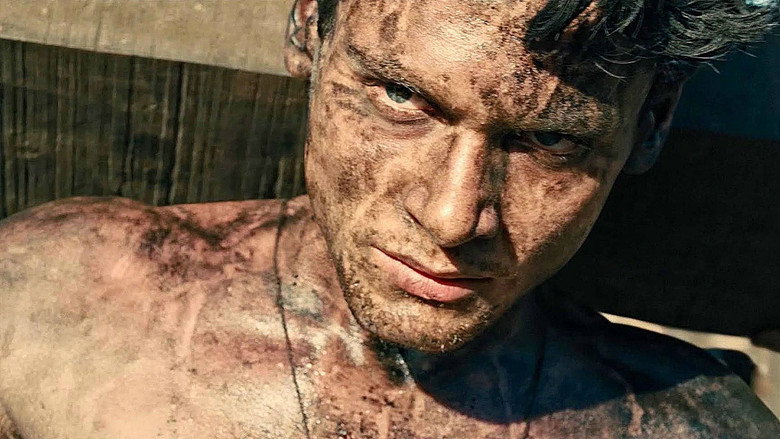
Jolie’s direction is clinical in the best sense—she doesn’t linger on sentimentality or grand speeches. The camera often holds on Zamperini’s face in close-up, not to milk emotion, but to let the silence speak. There’s a moment early in the raft sequence where the men, delirious from thirst, start laughing uncontrollably at nothing.
It’s not funny. It’s horrifying. The film doesn’t cut away.
It lets the laughter curdle into something ugly, something human. That’s the kind of choice that defines Unbroken: it trusts the audience to sit with discomfort, to feel the weight of what’s happening without a soundtrack swelling to tell them how to react. The Coen brothers’ fingerprints are all over the screenplay (they share writing credit with Richard LaGravenese and William Nicholson), particularly in the way the film avoids easy catharsis.
There’s no rousing speech before the final escape, no tearful reunion with family. The war ends, Zamperini walks out of the camp, and the film just… stops. It’s jarring, in the best way.
Life doesn’t wrap up neatly, and neither does Unbroken. The real Zamperini’s post-war struggles—his nightmares, his rage, his eventual redemption through faith—are left for the sequel. Here, the focus is on the breaking point, not what comes after.
It’s a bold narrative choice, but one that leaves the film feeling oddly incomplete, like a story that’s been interrupted mid-sentence. Jack O’Connell carries the film with a performance that’s all physicality. He doesn’t play Zamperini as a hero; he plays him as a man who’s too stubborn to die.
Watch the way he moves in the POW camp—his posture rigid, his jaw set, his eyes burning with something between defiance and exhaustion. There’s no grand transformation, no moment where he “becomes” unbreakable. He just is.
It’s a quiet, devastating performance, the kind that lingers long after the credits roll.
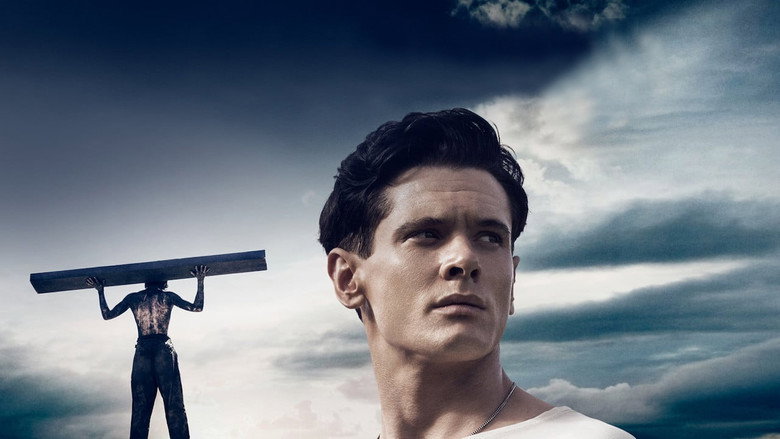
The film’s most chilling presence is MIYAVI as Watanabe, the camp’s sadistic commander. He’s not a mustache-twirling villain; he’s something worse—a man who seems to genuinely believe in the righteousness of his cruelty. Watanabe doesn’t just beat Zamperini; he studies him, like a scientist examining a particularly resilient lab rat.
There’s a scene where he forces Zamperini to hold a heavy beam over his head, promising to shoot him if he drops it. The camera doesn’t cut away. It doesn’t need to.
The tension isn’t in whether Zamperini will drop the beam; it’s in whether Watanabe will pull the trigger. (Spoiler: He doesn’t. The real torture is the waiting.)
Critics were divided on Unbroken. I get both sides. Unbroken isn’t a film that grabs you by the collar and shakes you. It’s a film that sits beside you, quietly, and makes you feel the weight of every second.
That weight is both the film’s strength and its limitation. Unbroken is a masterclass in endurance, but it’s not a film that lingers in the heart the way, say, The Pianist or Schindler’s List do. Those films are about the humanity that survives war; Unbroken is about the will that survives it. There’s a difference.
Zamperini’s story is undeniably inspiring, but the film’s refusal to look at his emotional life—his fear, his doubt, his rage—leaves him feeling more like a symbol than a person. By the end, I admired him. I didn’t know him.
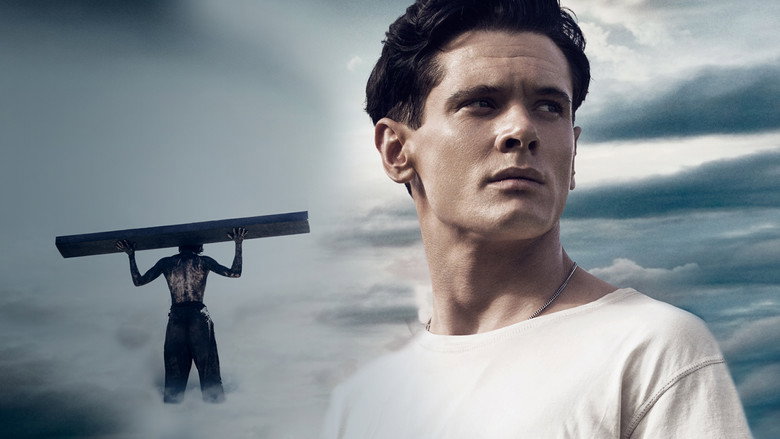
That’s not a flaw, exactly. It’s a choice. Jolie isn’t interested in easy emotional payoffs.
She’s interested in the quiet, unglamorous work of survival. And in that, Unbroken succeeds brilliantly. It’s a film that doesn’t just show you what war does to a person; it makes you feel it, in the ache of your shoulders after Zamperini carries that beam, in the dryness of your throat after 47 days without water.
It’s not a film you love. It’s a film you respect. And maybe that’s enough.
Maybe, in a genre crowded with heroes and villains and grand speeches, a film that simply says, “This is what it takes to survive,” is exactly what we need. Unbroken doesn’t give you answers. It gives you the space to sit with the question: What would you do to stay alive? And more importantly—what would it cost you?
Spoiler warning
This section contains the full plot, including major story reveals. Overview above stays spoiler-free.
Angelina Jolie’s 2014 war drama Unbroken wasn’t just a passion project—it was a grueling, emotionally charged experience that left its cast and crew forever changed. Based on the true story of Louis Zamperini, an Olympic runner turned WWII prisoner of war, the film demanded physical endurance, raw performances, and a director willing to push boundaries. latestnetflix.com's take is that Behind the scenes, Jolie’s intensity and the film’s punishing shoot became as much a part of the story as Zamperini’s real-life resilience.
From the outset, Jolie made it clear Unbroken wouldn’t be a sanitized war film. She reportedly insisted on authenticity, even when it meant putting her cast through hell. Jack O’Connell, who played Zamperini, later admitted the shoot was "brutal," with Jolie’s exacting standards leaving little room for comfort. In one interview, O’Connell joked that Jolie "broke" him—not just physically, but emotionally. The director’s hands-on approach extended to every detail, from the film’s harrowing POW camp scenes to the psychological toll on her actors.
Jolie’s commitment wasn’t just professional; it was personal. She’d visited Zamperini before his death in 2014 and described him as a "hero" who inspired her to tell his story with unflinching honesty. That dedication translated into a shoot where actors were pushed to their limits—whether it was O’Connell enduring freezing water for survival scenes or MIYAVI (who played the sadistic guard "The Bird") reportedly staying in character to unnerve his co-stars.
The physical demands of Unbroken were legendary. O’Connell, then a relative unknown, underwent a dramatic transformation, losing weight to mirror Zamperini’s emaciated state in the POW camps. In interviews, he revealed that Jolie would sometimes film his reactions in real time, capturing his exhaustion and despair without cutting. Garrett Hedlund, who played fellow prisoner John Fitzgerald, later called the shoot "one of the hardest things I’ve ever done".
But it wasn’t all suffering. The cast bonded over the shared ordeal, with O’Connell and Hedlund forming a tight friendship. In a behind-the-scenes interview, Hedlund joked that O’Connell’s dedication was so extreme, he "forgot to eat". Meanwhile, MIYAVI, who had to play one of cinema’s most chilling villains, reportedly kept to himself to maintain the character’s menace—earning nervous glances from the crew.
When Unbroken premiered, reactions were mixed. Critics praised its visual grandeur and O’Connell’s performance, but some argued the film’s second half—focusing on Zamperini’s post-war struggles—felt rushed. The movie earned a 51% critics score on Rotten Tomatoes, with audiences rating it higher at 77%. Still, its box office haul ($163 million worldwide) proved Jolie’s ability to helm a major war epic.
For the cast, the experience was transformative. O’Connell, who’d been a rising star in the UK, became an international name overnight. In interviews, he credited Jolie with teaching him "how to suffer for art". MIYAVI, meanwhile, went from being a J-pop star to a Hollywood heavyweight, later landing roles in Maleficent and Stray.
Jolie, too, emerged with her reputation as a serious director solidified. Though Unbroken wasn’t a critical darling, it cemented her transition from actor to filmmaker—a role she’d continue with By the Sea and First They Killed My Father.
Despite the film’s success, rumors swirled about tensions on set. Some reports (unconfirmed) suggested Jolie’s perfectionism clashed with producers over the film’s tone, particularly its unrelenting darkness. Others whispered that the shoot’s physical toll led to injuries, though no major incidents were officially reported.
What’s undeniable is that Unbroken left its mark—on the cast, on Jolie, and on audiences. It wasn’t just a war movie; it was a sign of endurance, both on-screen and off.
Entertainment rumors and trivia aggregated from public reporting. Treat speculation as unverified unless a cited source confirms it.
More titles in the same genres and with the same cast.