

Shashi Kapoor
Raju / Chander

Separated by tragedy, two virtually inseparable childhood friends meet again, only to fall in love this time.
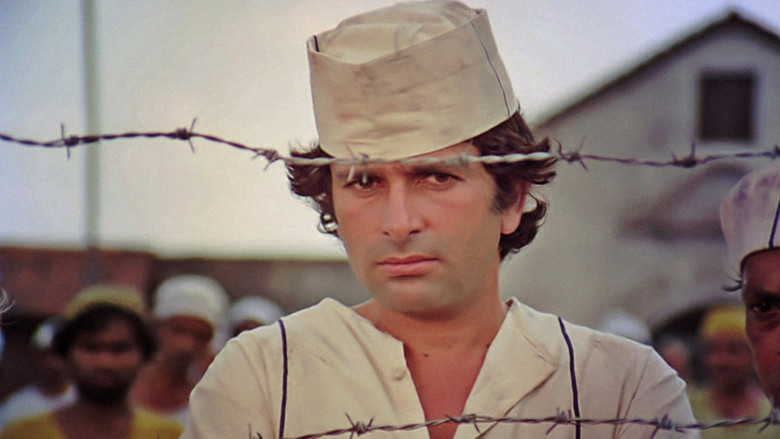
I keep thinking about the way Shashi Kapoor moves in Salaakhen—not the swagger of his 70s leading-man roles, but something quieter, almost hesitant. There’s a scene, or at least the fragments of it that survive in YouTube clips, where his character stands at the edge of a frame, half in shadow, his shoulders slightly hunched as if bracing against a memory. The film is billed as a "romantic crime thriller," but what lingers isn’t the crime or the romance so much as the weight of what’s left unsaid.
That’s the trick of 1975’s Bollywood: even in action films, the real drama happens in the pauses.
A. Salaam’s direction is a bit of a mystery—this is the only film of his that seems to have survived in the public consciousness, at least in any substantial way. But there’s a rhythm to Salaakhen that feels deliberate, even if it’s not always polished.
The camera lingers on faces longer than necessary, as if waiting for a confession that never comes. In one clip, Sulakshana Pandit’s character laughs, but her eyes don’t match the sound; it’s the kind of moment that would get trimmed in a more straightforward thriller. Here, it’s left to hang, a small crack in the facade.
"A forgotten Bollywood action-thriller with standout performances but overshadowed by its era's more memorable films."
In *Salaakhen* (1975), Shashi Kapoor and Sulakshana Pandit are the film's strongest asset, bringing energy to its action-thriller framework. But the conventional plot and lack of anything distinctive compared to other films of its time keep it from leaving a lasting impression, making it a niche watch even for Bollywood enthusiasts.
Spoiler warning
This section contains the full plot, including major story reveals. Overview above stays spoiler-free.
Few films from 1975 cast as long a shadow as Deewar, but that same year, another Shashi Kapoor vehicle slipped into theaters with far less fanfare—and far more mystery. Salaakhen (1975), directed by A. Salaam, was a romantic crime thriller that paired Kapoor with Sulakshana Pandit, backed by a supporting cast that read like a who’s-who of Bollywood’s golden era. latestnetflix.com's read is that Yet despite its pedigree, the film remains a footnote in Kapoor’s filmography, overshadowed by the megahit that shared its release year.What do we know about this elusive project?
Salaakhen assembled an ensemble that would make any producer envious today. Shashi Kapoor, then at the peak of his romantic-leading-man phase, headlined the film alongside Sulakshana Pandit, a playback singer-turned-actress whose on-screen chemistry with Kapoor was a selling point. The supporting cast was even more formidable: Amrish Puri, fresh off his villainous turn in Nishant (1975), played a key role, while A.K. Hangal, Mehmood, and Goga Kapoor added gravitas. Even Shammi Kapoor, Shashi’s elder brother, made an appearance—though his role’s significance remains unclear from the available evidence.
The film’s billing as a "romantic crime thriller" suggests a blend of genres, a formula Bollywood often deployed in the 1970s to balance mass appeal with edge. Yet unlike Deewar, which leaned into gritty realism, Salaakhen appears to have embraced a more melodramatic tone, judging by the few surviving clips and reviews. Whether this was a creative choice or a miscalculation is hard to say—evidence of its reception is scarce.
Little is known about director A. Salaam, whose filmography beyond Salaakhen is difficult to trace. Unlike Yash Chopra, who helmed Deewar and became a household name, Salaam didn’t leave a lasting imprint on Bollywood. This raises questions: Was Salaakhen a passion project, a studio assignment, or a one-off experiment? The lack of interviews or retrospectives on the film means we may never know his vision for it.
What is clear is that Salaam had access to top-tier talent. The inclusion of actors like Amrish Puri and Mehmood—both known for stealing scenes—hints at a script that gave its supporting players room to shine. Whether the film delivered on that promise, however, is another matter. With no critical consensus preserved in the public record, Salaakhen exists in a limbo of "what ifs."
Today, Salaakhen is a curiosity for Bollywood historians and Kapoor fans. Clips of the film circulate on YouTube, often labeled as "full movie" but rarely in high quality. Rotten Tomatoes lists the film, but without a score or reviews, leaving its legacy in the hands of nostalgia rather than critical appraisal. This is unusual for a film of its era, especially one featuring such a star-studded cast. Was it a box-office disappointment? A victim of Deewar’s dominance? Or simply a project that never found its audience?
One rumor—unconfirmed—suggests that Salaakhen was overshadowed by its own marketing, which may have struggled to differentiate it from the year’s bigger releases. Without contemporary reviews or studio records, this remains speculative. What’s certain is that the film’s obscurity has only deepened with time, turning it into a cult oddity for those who stumble upon it.
Salaakhen (1975) is a reminder of how quickly even star-powered films can fade from memory. With Shashi Kapoor, Sulakshana Pandit, and a supporting cast that included some of Bollywood’s most iconic names, it had all the ingredients for success. Yet its legacy is defined by absence: no preserved reviews, no director’s commentary, no clear cultural footprint. For fans of 1970s Hindi cinema, it’s a tantalizing "what could have been."
If you’re curious, the film is available in fragments online. But don’t expect answers—just a glimpse of a project that, for reasons unknown, never got its due.
Entertainment rumors and trivia aggregated from public reporting. Treat speculation as unverified unless a cited source confirms it.
More titles in the same genres and with the same cast.


