Uttam Kumar
BholaB. Singh / Yuvraj Uday B. Singh

Maharaj Brajbhan lives a wealthy lifestyle in Bharatpur, India along with his wife, Badi Rani, but have been unable to conceive for Bharatpur, and have no choice but to leave it's reigns with Brajban's widowed cousin, Vikram, and his son, Kanchan. When Vikram finds out that Badi Rani is pregnant, he plots to first sully her character by having her abducted, then shunned by the Maharaj, and then decides to have her killed. But her killer has a change of heart and lets her live. She gives birth to a son, names him Bhola, and starts living a simple lifestyle in a Mandir with the help of it's Poojary. Years later Vikram finds out she is alive and kills her, as well the Poojary and the Poojary's son. Bhola witnesses this, manages to escape, starts to live with a poor widow, grows up uneducated, and makes a living through crime.
Bandie (1978) is a stubborn film. Not a perfect one. A Bengali drama with the weight of a family saga and the pulse of a thriller, and it will not sit still in either box.
The title, Bandie (বন্দি), means "captive." That is the obsession: people trapped by blood, by duty, by the stories they tell themselves. Then, for a second, someone slips.
That tug is why the movie stays in my head.
Alo Sarkar does not hand you a clean moral. Power is inherited and stolen in the same corridor. Women are queens or pieces.
The past will not stay buried. The film opens in the gilded cage of Bharatpur's royal palace, where Maharaj Brajbhan (Satyendra Kapoor) and his wife, Badi Rani (Indrani Mukherjee), already rule a kingdom rotting from the inside. They have no heir.
That absence is the crack. Through it walks Vikram (Utpal Dutt), the Maharaj's widowed cousin, with the quiet threat of a Shakespearean villain. Dutt, a titan of Bengali theater and cinema, plays him with a smirk that never quite leaves, even when he is ordering a murder.
You lean forward. Not because it is subtle. Because it is precise.
A raised eyebrow. A slow sip of wine. Chess, not speech.
The first act is slow dread. The palace is a maze of corridors and courtyards. Every door could save you or finish you.
Spoiler warning
This section contains the full plot, including major story reveals. Overview above stays spoiler-free.
Bandie (1978), directed by Alo Sarkar, wasn’t just another Bengali film—it was a high-octane collision of comedy, drama, and musical fireworks, packed with some of Indian cinema’s biggest names. latestnetflix.com's take is that Starring Uttam Kumar, Sulakshana Pandit, Utpal Dutt, and Amjad Khan, the movie became a cult favorite, but the behind-the-scenes madness was just as legendary as its on-screen antics.
The film’s ensemble read like a who’s who of 1970s Indian cinema. Uttam Kumar, the "Mahanayak" of Bengali cinema, shared the screen with Bollywood’s Sulakshana Pandit, whose voice and charm made her a musical sensation. Then there was Utpal Dutt, the powerhouse of Bengali theater, and Amjad Khan, fresh off his iconic role as Gabbar Singh in Sholay (1975). With such heavyweights in one frame, sparks were inevitable.
Rumors swirled about on-set tensions, particularly between Kumar and Khan. While neither actor publicly confirmed clashes, insiders hinted at creative differences—Khan’s method-acting intensity reportedly clashed with Kumar’s more relaxed, star-powered approach. Still, the final product suggests they found a way to make it work, delivering a film that balanced slapstick humor with sharp wit.
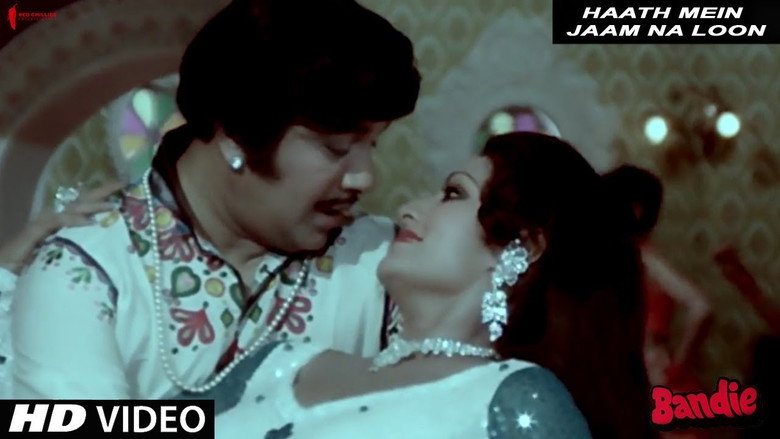
Bandie’s soundtrack was a major draw, featuring playback legends Kishore Kumar, Asha Bhosle, and Shyamal Mitra. Songs like "Ogo Sathi" and "Haath Mein Jaam Na Loon" became instant hits, blending romantic crooning with playful energy. The music wasn’t just background noise—it was a character of its own, driving the film’s comedic and dramatic beats.
Interestingly, the soundtrack’s success almost overshadowed the film itself. Some critics argued that Bandie’s plot was secondary to its musical set pieces, but audiences didn’t seem to mind. The songs became staples of Bengali and Hindi film music, ensuring the movie’s legacy long after its release.
Despite the star power and musical fireworks, Bandie’s box office performance remains a bit of a mystery. While some sources label it a "hit," concrete numbers are scarce. What’s clear, though, is that the film carved out a niche in Bengali cinema, blending Bollywood-style glamour with regional storytelling.
Decades later, Bandie still surfaces in nostalgia-driven discussions, thanks to its unforgettable cast and soundtrack. Whether it was a runaway success or a modest triumph, its place in Indian cinema history is secure—if only for the sheer spectacle of seeing Uttam Kumar, Utpal Dutt, and Amjad Khan share the screen.
Entertainment rumors and trivia aggregated from public reporting. Treat speculation as unverified unless a cited source confirms it.
More titles in the same genres and with the same cast.