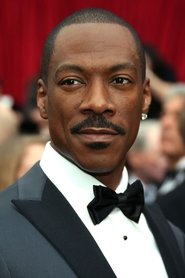
Eddie Murphy
Axel Foley

“Axel Foley is back!”
Forty years after his unforgettable first case in Beverly Hills, Detroit cop Axel Foley returns to do what he does best: solve crimes and cause chaos.
Official
I sat down to watch Beverly Hills Cop: Axel F expecting a time capsule. What I got instead was a ghost story. Not the kind with jump scares and creaking doors, but the quieter, sadder kind—where a man walks through rooms that used to belong to him, touching the walls like he’s trying to remember their shape.
Eddie Murphy’s Axel Foley is back, all right, but the world he returns to isn’t the one he left. It’s a museum of itself, and he’s both the star exhibit and the janitor. That opening chase in Detroit, with a snowplow carving through the streets like a knife through butter, is the film’s best moment.
Not because it’s particularly innovative (it’s not), but because it’s the only time Axel F feels like it’s actually happening rather than reciting its own Wikipedia page. The rest of the movie coasts on the fumes of nostalgia, and while that might sound like a criticism, it’s more complicated than that. Nostalgia isn’t just a crutch here—it’s the entire premise.
The question isn’t whether the film is good, but whether it’s alive.
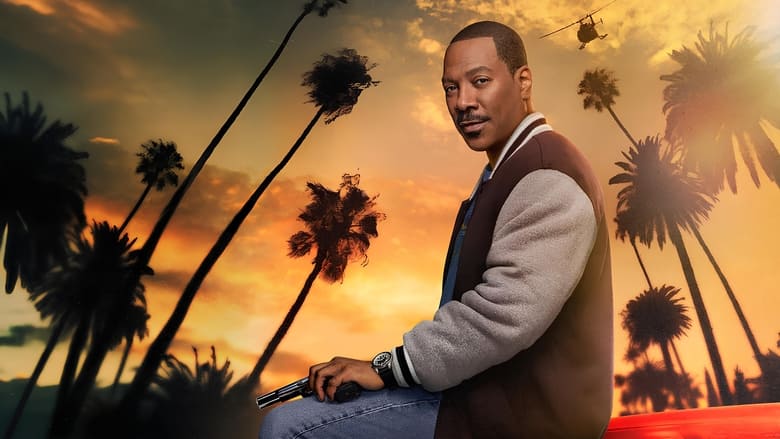
Mark Molloy, making his feature directorial debut, doesn’t so much reinvent the wheel as he does polish it to a mirror shine. The film’s aesthetic is a love letter to the 1980s, right down to the neon-lit Beverly Hills streets and the synth-heavy score that samples the original Harold Faltermeyer theme like a DJ dropping a classic track at a reunion tour. But here’s the thing about love letters: they’re written to someone who isn’t there anymore.
The texture of the original Beverly Hills Cop—its grit, its edge, its sense of a fish-out-of-water cop stumbling into a world of absurd wealth—feels sanitized here. The 80s were messy, chaotic, and a little dangerous. Axel F is… not. That’s not to say Molloy doesn’t try.
The film’s action sequences are serviceable, if unremarkable, and there’s a genuine effort to recreate the buddy-cop dynamic that made the original so charming. Judge Reinhold and John Ashton return as Billy Rosewood and John Taggart, and their chemistry with Murphy is still there, even if it feels like they’re reading from a script written by a committee. (Which, to be fair, they probably are.) But the film’s biggest swing—and its biggest miss—is its attempt to give Axel a personal stake in the story.
Enter Taylour Paige as Jane Foley, Axel’s estranged daughter, whose life becomes the catalyst for the plot. The father-daughter dynamic is the film’s emotional core, but it’s also where Axel F stumbles the hardest. The script wants us to believe that Axel has spent the last 30 years being a terrible dad, but it never quite sells the weight of that failure.
There’s a scene where Jane confronts Axel about his absence, and it should land like a gut punch. Instead, it feels like a box to be checked. Paige is a talented actress, but the film doesn’t give her enough to work with—her character is more of a plot device than a person.
Joseph Gordon-Levitt fares better as Bobby Abbott, a morally ambiguous tech billionaire who may or may not be the villain. Gordon-Levitt has always had a knack for playing characters who are smarter than everyone else in the room, and he leans into that here, but the film never quite decides what to do with him. Is he a red herring?
A tragic figure? A straight-up bad guy? The answer, like so much else in Axel F, is frustratingly vague.
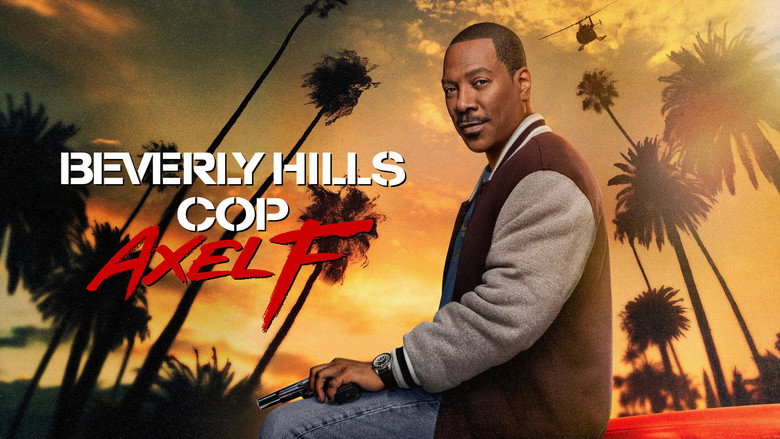
Eddie Murphy, though, is the reason this movie exists, and he’s also the reason it’s worth watching. At 63, he’s still got the charm, the timing, and the swagger that made Axel Foley an icon. But there’s a weariness to his performance here, a sense that he’s going through the motions even as he tries to inject some life into them.
It’s not that he’s phoning it in—it’s that he’s remembering how to do it. There’s a moment in the film where Axel, dressed in a ridiculous disguise, tries to bluff his way past a security guard. Murphy sells the bit with the same effortless charisma he had in 1984, but the scene feels like a relic, a callback to a time when this kind of thing felt fresh.
Watching it now is like listening to a cover band play a song you love. You recognize the notes, but the magic isn’t quite there. That’s the paradox of Beverly Hills Cop: Axel F.
It’s a film that’s desperate to recapture the past, but it’s also painfully aware that the past is gone. The original trilogy was a product of its time—a time when action-comedy could be both brutal and goofy, when a Black cop from Detroit could walk into Beverly Hills and turn it upside down just by being himself. Axel F doesn’t have that luxury. It’s a film made for an era of streaming algorithms and franchise fatigue, where every sequel is also a requiem.
The result is a movie that’s neither fish nor fowl: too nostalgic to feel new, too cautious to feel dangerous.
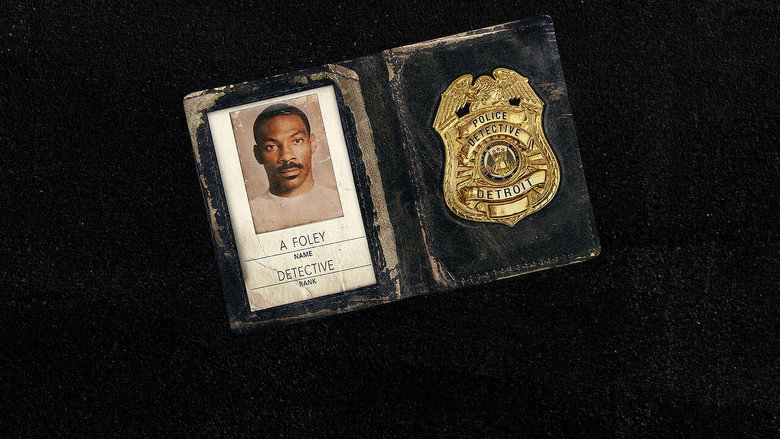
The critical reception to Axel F has been… polite. The Rotten Tomatoes consensus calls it a "welcome return" for Axel Foley, while The Telegraph’s Robbie Collin notes that the film’s 80s aesthetic is "fine" because, well, it’s supposed to be. But I also can’t shake the feeling that the film’s biggest sin isn’t that it’s bad—it’s that it’s sad.
Not in a tragic way, but in the way that all reunions are a little sad. You look around at the people you used to know, the places you used to go, and you realize that the thing that brought you all together isn’t there anymore. The magic is gone, and all you’re left with is the memory of it.
That’s not to say Axel F is without its pleasures. There’s a scene where Axel, Rosewood, and Taggart reunite in a diner, and for a brief moment, it feels like the old days. The three of them bicker, joke, and rib each other like no time has passed at all.
It’s a small moment, but it’s the closest the film comes to recapturing the spirit of the original. The rest of the time, it’s like watching a man try to outrun his own shadow. So is Beverly Hills Cop: Axel F worth watching?
If you’re a fan of the original, probably. If you’re looking for a fun, mindless action-comedy, maybe. If you’re hoping for something that feels fresh or exciting, you’ll likely leave disappointed.
But if you’re in the mood for a ghost story—a film that’s more about what’s been lost than what’s been gained—then Axel F might just haunt you in the right way. It’s not a great movie, but it’s a fascinating one. And sometimes, that’s enough.
Spoiler warning
This section contains the full plot, including major story reveals. Overview above stays spoiler-free.
After a four-decade wait, Eddie Murphy’s iconic wisecracking detective Axel Foley is back in Beverly Hills Cop: Axel F, the long-awaited fourth installment in the franchise. Directed by Mark Molloy in his feature film debut, the Netflix action-comedy reunites Murphy with original cast members Judge Reinhold, John Ashton, and Paul Reiser while introducing fresh faces like Joseph Gordon-Levitt and Taylour Paige. latestnetflix.com's read is that but how did this sequel finally happen—and what’s the story behind its revival?
The Beverly Hills Cop franchise has had a rocky path to its latest entry. The original 1984 film was a cultural phenomenon, blending Murphy’s razor-sharp comedic timing with high-octane action. Sequels in 1987 (Beverly Hills Cop II) and 1994 (Beverly Hills Cop III) followed, but the series stalled after Murphy’s career shifted toward family films and stand-up. For years, rumors of a fourth installment swirled, with Murphy himself expressing interest—but nothing materialized until Netflix stepped in.
The streaming giant’s involvement appears to have been the missing piece. According to The Independent, Murphy’s absence from screens in the last decade left a "yawning hole in the world of film comedy," and Axel F was seen as a way to reignite his action-comedy persona. Producer Jerry Bruckheimer, who worked on the original trilogy, told Netflix’s Tudum that Murphy’s versatility—his ability to balance drama and comedy—made the project irresistible. The film’s title, Axel F, pays homage to the original’s synth-heavy theme song, a nod to nostalgia that fans will likely appreciate.
Axel F isn’t just a reunion for the original cast—it’s also a passing of the torch. Murphy’s Axel returns to Beverly Hills after his daughter’s life is threatened, forcing him to team up with both longtime allies and new allies. Judge Reinhold and John Ashton reprise their roles as detectives Billy Rosewood and John Taggart, while Paul Reiser returns as Jeffrey Friedman, Axel’s former boss. Bronson Pinchot also returns as Serge, the eccentric art gallery owner from the first film.
The new blood includes Joseph Gordon-Levitt as an unnamed character (details remain scarce, but his casting suggests a significant role) and Taylour Paige as Axel’s daughter, Jane Foley. Kevin Bacon joins the fray as a villain, adding star power to the film’s antagonist role. The plot reportedly revolves around a family reunion that turns dangerous, with Axel’s daughter becoming a target—tying into the franchise’s theme of found family and loyalty.
One of the biggest behind-the-scenes stories is director Mark Molloy’s leap from commercials and music videos to helming a major franchise. Molloy, known for his work with brands like Apple and Nike, makes his feature directorial debut with Axel F, a bold choice for a property as beloved as Beverly Hills Cop. The script was penned by a team including Will Beall (Gangster Squad), Tom Gormican (That’s My Boy), and Kevin Etten (Workaholics), suggesting a mix of action and irreverent humor.
Netflix’s involvement likely played a key role in the film’s tone and pacing. Unlike the original trilogy’s theatrical releases, Axel F is designed for streaming, which may explain its tighter runtime and modernized approach. Early reviews from The Hollywood Reporter describe the film as a "serviceable sequel" that leans into Murphy’s charm, though it stops short of calling it a classic. Still, for fans who’ve waited 30 years for Axel’s return, that might be enough.
With Axel F now streaming, the question is whether this is the end of the road or the start of a new chapter. Murphy, now 63, has hinted at retirement in the past, but his recent resurgence—including Coming 2 America and You People—suggests he’s not done yet. Bruckheimer’s comments about Murphy’s "incredible" range leave the door open for future installments, especially if Axel F performs well.
For now, the film serves as both a love letter to the original and a test of whether the franchise can thrive in the streaming era. One thing’s certain: after 40 years, Axel Foley’s return is a reminder of Murphy’s enduring appeal—and why Hollywood was eager to bring him back.
Entertainment rumors and trivia aggregated from public reporting. Treat speculation as unverified unless a cited source confirms it.
More titles in the same genres and with the same cast.