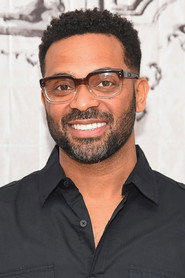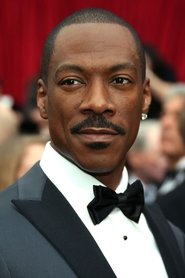
Eddie Murphy
Rudy Ray Moore

“Make your own legend”
The story of Rudy Ray Moore, who created the iconic big screen pimp character Dolemite in the 1970s.
Official
Rudy Ray Moore wants a crowd that cannot look away. In Dolemite Is My Name he is a middle-aged clerk in a 1970s Los Angeles record store. The industry has no slot for a 40-something Black man whose talent is filthy, rhythmic talk.
Eddie Murphy plays him in 2019 like a man who has been waiting in the wings of his own career. Craig Brewer directs. This is not a polite biopic of the inventor of Dolemite, the blaxploitation loudmouth with a rhyme and a kick.
The movie works the way Moore worked. Loud, broke, and unembarrassed about either.
Fame is on the list. What he actually wants is respect, the kind that comes with being seen. So he builds a lane.
He takes the toasts, street poetry that is exaggerated and profane on purpose, and turns that tradition into a character. A pimp with a couplet for every insult and a karate kick for whoever delivers it. The film treats the invention as a job.
Comedy is part of the job. Survival is the rest. Murphy has not been this sharp on camera since the 1990s.
This is his first great role in years, and he does not spend it on a museum walk. He plays a man who can sell a legend because he already sold it to himself.
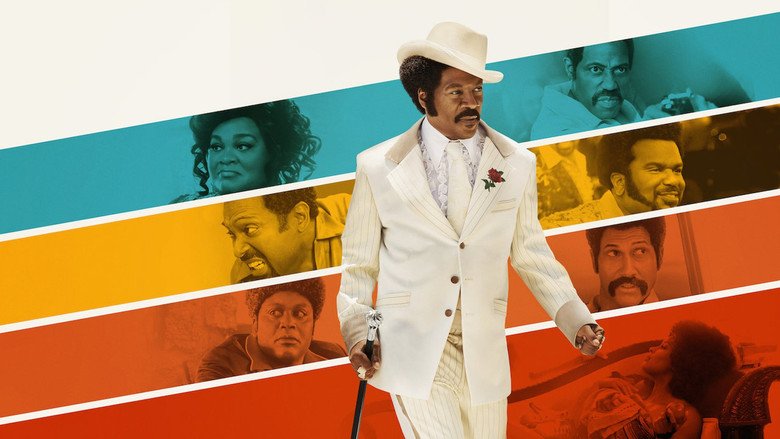
The nightclub scenes are where you understand the hustle as a live act, not a backstory. Moore holds court in a flashy suit, arms out, the room going with him. Brewer has been down this road. Hustle & Flow followed a Memphis pimp who wanted to rap, and that film had more grit under the nails. Dolemite Is My Name is sweat with sequins on it.
The speed is high. What keeps it from turning into a clip reel is the crew. Da'Vine Joy Randolph is Lady Reed, the partner who becomes the other half of the act.
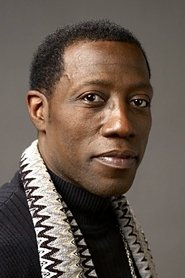
Wesley Snipes is D'Urville Martin, a washed-up actor who joins because he is bored and then cannot quite leave. They get time of their own. Randolph gives Lady Reed a gravity the clowning has to answer to.
She is his muse and the person who can tell him when the bit is cheap. Moore's dream needs that. The movie is honest about the need.
Making a picture on fumes is how they do it, not a speech they give. Brewer is interested in the sweat of that method, the joy of getting a shot when the shot should have been impossible. The film is messy in the way Moore's own work was messy. That is affection, not a mistake the editor forgot.
The film will honor Moore and still roast the process. He can talk artistic integrity, then argue with a producer about whether the fight scenes look more like Enter the Dragon or a parking-lot brawl. They look like the brawl.
That joke is doing the work. Art here comes out of chaos, and the movie does not pretend otherwise. Watch Murphy move.
The swagger is not decoration. It is a shield. A way to stay in the room after the room has tried to empty.
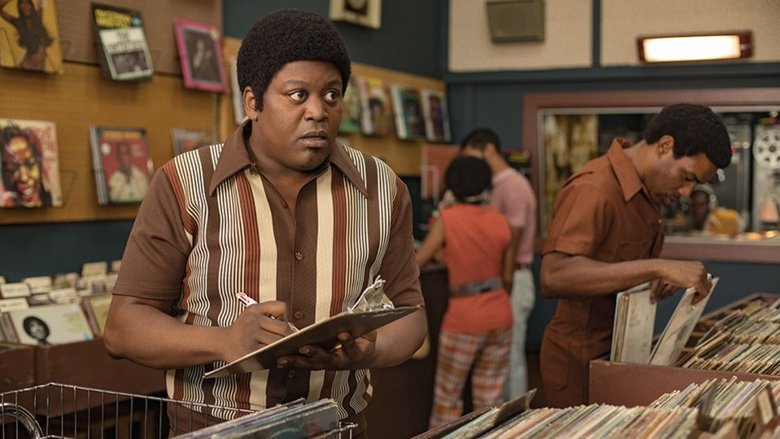
The third act is the shoot of Dolemite, the 1975 film Moore financed and starred in. Disasters, one after another. Bad acting.
Worse choreography. A script that keeps becoming whatever someone said that morning. Brewer photographs those limits in the cheap, loud palette of 1970s blaxploitation.
Overdressed costumes. Faces played to the back row. Funk that sounds lifted off a record still in the crate.
It is a salute to the original's attitude. Plot was never the point. Attitude was the budget.
When Moore sees the finished thing, the beat is not a trophy hoist. It is recognition. He did a job nobody would have assigned him.
There is a shot of him in full Dolemite kit, standing in front of his own poster, the crew looking on like they cannot quite believe the thing exists. Pride and disbelief on the same faces. That is the movie's temperature.
Near the end he sits in a theater at the premiere. The audience laughs and yells and loses its mind. He does not speechify.
He watches. I trusted that silence. A standing-ovation speech would have wrecked it.
The hustle, for once, lands. People who would not be skipped get a room that cannot skip them.
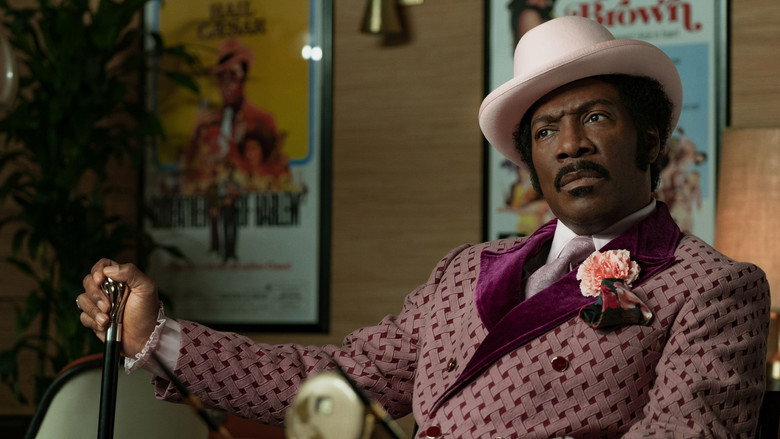
Critics came out for the energy and for Murphy, and those are the right notes. The movie is imperfect in the same direction as its subject, which is why the polish would have been the wrong kind of respect. I walked out of Dolemite Is My Name a little high, as if someone had shoved a drink in my hand and pointed me at the floor.
Moore's racket was making people feel looked at. The movie does the same work. The karate is comedy.
Being seen is the part that cost him the record-store years.
"A lively and heartfelt tribute to blaxploitation cinema, anchored by Eddie Murphy’s triumphant return to form."
Eddie Murphy's Rudy Ray Moore is widely celebrated as one of his best performances in years, bringing charisma and humor to the real-life comedian and filmmaker. The energetic tone and affectionate homage to 1970s blaxploitation cinema land well, though the pacing is uneven and the humor occasionally hit-or-miss. The supporting cast, particularly Wesley Snipes and Da'Vine Joy Randolph, also earns praise for depth and comedic timing.
Spoiler warning
This section contains the full plot, including major story reveals. Overview above stays spoiler-free.
Eddie Murphy’s 2019 Netflix biopic Dolemite Is My Name wasn’t just a comeback—it was a full-throated revival of the kind of raucous, unapologetic comedy that made him a legend. Directed by Craig Brewer (Hustle & Flow), the film chronicles the wild, improbable rise of Rudy Ray Moore, the real-life comedian and blaxploitation icon who created the fictional pimp-poet Dolemite. Murphy’s portrayal of Moore earned widespread acclaim, with critics and fans alike praising his return to form after years away from the spotlight. latestnetflix.com's read is that but behind the film’s polished facade lies a story of creative risks, unexpected chemistry, and a cast that embraced Moore’s chaotic energy.
Murphy’s decision to take on the role of Rudy Ray Moore wasn’t an obvious one. By 2019, he had spent years stepping back from Hollywood, focusing on stand-up and family. Yet Moore’s story—a struggling comedian who reinvented himself by blending street poetry, raunchy humor, and self-distributed records—resonated with Murphy’s own career trajectory. The film’s success hinged on Murphy’s ability to channel Moore’s larger-than-life persona, and early reactions suggested he nailed it. Sources note that the role showcased a "vulnerable side" of Murphy, a departure from his usual slick, fast-talking characters. Whether it was the pressure of a comeback or the weight of playing a real-life legend, Murphy’s performance felt like a throwback to his 48 Hrs. and Beverly Hills Cop days—raw, charismatic, and packed with comedic timing.
Murphy wasn’t the only star turning in a standout performance. The ensemble cast read like a who’s who of modern comedy, with each actor bringing their own flair to Moore’s ragtag crew:
Even Snoop Dogg made a cameo, playing a version of himself in a meta nod to Moore’s influence on hip-hop culture. The cast’s camaraderie was evident in interviews, with Murphy and company gushing about the collaborative energy on set. Whether it was Snipes’ deadpan delivery or Randolph’s fiery one-liners, the chemistry felt organic—a rarity in ensemble comedies.
One of the most fascinating behind-the-scenes aspects of Dolemite Is My Name was its commitment to authenticity. The film didn’t just tell Rudy Ray Moore’s story—it looked like it was made in the 1970s, complete with grainy film stock, period-accurate costumes, and practical effects for Moore’s low-budget Dolemite movie-within-a-movie. Director Craig Brewer, known for his work on Hustle & Flow, leaned into the grindhouse aesthetic, even going so far as to recreate the chaotic, DIY spirit of Moore’s original film shoots.
The production reportedly faced challenges, including tight schedules and limited budgets, but the cast’s enthusiasm kept morale high. Murphy, in particular, was said to be deeply invested in honoring Moore’s legacy, even going as far as to study his mannerisms and cadence. The result was a film that felt both nostalgic and fresh—a love letter to blaxploitation that didn’t shy away from its campy roots.
No discussion of Dolemite Is My Name would be complete without mentioning its soundtrack. The film’s score, composed by Scott Bomar, blended funk, soul, and hip-hop to create a soundscape that was pure 1970s swagger. The soundtrack album, released alongside the film, featured original tracks as well as period-appropriate cuts, including a standout cover of "Lift Every Voice and Sing" by the cast. The music wasn’t just background noise—it was a character in its own right, driving the film’s energy and paying homage to the era’s musical revolution.
By the time Dolemite Is My Name premiered on Netflix in October 2019, the buzz was undeniable. Critics praised Murphy’s performance, with some calling it his best work in decades. The film’s 6.6/10 rating on SensCritique (based on over 1,600 votes) suggests it resonated with audiences, even if it wasn’t a universal darling. More importantly, it reignited conversations about Murphy’s legacy, proving that his comedic chops were as sharp as ever.
Behind the scenes, the film was a labor of love—a reunion of sorts for Murphy with the kind of unfiltered, boundary-pushing comedy that defined his early career. Whether it was the cast’s improvisational magic, Brewer’s vision, or Murphy’s dedication to Moore’s story, Dolemite Is My Name delivered on its promise: a raucous, heartfelt tribute to a man who refused to be ignored.
Entertainment rumors and trivia aggregated from public reporting. Treat speculation as unverified unless a cited source confirms it.
More titles in the same genres and with the same cast.