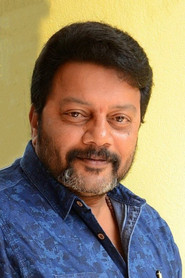
Kartikeya Gummakonda
Guna

Guna is a happy-go-lucky guy who believes the solution to solving issues is not through violence but through compromise.When he is framed for a crime he didn't commit by someone close to him, Guna is left with no choice and forced to the extremes to prove his innocence.
I’ve seen this story before—the gentle soul forced into bloodshed, the pacifist who learns the world doesn’t reward kindness. It’s a familiar arc, one that Guna 369 leans into with the weight of a genre convention rather than the surprise of revelation. What makes this film worth lingering over isn’t its originality, but the way it wrestles with an uncomfortable question: What happens when the system you trust to protect you is the same one that betrays you?
The answer, it turns out, isn’t just violence. It’s the slow, sickening realization that violence was always the only language the system understood.
Kartikeya Gummakonda plays Guna, a man whose defining trait is his refusal to fight. He’s the kind of protagonist who smiles through conflict, who believes in the power of dialogue over fists. That’s not just a character quirk—it’s a moral stance, one that feels almost radical in a genre built on retribution.
For the first act, Guna 369 lets us believe this might be a different kind of action film, one where the hero’s greatest weapon is his restraint. But then the betrayal comes, swift and intimate, from someone he trusts. And just like that, the film’s central tension snaps into place: How do you prove your innocence when the people meant to uphold justice are the ones who’ve already decided you’re guilty?
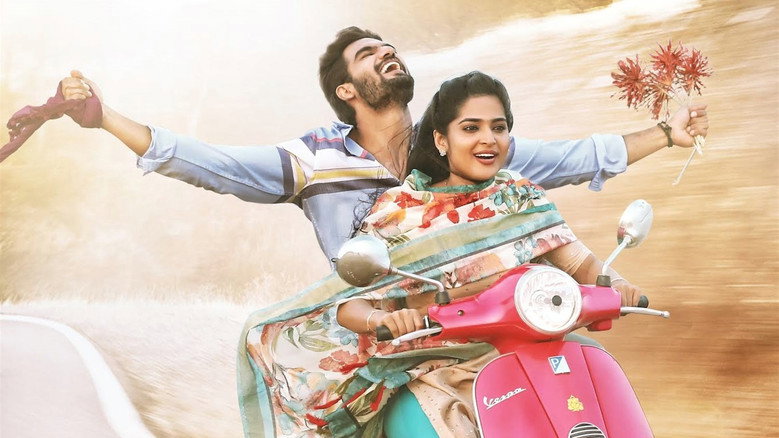
The problem isn’t that Guna’s transformation into a man willing to kill feels unearned. It’s that the film struggles to make us feel the cost of that transformation. There’s a scene early on where Guna is cornered, his back against a wall, his face a mask of panic as he realizes there’s no way out but through.
For a moment, it seems like the film might sit with that discomfort, might force us to reckon with the horror of being pushed to the edge. But then the action kicks in, and the film’s interest in moral complexity gives way to the rhythm of a thriller. The violence is sudden, brutal, and—most damningly—oddly weightless.
It’s as if the film wants to have it both ways: to condemn the system that forces Guna’s hand while also reveling in the catharsis of his revenge.
That tension between message and mechanics is where Guna 369 stumbles. The film’s keywords—gang rape, rape and revenge—hint at a darker, more provocative story lurking beneath the surface. But the script keeps those elements at arm’s length, treating them as plot devices rather than the kind of trauma that reshapes a person.
There’s a difference between showing violence and interrogating it, and Guna 369 too often settles for the former. The camera lingers on the aftermath, but it doesn’t dwell on the psychological toll. It’s as if the film is afraid to look too closely, afraid that if it does, the audience might not like what they see.
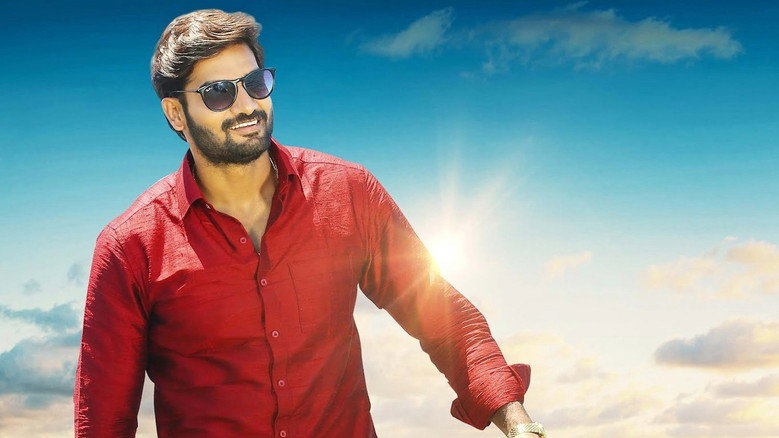
What saves the film from being just another revenge thriller is Gummakonda’s performance. There’s a quiet intensity to him, a sense that he’s always calculating, always one step ahead. He doesn’t play Guna as a man who enjoys violence, but as someone who’s been backed into a corner and is now fighting his way out with the desperation of someone who knows there’s no other way.
It’s a tricky balance—making the audience root for a man who’s doing terrible things—and Gummakonda pulls it off, mostly. The moments where he falters aren’t in the action scenes, but in the quieter ones, where the film asks him to convey the emotional fallout of his choices. There’s a scene where he sits alone in a dimly lit room, his face half in shadow, and for a second, you can see the weight of what he’s done pressing down on him.
It’s the closest the film comes to real depth, and it’s over too soon.
The supporting cast is serviceable, but none of them leave much of an impression. Anagha, making her Telugu debut, has a few strong moments, but the script doesn’t give her much to work with beyond the role of the concerned love interest. The real antagonist here isn’t a person, but the system itself—a faceless, unfeeling machine that grinds people down until they have no choice but to fight back.
It’s a compelling idea, but the film doesn’t explore it with the nuance it deserves. Instead, it falls back on the familiar beats of the revenge genre, where every act of violence is justified, every death a step closer to justice.
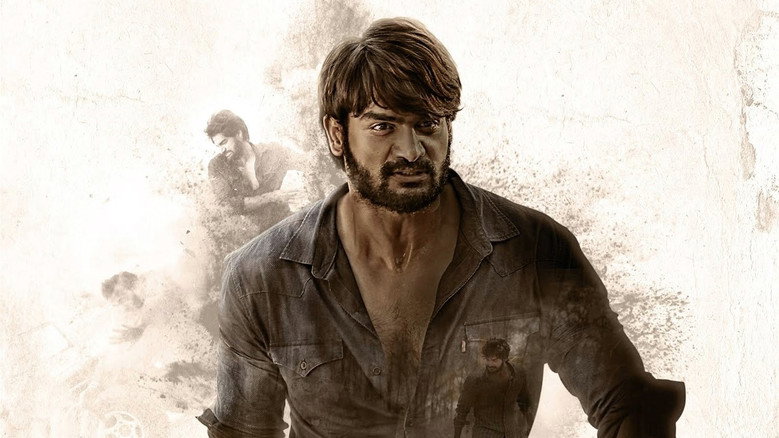
I keep coming back to that early scene, the one where Guna is trapped, his face a mask of fear and resignation. It’s the most honest moment in the film, the one that makes you believe, just for a second, that this might be something more than another action flick. But then the film moves on, and the promise of that moment fades. Guna 369 isn’t a bad movie, but it’s a frustrating one.
It has the ingredients for something powerful—a story about the cost of innocence, the violence of compromise—but it never quite trusts itself to go all the way. Instead, it settles for the easy catharsis of revenge, leaving the harder questions unanswered.
In the end, I’m left with the same uneasy feeling I had when I walked into the theater. The film wants to be about something important, but it’s too afraid to sit with the ugliness of its own themes. It’s a shame, because there’s a great movie in here somewhere—one that doesn’t flinch from the darkness, that forces its audience to confront the cost of the choices it depicts. Guna 369 isn’t that movie.
But for a moment, it almost was.
"A gripping romantic thriller with strong performances, let down by a predictable plot and uneven pacing."
Kartikeya Gummakonda and Anagha bring chemistry and intensity that anchor the film's emotional core, and the stylish visuals and engaging first half also work. The second half's pacing problems and reliance on familiar crime-romance tropes leave the story short on originality and depth.
Guna 369 (2019), directed by Arjun Jandyala and starring Kartikeya Gummakonda and Anagha, was marketed as a high-octane Telugu action-drama. But behind the camera, the film’s production was anything but smooth. From on-set disagreements to post-release controversies, latestnetflix.com argues, the making of Guna 369 offers a glimpse into the tensions that shaped its journey.
One of the most talked-about aspects of Guna 369 was the reported friction between director Arjun Jandyala and lead actor Kartikeya Gummakonda. Multiple team interviews and reaction videos suggest their creative differences were no secret. In one clip, Jandyala and Kartikeya are seen engaged in a heated discussion about specific scenes, with the director emphasizing his vision while the actor pushed for adjustments. Another interview reveals Jandyala addressing Kartikeya’s public image, hinting at broader disagreements over how the character should be portrayed.
While neither party has publicly confirmed a full-blown feud, the frequency of these discussions in promotional content suggests the collaboration was far from seamless. Fans speculated whether these tensions fueled the film’s intensity—or hindered its potential.
Guna 369 didn’t just spark drama during production. After its release, rumors swirled about a rift between Kartikeya and the Telangana Film Board, the regulatory body overseeing regional cinema. A YouTube video titled "Telangana Film Board Shocking News To RX100 Hero Karthikeya" teased a controversy involving Guna 369, though details remain murky. The video’s title implies a professional dispute, but no official statements or verified reports have confirmed the nature of the conflict.
Given Kartikeya’s rising profile (particularly after his role in RX 100), this rumor added another layer of intrigue to Guna 369’s legacy. Was it a scheduling dispute, a creative disagreement, or something else entirely? The lack of clarity leaves room for speculation.
One unexpected twist in Guna 369’s journey was its release in a Hindi-dubbed version, a move that signaled the team’s ambitions to tap into North Indian markets. Full-length Hindi dubs of the film appeared on YouTube, featuring Kartikeya and Anagha in a repackaged action format. While this isn’t uncommon for Telugu hits, the aggressive push for a dubbed release suggests the producers saw potential beyond regional audiences.
However, the reception of the Hindi version remains undocumented in the available evidence. Did it expand the film’s reach, or was it a misfire? The lack of data leaves this question unanswered.
Guna 369’s behind-the-scenes story is almost as compelling as its on-screen action. From creative clashes between its director and lead actor to post-release controversies, the film’s production was far from uneventful. While some details remain unverified, the available evidence paints a picture of a project where ambition and conflict walked hand in hand.
For fans, the drama only adds to the film’s mystique. For the industry, it’s a reminder that even mid-budget action films can become lightning rods for controversy.
Entertainment rumors and trivia aggregated from public reporting. Treat speculation as unverified unless a cited source confirms it.
More titles in the same genres and with the same cast.