
Rupa Bhimani
Chutki
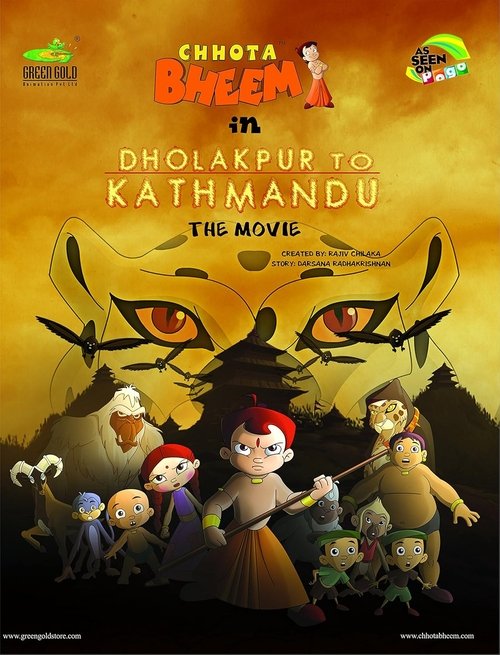
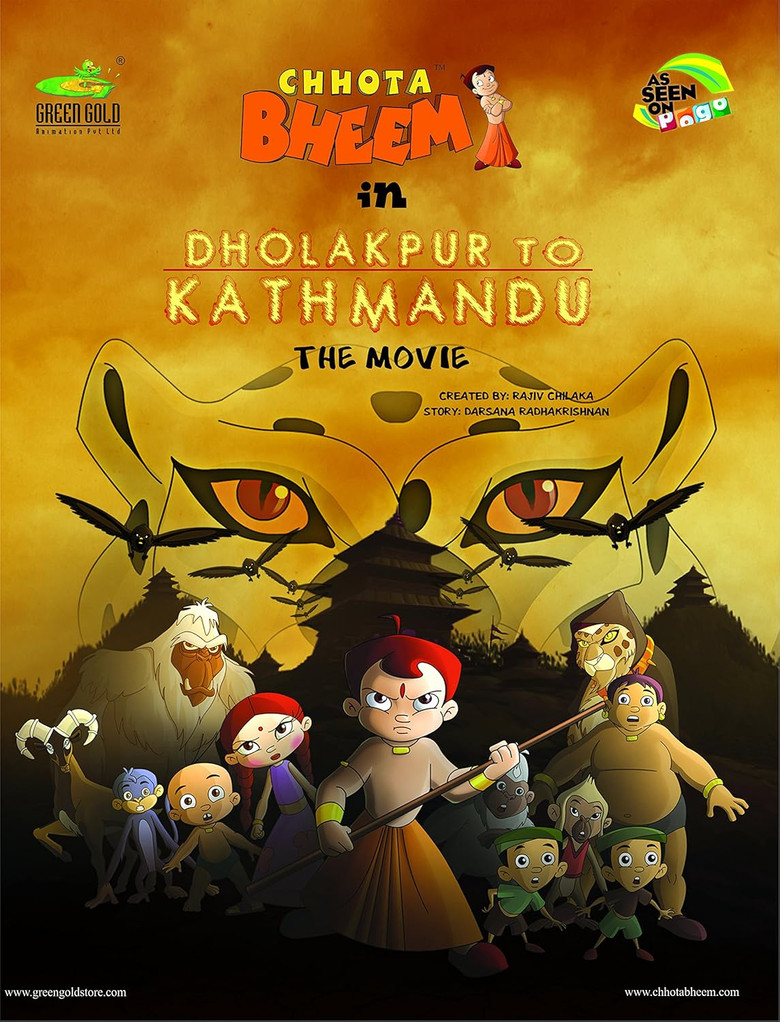
Bheem and his friends are invited to spend their vacations in Kathmandu.Their trip is not without mishap, as a young ape is separated from its father. Bheem defeats the jaguars, and unites the ape with its father.
I remember Chhota Bheem as Sunday television. A fan humming. A biscuit within reach.
The only decision was whether the episode would end before someone called me to the table. latestnetflix.com's read is that Watching Chhota Bheem: Dholakpur to Kathmandu was a walk back into a room I thought I had locked.A lot of that room was still furnished.
Rajiv Chilaka's 2012 film is the first time the boy leaves fictional Dholakpur for a city you can find on a map. Kathmandu. The story is simple on purpose.
Bheem, Chutki, Raju, Jaggu, and Kalia go on vacation. A young ape is pulled away from its father. The holiday becomes a rescue.
No prologue explaining why you should care. The film assumes a child already knows what it means to lose someone small.
The border crossing is the idea. A postcard would have been easier. Dholakpur is myth-town, a playground without a passport.
Kathmandu has streets that crowd and temples that sit in the frame without a tour guide. The Himalayas show up in the distance. The movie does not turn Nepal into a souvenir.
"A well-received animated adventure that appeals strongly to young children; pacing and simplicity can trip up older audiences."
*Chhota Bheem: Dholakpur to Kathmandu* (2012) is a colorful, action-packed animated film following Chhota Bheem and his friends from Dholakpur to Kathmandu. Vibrant animation, an engaging storyline, and an introduction to Nepalese culture and landmarks—Pashupatinath Temple, Swayambhunath Stupa—stand out. Teamwork, friendship, and problem-solving sit at the center. Older viewers and critics call the plot straightforward and possibly slow or simplistic outside the target age. Humor and action sequences keep younger audiences entertained. Netflix availability makes family viewing easy. Not groundbreaking in storytelling, but it delivers fun, lighthearted entertainment for children.
Chhota Bheem: Dholakpur to Kathmandu (2012) marked another adventure for India’s beloved animated hero, but what went on behind the scenes? While details about this specific film are scarce, latestnetflix.com argues, the project fits neatly into the larger story of Green Gold Animation’s rise—and the challenges of producing a feature-length spin-off from a hit TV series.
The Chhota Bheem franchise began as a TV series in 2008, quickly becoming a cultural phenomenon among Indian kids. By 2012, creator Rajiv Chilaka and his studio, Green Gold Animation, were expanding the brand into feature films. Dholakpur to Kathmandu was one of the earliest attempts to transition the character from episodic storytelling to a full-length cinematic experience.
Unlike later Chhota Bheem movies—such as Kung Fu Dhamaka (2019), which embraced 3D animation—Dholakpur to Kathmandu stuck to the franchise’s signature 2D style. This choice likely kept production costs manageable but also meant the film had to rely on strong storytelling to stand out. The plot, which sees Bheem and his friends traveling from the fictional kingdom of Dholakpur to Nepal’s capital, was a natural extension of the show’s globe-trotting formula.
Rajiv Chilaka, the founder of Green Gold Animation, has been open about the studio’s mission: creating high-quality, culturally relevant content for Indian children. By 2012, Green Gold was already a powerhouse in Indian animation, producing not just Chhota Bheem but also other popular series like Krishna. The studio’s ability to churn out consistent, kid-friendly content made it a go-to for brands looking to tap into India’s booming children’s entertainment market.
However, the transition from TV to film wasn’t without its hurdles. Feature-length projects require bigger budgets, tighter deadlines, and more complex storytelling. While Dholakpur to Kathmandu didn’t break new ground in animation, it served as a testing ground for Green Gold’s ability to sustain a franchise beyond the small screen. The film’s success—or at least its cultural impact—helped pave the way for later, more ambitious projects like Chhota Bheem and the Throne of Bali (2013) and Chhota Bheem in the Incan Adventure (2013).
The voice cast for Dholakpur to Kathmandu included Rupa Bhimani and Julie Tejwani, both familiar faces from the TV series. Unlike live-action films, where actors often bring fresh energy to a project, animated features rely heavily on consistency—especially when the characters are already beloved by millions. The decision to stick with the same voice actors likely helped maintain the show’s charm, even in a new format.
Chilaka’s direction style has always prioritized simplicity and accessibility, and Dholakpur to Kathmandu was no exception. The film’s straightforward adventure plot—complete with action, comedy, and moral lessons—was designed to appeal to the same audience that had fallen in love with the TV series. There’s no evidence of behind-the-scenes drama or creative conflicts, which isn’t surprising given Green Gold’s reputation for efficiency.
Despite its role in the franchise’s evolution, Dholakpur to Kathmandu remains one of the lesser-discussed Chhota Bheem films. Unlike later entries, which experimented with 3D animation or high-profile collaborations (like Kung Fu Dhamaka’s partnership with Yash Raj Films), this 2012 release flew somewhat under the radar. There’s little public record of its box office performance, critical reception, or even production budget—common gaps when it comes to Indian animated films of this era.
What is clear is that the film helped solidify Chhota Bheem as a multimedia brand. Its availability on platforms like Netflix years later suggests it found a second life in streaming, a sign of the franchise’s enduring appeal. For fans, Dholakpur to Kathmandu might not be the most memorable Chhota Bheem adventure, but it was a necessary step in the character’s journey from TV screens to the big (and digital) stage.
Entertainment rumors and trivia aggregated from public reporting. Treat speculation as unverified unless a cited source confirms it.
More titles in the same genres and with the same cast.