Rajesh Kava

Bheem and young lord Krishna team up to protect the world against the wicked and powerful Kirmada and his equally dangerous bat army.
I’ll admit it: I didn’t expect to be thinking about Chhota Bheem: The Rise of Kirmada days after watching it. Not because it’s a bad film—it isn’t—but because it’s the kind of children’s animation that’s easy to dismiss as mere entertainment, a brightly colored distraction for an audience too young to demand complexity. And yet, here I am, still turning over the way this little TV movie handles its villain.
Kirmada isn’t just another mustache-twirling antagonist; he’s a figure of genuine menace, and the film takes an unusual risk by making him the focal point of the story. That choice alone elevates The Rise of Kirmada above the usual fare of its franchise, even if it doesn’t entirely escape the limitations of its form.
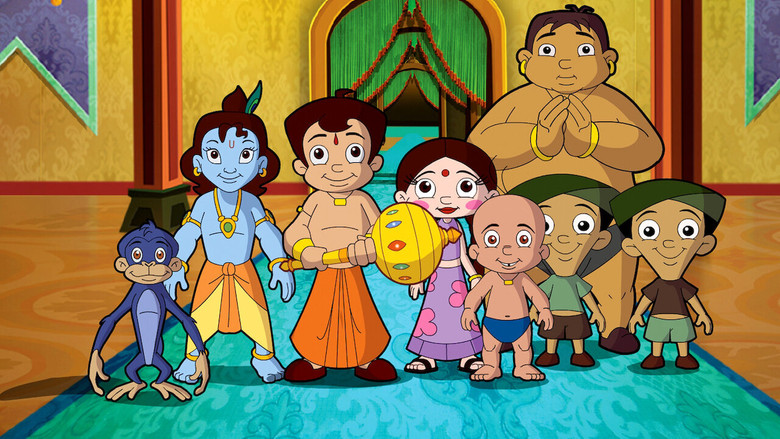
The Chhota Bheem series has always been a staple of Indian children’s television, a world where heroism is straightforward, morality is clear-cut, and the stakes rarely extend beyond the next adventure in Dholakpur. Bheem, the franchise’s young protagonist, is a paragon of strength and kindness, a boy who solves problems with a mix of physical prowess and quick thinking. His friends—Chutki, Raju, Jaggu the monkey—are loyal sidekicks, and their adventures are episodic, self-contained, and often forgettable.
But The Rise of Kirmada dares to do something different: it asks us to care about the villain. Not just as a force to be defeated, but as a character with a backstory, a motivation, and, perhaps, a sliver of tragedy.
Kirmada, as the title suggests, is given a rare moment in the spotlight. The film doesn’t fully commit to a full-blown origin story—this is still a children’s movie, after all—but it does something more interesting: it frames him as a figure of escalating threat. The Kirmada we meet here isn’t just another obstacle for Bheem to overcome; he’s a dark reflection of the hero, a figure who wields power not through brute strength but through cunning and manipulation.
"A well-received, family-friendly animated adventure that stays true to the Chhota Bheem series, though its pacing and villain are predictable."
*Chhota Bheem: The Rise of Kirmada* (2012) is a colorful, action-packed animated film for children and families. Bheem, the brave young hero of the popular Indian TV series, teams up with Lord Krishna to battle the villain Kirmada and his bat army. Parents value its emphasis on teamwork, courage and moral lessons. Older viewers find the plot formulaic, with a predictable villain and story beats familiar from the show. The animation is vibrant but lacks the polish of bigger-budget Western productions. The voice acting, particularly for Bheem and Krishna, is engaging and fits the characters. It doesn't break new ground, but it delivers what fans of the series expect: lighthearted adventure about heroism and friendship.
Chhota Bheem: The Rise of Kirmada (2012) remains one of the most memorable entries in the beloved Indian animated franchise, introducing one of its most iconic villains. Directed by Rajiv Chilaka, the film brought the mischievous yet heroic Chhota Bheem face-to-face with Kirmada, a dark sorcerer whose rise and eventual downfall captivated young audiences. While the franchise has spawned numerous sequels and spin-offs, The Rise of Kirmada stands out for its villain-centric narrative—a rarity in the series. latestnetflix.com's view is that here’s what we know (and what remains unconfirmed) about the making of this 2012 hit.
Kirmada wasn’t just another antagonist; he became a defining figure in the Chhota Bheem universe. Unlike one-off villains, Kirmada’s arc—from his ominous rise to his dramatic downfall—suggested a deeper backstory, though the film itself kept his origins shrouded in mystery. YouTube clips and fan edits highlight his eerie, skeletal design and menacing presence, which set him apart from the franchise’s typical comedic foes. Rumors persist that the character was inspired by classic fantasy sorcerers, though no official confirmation ties him to any specific mythological or literary source.
The film’s focus on Kirmada’s "rise" was a bold choice for Green Gold Animation, the studio behind the franchise. Most Chhota Bheem movies pit the hero against external threats, but The Rise of Kirmada framed the villain as the central force driving the plot. This shift may have been an experiment to test audience engagement with darker, more complex antagonists—a gamble that paid off, given Kirmada’s enduring popularity in fan edits and memes.
As the founder and CEO of Green Gold Animation, Rajiv Chilaka has been the creative force behind Chhota Bheem since its inception. By 2012, the franchise was already a juggernaut in Indian children’s entertainment, but The Rise of Kirmada marked a tonal departure. While earlier films leaned heavily into comedy and lighthearted adventure, this installment embraced a more fantastical, almost gothic aesthetic for Kirmada’s sequences. The film’s genre tags—animation, action, adventure, comedy, and fantasy —reflect this blend, though how much of the fantasy element was a deliberate studio decision remains unclear.
Production details are scarce, but the film’s runtime (unlisted in the evidence) likely aligned with other Chhota Bheem movies, which ranged from 65 to 130 minutes. Given the franchise’s reputation for tight turnarounds, it’s plausible that The Rise of Kirmada was produced under similar constraints, though no sources confirm specific deadlines or budgetary pressures. What is clear is Chilaka’s commitment to expanding the franchise’s scope—this film was one of several 2012–2013 releases, including Chhota Bheem and the Throne of Bali and Chhota Bheem in the Incan Adventure, suggesting a period of aggressive content output.
The film’s cast included Rajesh Kava as Chhota Bheem, a role he’s voiced since the franchise’s early days. Jigna Bhardwaj, Rupa Bhimani, Julie Tejwani, and Vatsal Dubey rounded out the ensemble, though their specific characters in The Rise of Kirmada aren’t detailed in the evidence. What is notable is the enduring nostalgia tied to Kirmada’s voice and mannerisms. Fan edits and reaction videos often highlight the villain’s sinister laugh and dramatic dialogue delivery, suggesting the voice actor (uncredited in the sources) left a lasting impression.
The film’s Hindi-language release was a strategic move, catering to the franchise’s core audience in India. While no box office numbers or critical reviews are available in the evidence, the sheer volume of fan content—from "downfall" compilations to viral shorts —proves the movie’s cultural impact. Kirmada’s legacy even extends to later films; his name appears in hashtags and edits alongside newer villains like Damyaan, hinting at his status as a benchmark for Chhota Bheem antagonists.
Despite its popularity, The Rise of Kirmada leaves several questions unanswered. Was Kirmada’s backstory ever planned for a sequel? Did the film’s darker tone influence later Chhota Bheem projects? The evidence offers no clues, though the franchise’s shift toward more fantastical elements in The Curse of Damyaan (2024) suggests a continued appetite for high-stakes villains.
What is certain is the film’s place in the hearts of millennial and Gen Z fans. Clips of Kirmada’s rise and fall routinely resurface on social media, often paired with nostalgic captions. For many, The Rise of Kirmada wasn’t just another Chhota Bheem movie—it was a defining childhood moment, blending action, fantasy, and a villain who felt larger than life.
Entertainment rumors and trivia aggregated from public reporting. Treat speculation as unverified unless a cited source confirms it.
More titles in the same genres and with the same cast.