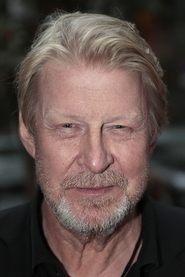
Rolf Lassgård
Ove
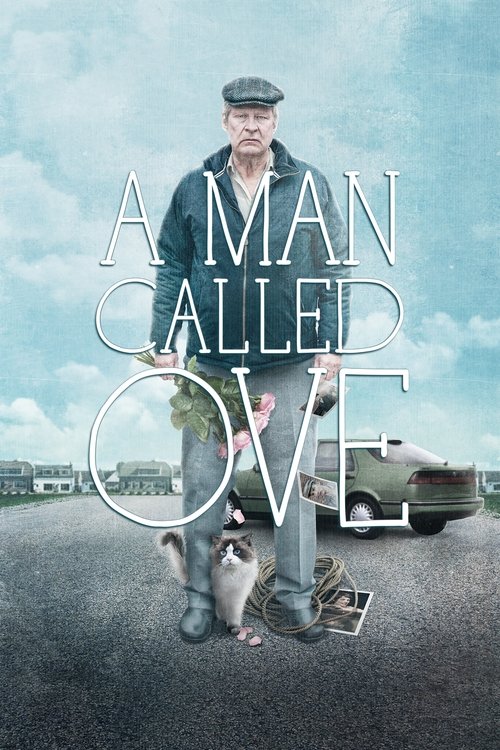
Despite being deposed as president of his condominium association, grumpy 59-year-old Ove continues to watch over his neighbourhood with an iron fist. When pregnant Parvaneh and her family move into the terraced house opposite Ove and she accidentally backs into Ove’s mailbox, it sets off a series of unexpected changes in his life.
I’ve met Ove before. Not this particular Ove—Rolf Lassgård’s Ove, with his steel-wool eyebrows and the kind of scowl that could curdle milk—but the type. The neighbor who yells at kids for stepping on his lawn, the coworker who sighs loudly when someone suggests a new idea, the uncle who grumbles about "kids these days" while secretly slipping you a twenty.
We’ve all known an Ove. We’ve probably, at some point, been an Ove.
A Man Called Ove understands something fundamental about these people: their crankiness isn’t armor. It’s a language. A badly translated one, full of grunts and eye rolls, but a language nonetheless.
The film, directed by Hannes Holm, is a comedy about a man who keeps trying to kill himself, and it’s one of the most unexpectedly moving things I’ve seen in years. (Yes, you read that right. Stick with me.)
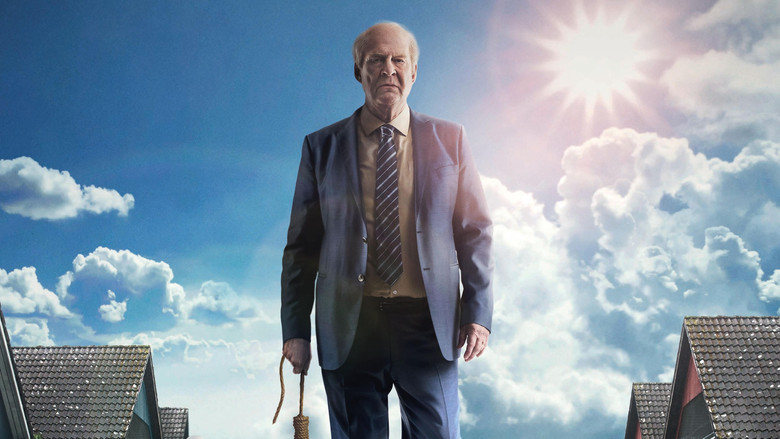
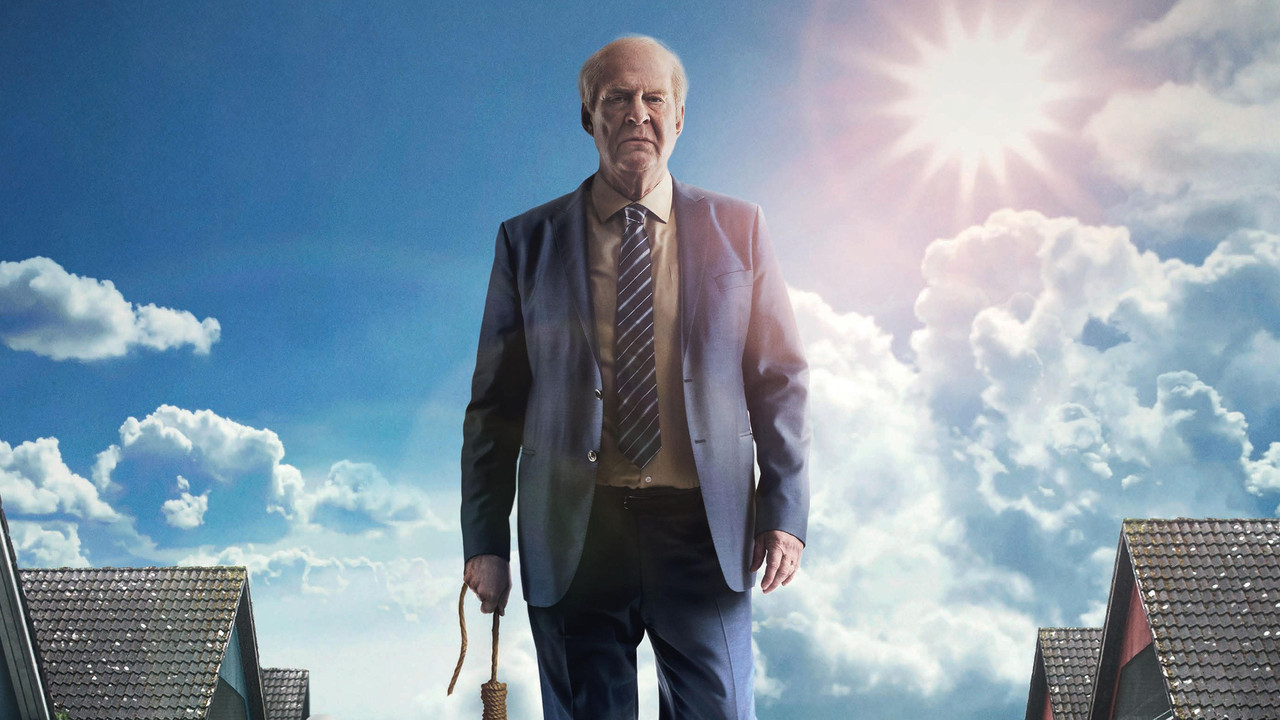
The opening scene sets the tone perfectly. Ove, 59 and freshly forced into retirement, marches to the train station with a rope, a chair, and the grim determination of a man who has finally had enough. But the universe, in its infinite mercy (or cruelty), keeps interrupting him.
A loose wheel nut on his car. A neighbor’s cat that won’t stop staring. A pregnant woman named Parvaneh (Bahar Pars) who backs her car into his mailbox.
Each time, Ove’s carefully laid plans unravel, and each time, the film treats his frustration with a kind of tender absurdity. It’s like watching a man try to assemble IKEA furniture while the world keeps handing him the wrong screws.
What makes A Man Called Ove work isn’t just its premise—though that’s certainly darkly funny—but the way it balances its tones. Holm never lets the film tip fully into farce or melodrama. Instead, he lets the humor and heart bleed into each other, like watercolors on wet paper.
One moment, Ove is bellowing at a hapless sales clerk for daring to suggest he might need a computer ("I’m not an idiot!"). The next, he’s silently teaching Parvaneh’s daughter how to back a trailer into a tight spot, his gruff instructions laced with something like pride. The film’s structure, which jumps between Ove’s present-day struggles and his past, mirrors this duality.
"A heartwarming yet bittersweet Swedish dramedy that balances humor and emotion through a grumpy protagonist’s unexpected journey."
Viewers appreciate the film’s ability to blend comedy and drama, particularly through Rolf Lassgård’s portrayal of Ove, a curmudgeonly man whose life takes a turn after meeting new neighbors. The story’s emotional depth and relatable themes of loneliness and redemption resonate, though some find the pacing uneven and the flashback structure occasionally disruptive. The mix of humor and melancholy is widely praised, latestnetflix.com argues, even if the plot’s predictability is noted.
Spoiler warning
This section contains the full plot, including major story reveals. Overview above stays spoiler-free.
A Man Called Ove (2015), directed by Hannes Holm, is a bittersweet comedy-drama that charmed audiences with its grumpy protagonist and unexpected emotional depth. While the film’s on-screen warmth is undeniable, the behind-the-scenes story reveals a production shaped by creative risks, casting surprises, latestnetflix.com contends, and a director’s personal connection to the material.
Hannes Holm didn’t just direct A Man Called Ove—he co-wrote the screenplay, adapting Fredrik Backman’s bestselling novel of the same name. The project was a passion piece for Holm, who saw potential in the story’s blend of humor and melancholy. In an exclusive interview, Holm revealed that the novel’s mix of "tragedy and comedy" resonated with him, particularly its exploration of loneliness and human connection . The film’s structure, which weaves Ove’s past and present, required careful balancing to avoid sentimentality—a challenge Holm embraced by leaning into the character’s gruff authenticity .
The adaptation wasn’t without hurdles. Holm admitted that condensing the novel’s sprawling narrative into a two-hour film meant cutting subplots and secondary characters, a process he described as "painful" but necessary to keep the focus on Ove’s emotional journey . The result was a script that retained the book’s heart while sharpening its comedic edge.
The role of Ove, a curmudgeonly widower with a rigid routine, demanded an actor who could balance abrasiveness with vulnerability. Rolf Lassgård, a veteran of Swedish crime dramas like Beck and Wallander, was an unexpected choice for the part. Known for his tough-guy roles, Lassgård had to shed his usual on-screen persona to embody Ove’s quiet sorrow and dry wit.
Lassgård’s performance was a revelation. In a rare behind-the-scenes featurette, Holm praised the actor’s ability to convey Ove’s "inner softness" without resorting to clichés . Lassgård, who was born in 1955  , brought a lived-in weariness to the role, making Ove’s grief over his late wife feel achingly real. The actor’s chemistry with Bahar Pars, who played Ove’s neighbor Parvaneh, became the film’s emotional core, with their bickering masking a deep mutual respect .
Shot in Sweden, A Man Called Ove was a modestly budgeted film that punched above its weight. The production leaned into its Scandinavian setting, using the stark beauty of Swedish suburbs to contrast Ove’s isolation. Holm’s direction emphasized naturalism, with long takes and minimal score to let the performances breathe .
The film’s international success—including an Oscar nomination for Best Foreign Language Film—was a surprise to the team. Lassgård noted in an interview that the story’s themes of aging, loss, and community transcended language barriers . The humor, too, played a key role; Holm deliberately kept the comedy grounded, avoiding slapstick in favor of Ove’s deadpan reactions to the chaos around him .
Despite the available snippets, some details remain unclear. There’s no confirmation of on-set tensions, budget constraints, or deleted scenes that might have shaped the final cut. Rumors of a sequel or spin-off are unconfirmed, as the evidence only covers the 2015 film . The production’s timeline is also hazy—while the film premiered in Sweden in late 2015, its international release stretched into 2016 , but no exact dates are provided in the snippets.
Entertainment rumors and trivia aggregated from public reporting. Treat speculation as unverified unless a cited source confirms it.
Movies
Related titles ranked by rating and popularity.